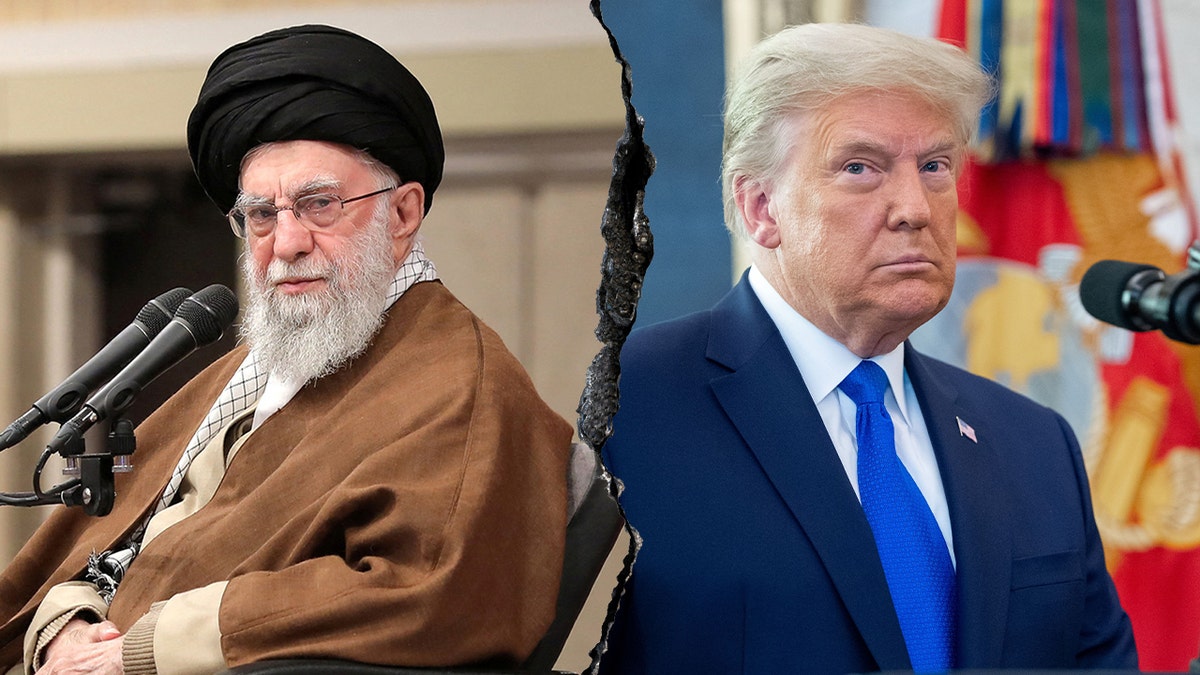
The window for a diplomatic resolution between Washington and Tehran is closing rapidly as US President Donald Trump’s latest ultimatum for Iran to reopen the Strait of Hormuz reaches its final hours. Amidst a backdrop of escalating military strikes and aggressive rhetoric, reports suggest that Iran cuts off direct diplomacy with U.S. channels, leaving the two nations on a perilous collision course as a Tuesday deadline looms.
President Trump has set 8 p.m. ET Tuesday (Wednesday 3:30 a.m. Tehran time) as the hard cutoff for Iran to strike a deal or fully open the critical maritime chokepoint, according to reports from CNN. The president has warned that failure to comply will result in Iran facing “hell,” a threat he has renewed several times in recent weeks, often delaying the deadline shortly before it expires.
The stakes of this confrontation extend far beyond bilateral diplomacy. The Strait of Hormuz is a vital artery for the global energy trade, and any prolonged closure or escalation in the region threatens to destabilize international oil markets and spike fuel prices globally. While the White House maintains that its objective is the restoration of free navigation, the methods employed have sparked intense international debate over the legality of targeting civilian infrastructure.
Threats of ‘Complete Demolition’ and Civilian Infrastructure
The current escalation is defined by President Trump’s willingness to target non-military assets. Speaking on Monday, the president claimed the US possesses a plan capable of destroying every power plant and bridge within Iran. “I mean complete demolition by 12 o’clock,” Trump stated, referring to a midnight Tuesday deadline as reported by CNN.
This strategy has drawn sharp criticism from human rights advocates and legal experts, who argue that the systematic destruction of power grids and transportation networks constitutes a war crime due to the disproportionate impact on the civilian population. In an interview with ABC News, Trump dismissed these concerns, asserting that Iran “has been decimated” and that “every day they’re gonna have to build more bridges, and they’re gonna have to build more power plants” per ABC News.
The president’s rhetoric has shifted from targeted strikes to broader threats of national obliteration. He previously told ABC News that if no peace deal is reached, “we’re blowing up the entire country,” specifically designating the upcoming period as “bridge day” and “power plant day” in Iran per ABC News.
Military Escalation: Strikes on Kharg Island and Transport Hubs
Even before the Tuesday evening deadline passed, the conflict transitioned from threats to active kinetic operations. On Tuesday, US forces conducted strikes on military sites located on Kharg Island, which serves as Iran’s primary export oil hub. White House and US officials have clarified that while military targets were hit, the US did not target the oil facilities themselves according to CNN.
Vice President JD Vance stated that these specific operations did not represent a “change in strategy” nor did they alter the existing deadline set by the president per CNN.
Simultaneously, Israeli forces have intensified their campaign against Iranian logistics. An Israeli source informed CNN that strikes on Tuesday specifically targeted transportation routes across the country, including freeways, multiple railway lines, and other roads. One such attack on a railway bridge resulted in the deaths of two people per CNN.
The Broader Conflict: A War of Attrition
The current crisis is the latest chapter in a conflict that began on February 28 with joint U.S.-Israel strikes. Since that date, the war has resulted in thousands of deaths and significant instability in global shipping routes. The human cost for the United States has also been substantial; newly released Pentagon figures indicate that 365 American service members have been injured during operations against Iran according to CBS News.
President Trump has claimed in a prime-time address that the US has “completely decimated” Iran, asserting that the nation’s radar capabilities are “100% annihilated” and that the US military remains “unstoppable” per CBS News.
Despite these claims of military dominance, the conflict shows no signs of slowing. Iran has continued to respond to airstrikes with its own attacks across the region, creating a cycle of escalation that has left international observers fearing a total regional war.
Tehran’s Defiance and the Diplomatic Void
The Iranian government has met the US ultimatums with public defiance. Gen. Ali Abdollahi Aliabadi, representing the Khatam al-Anbiya Central Headquarters, rejected President Trump’s threats, describing them as a “helpless, nervous, unbalanced and stupid action” per CBS News.
Echoing the religious imagery used by Trump in his Truth Social posts—where the president warned that “all Hell will reign down” on Iran—Gen. Aliabadi warned that the “gates of hell will open for you” per CBS News.
This breakdown in communication is further evidenced by the reported closure of backchannels. As the two nations move toward the Tuesday deadline, the lack of direct diplomatic engagement increases the risk of miscalculation. The transition from “productive conversations”—which Trump mentioned in late March—to the current state of open hostility suggests a complete collapse of the negotiation framework.
Timeline of Recent Ultimatums
| Date | Action/Threat | Outcome/Status |
|---|---|---|
| March 21 | 48-hour threat to obliterate power plants | Postponed after “productive conversations” |
| Late March | Five-day extension on power plant strikes | Deadline pushed back to April 6 |
| April 5 | 48-hour threat to “blow up the whole country” | Lead-up to current Tuesday deadline |
| April 7 | 8 p.m. ET deadline to open Strait of Hormuz | Active military strikes on Kharg Island/Railways |
As the clock ticks toward 8 p.m. ET, the world watches to see if the US will follow through on the threat of “complete demolition” or if a last-minute deal will emerge to prevent a catastrophic expansion of the war. The immediate checkpoint remains the passing of this Tuesday deadline, after which the White House is expected to announce whether the Strait of Hormuz has been sufficiently opened or if further strikes on Iranian infrastructure will commence.
World Today Journal will continue to monitor this developing story. We invite our readers to share their perspectives on the humanitarian implications of targeting civilian infrastructure in the comments below.