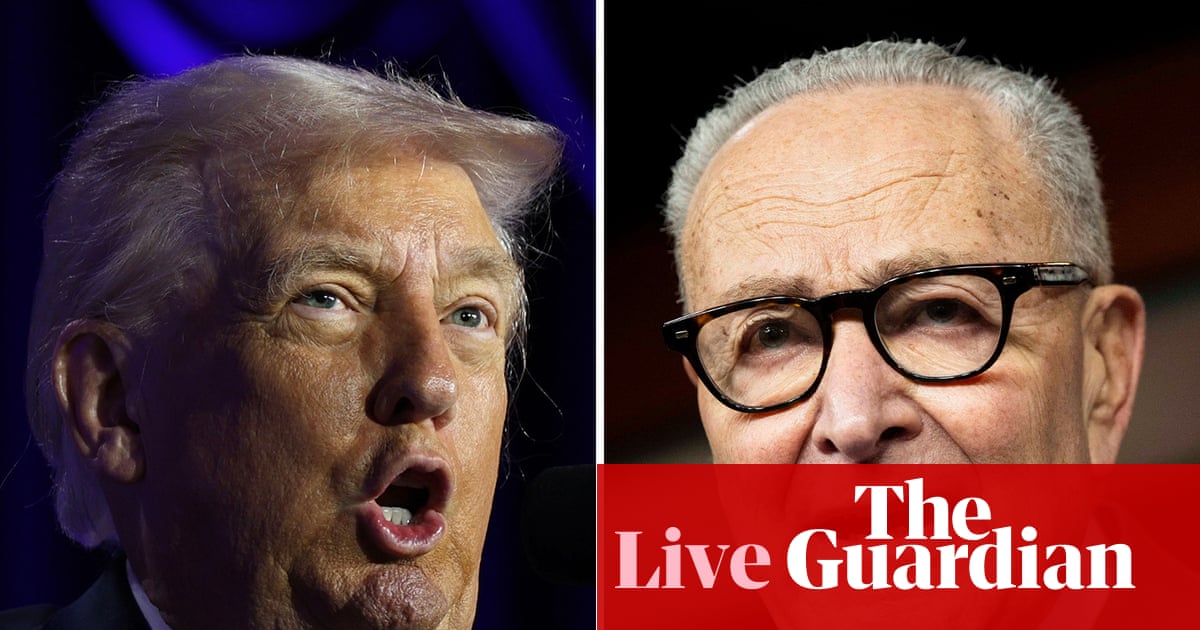
The political climate in Washington has reached a boiling point following a series of volatile Trump Iran threats that have sparked accusations of instability and urgent calls for constitutional intervention. The U.S. Senate Democratic leader has described President Donald Trump as an “extremely sick person” after the president utilized social media to post what have been characterized as death threats against Iranian leadership.
This latest escalation follows a period of intensifying military friction in the Middle East. On April 5, 2026, President Trump issued an expletive-laden social media post taunting Iranian leaders and escalating threats to target Iranian power plants, a move that came shortly after the United States successfully rescued a downed airman according to reports from the New York Times.
The reaction from Democratic lawmakers has been swift and severe, reflecting a deep concern over the president’s rhetoric and its potential to trigger a wider regional conflict. The rhetoric is not viewed in isolation but as part of a pattern of aggression that has seen the U.S. Move closer to a full-scale confrontation with Tehran.
Democratic Leadership Reacts to Presidential Rhetoric
The description of the president as an “extremely sick person” by the Senate Democratic leader marks one of the most direct personal attacks on the president’s mental state from the highest levels of the opposition. This condemnation was prompted by the nature of the president’s social media communications, which have moved beyond traditional diplomatic warnings into the realm of personal threats.
Lawmakers are expressing alarm that the use of social media to announce potential strikes on critical infrastructure, such as power plants, bypasses traditional command-and-control structures and diplomatic channels. The volatility of these communications has led to concerns that the U.S. Is operating without a stable, predictable foreign policy strategy.
Calls for Impeachment and War Powers Intervention
Beyond the rhetorical clashes, some members of Congress are pushing for formal legal action to curtail the president’s authority. Congressman Paul D. Tonko (NY-20) has called on the U.S. House of Representatives to immediately return to Washington to consider the impeachment of President Trump following the president’s recent threats against Iran.
Representative Tonko has argued that the current trajectory of U.S. Policy is leading the nation toward an avoidable catastrophe. In a formal statement, Tonko asserted that Trump is dragging the country into another “reckless, unjustified war in the Middle East,” emphasizing that the American public has little appetite for another regime change war that could cost trillions of dollars and sacrifice the lives of U.S. Troops per his office’s February 28, 2026, release.
To prevent further escalation, Tonko has urged Congress to reconvene at once to vote on a War Powers Resolution. Such a resolution would be intended to put a stop to unauthorized military actions and reclaim legislative oversight over the deployment of U.S. Forces in the region.
A Timeline of Escalation in the Middle East
The current tension is the result of several months of escalating military and diplomatic friction. The trajectory of the conflict has shifted from targeted strikes to broad threats against national infrastructure.
On February 28, 2026, President Trump announced that the United States and Israel had launched strikes on Iran according to official statements. This action signaled a significant shift in the U.S. Approach, moving toward active kinetic engagement. While the administration defended these strikes as necessary for national security, critics viewed them as the start of an unjustified campaign.
The situation deteriorated further in early April. Following the rescue of a downed U.S. Airman, the president transitioned from military strikes to social media taunts, specifically targeting Iranian power plants on April 5, 2026 as reported by the New York Times. This shift toward targeting infrastructure has raised the stakes, as such actions often precede larger-scale warfare.
Key Developments in the U.S.-Iran Conflict
| Date | Event | Primary Outcome/Reaction |
|---|---|---|
| February 28, 2026 | U.S. And Israel launch strikes on Iran | Calls for a War Powers Resolution by Rep. Tonko |
| April 5, 2026 | Trump threatens Iranian power plants via social media | Accusations of instability; rescue of downed airman |
| April 7, 2026 | Senate Democratic leader labels Trump “extremely sick” | Heightened calls for Congressional reconvening and impeachment |
The Implications of Infrastructure Threats
The threat to hit Iranian power plants is particularly significant because it targets civilian-adjacent infrastructure, which can lead to humanitarian crises and is often viewed as a precursor to total war. By moving the target set from military assets to power grids, the administration is signaling a willingness to disrupt the daily lives of the Iranian population to achieve political goals.

For the global community, this instability creates a precarious environment for international trade and regional security. The lack of a clear, communicated strategy—replaced instead by “expletive-laden” social media posts—makes it difficult for allies and adversaries alike to predict U.S. Movements, increasing the risk of miscalculation.
The political fallout within the U.S. Is equally severe. The divide between the executive branch and the legislative branch regarding the use of force has widened. The push for a War Powers Resolution represents a direct challenge to the president’s authority to conduct warfare without explicit Congressional approval, a tension that has defined several eras of American foreign policy.
What Happens Next
The immediate focus now shifts to whether the House of Representatives will heed the calls of members like Representative Tonko to reconvene. The potential for an impeachment vote or the introduction of a War Powers Resolution remains the primary legislative checkpoint for curbing the current escalation.
As the administration continues to navigate the aftermath of the airman’s rescue and the subsequent threats, the international community will be watching for any official diplomatic outreach or, conversely, the execution of the threats made against Iranian infrastructure.
World Today Journal will continue to monitor this developing story. We invite our readers to share their perspectives on the use of social media in diplomatic warfare in the comments section below.
Related reading