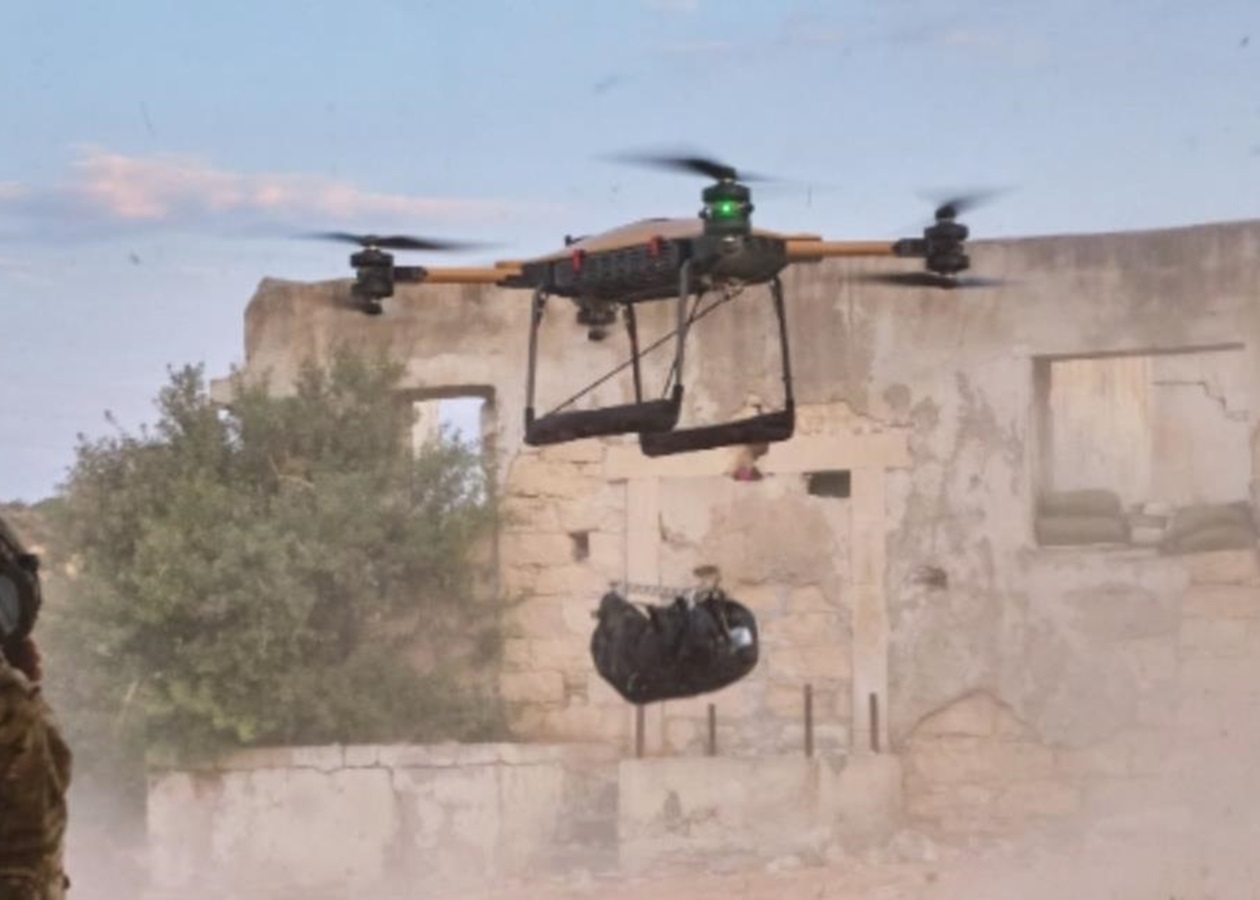
In a first for modern military history, Ukrainian forces have successfully destroyed a strategic bridge using a fleet of logistics drones, marking a significant shift in how unmanned aerial systems are employed in combat. The operation, carried out by the 426th Regiment of Unmanned Systems of the Marine Corps, targeted a bridge over the Konka estuary within the Dnipro Delta in the occupied Kherson region Obozrevatel.
The mission utilized British-made Malloy T-150 drones, which are designed as heavy-lift logistics systems rather than dedicated combat platforms. By repurposing these drones to deliver explosives to precise structural weak points, the Ukrainian military bypassed the bridge’s reinforced upper construction, which had previously resisted strikes from aviation and HIMARS rockets RBC-Ukraine.
The strategic importance of the bridge lay in its role as a primary supply route for Russian forces moving resources to islands used to launch shelling attacks against the city of Kherson and Ukrainian positions. The destruction of this crossing has significantly complicated enemy logistics in the region Obozrevatel.
Precision Engineering: The Role of the Malloy T-150
The success of the operation hinged on the specific capabilities of the Malloy T-150. Unlike smaller FPV (First Person View) drones, these heavy-lift systems allowed for the delivery of significant payloads. Over a period of 60 days, the drones conducted 30 flights, delivering a total of 1.5 tons of explosives RBC-Ukraine.
The tactical approach involved lowering 50-kilogram cumulative charges on cables directly into the vulnerable zones of the bridge supports RBC-Ukraine. This method addressed a critical engineering reality: while bridges are designed to be exceptionally strong from the top to support traffic and withstand aerial bombardment, they are relatively fragile when attacked from underneath PolitDumka.
Colonel Oleksiy Bulakhov, commander of the regiment, explained to The Telegraph that the structure was too robust for strikes from above, necessitating a “bottom-up” approach to ensure total destruction RBC-Ukraine.
Intelligence Breakthrough via Social Media
The precision of the attack was made possible by a critical intelligence lapse by Russian personnel. Ukrainian military intelligence discovered a photograph on Instagram posted by a Russian soldier, which showed the soldier positioned directly under the bridge’s supports PolitDumka.
This single image provided Ukrainian engineers with the visual data necessary to study the bridge’s underside and identify the exact structural vulnerabilities. By analyzing the photo, the military was able to map the support system and determine where the 50-kilogram charges would be most effective in causing a total collapse RBC-Ukraine.
Operational Impact and Logistics
The operation was a systematic effort that spanned two months, demonstrating a level of patience and precision rarely seen in drone warfare. By using “silent” drones that lack a significant thermal signature, the Ukrainian forces were able to maintain a level of stealth that avoided detection during the repeated delivery flights Obozrevatel.
The destruction of the bridge over the Konka estuary is expected to have a lasting impact on the Russian military’s ability to sustain operations on the islands of the Dnipro Delta. With the primary supply route severed, the ability to transport ammunition, fuel, and personnel to the islands used for shelling Kherson has been severely diminished Obozrevatel.
Key Operation Details
| Metric | Detail |
|---|---|
| Unit Involved | 426th Regiment of Unmanned Systems (Marine Corps) |
| Drone Model | Malloy T-150 (British Logistics Drone) |
| Operation Duration | 60 Days |
| Number of Sorties | 30 Flights |
| Total Explosives Delivered | 1.5 Tons |
| Payload per Charge | 50 kg Cumulative Charges |
This operation underscores a growing trend in the conflict: the adaptation of non-combat technology for specialized offensive roles. The transition of a logistics drone into a precision demolition tool represents a significant tactical evolution that may influence future military strategies regarding the destruction of hardened infrastructure.
For further updates on military developments in the Kherson region, readers are encouraged to follow official briefings from the General Staff of the Armed Forces of Ukraine.
Do you think the repurposing of logistics drones will become a standard tactic in modern warfare? Share your thoughts in the comments below.
Keep reading