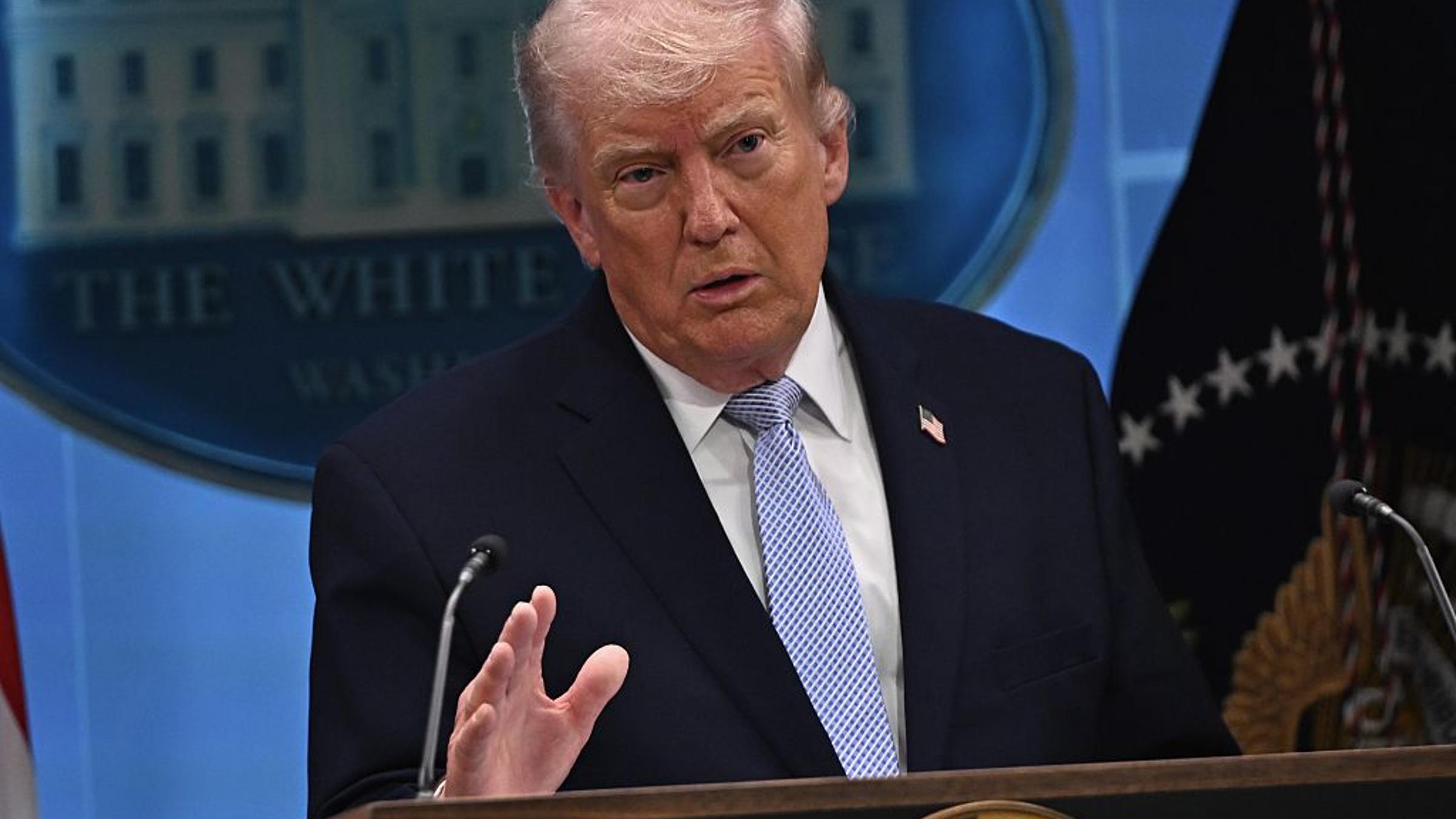
President Donald Trump has agreed to a two-week ceasefire with Iran, abruptly stepping back from threats of sweeping military strikes that he warned could devastate the region. The decision, announced just hours before a self-imposed deadline, marks a critical de-escalation in a conflict that has rattled global energy markets and pushed the Middle East to the brink of a wider war.
The pivot came just two hours before an 8 p.m. Deadline imposed by the White House. Trump had previously threatened potentially catastrophic attacks on Iranian infrastructure, suggesting that such a campaign could result in the death of a “whole civilization.” The sudden shift toward diplomacy follows intense mediation by Pakistani officials and growing pressure over the economic fallout of the conflict.
Central to the agreement is the status of the Strait of Hormuz, the strategic waterway through which roughly a fifth of the world’s oil supply passes. Since the early stages of the war, Iran has effectively choked off traffic through the passage, triggering a global energy shock that sent fuel prices soaring and destabilized financial markets. In a post on Truth Social, Trump stated he would suspend attacks for two weeks provided Iranian leaders agree to the “COMPLETE, IMMEDIATE, and SAFE OPENING” of the Strait.
The Terms of the Two-Week Ceasefire
Iran’s Supreme National Security Council confirmed its acceptance of the two-week ceasefire, stating that its “Powerful Armed Forces” would cease defensive operations if U.S. Attacks are halted. While Tehran agreed to participate in talks with the United States, the council noted that this pause does not constitute a permanent end to the hostilities. Iran has indicated that safe passage through the Strait of Hormuz will be possible for the duration of the ceasefire, subject to coordination with Iranian forces and technical limitations.
The ceasefire is the most significant pause since the conflict began on Feb. 28, when the United States and Israel launched a sweeping campaign targeting Iran’s military leadership, strategic infrastructure, and nuclear program. In response, Iran launched missile and drone strikes across the region, including targets in Israel and various Gulf Arab states, while leveraging its control over the Strait of Hormuz to exert economic pressure NBC News.
Trump indicated that the U.S. Would assist with the traffic buildup in the Strait of Hormuz, suggesting that the reopening would allow Iran to begin reconstruction and create economic opportunities. He described the current framework as a stepping stone toward a “definitive Agreement concerning Longterm PEACE,” noting that Iran has presented a “workable” 10-point proposal that resolves almost all major points of contention in principle.
Pakistani Mediation and the ‘Off-Ramp’
The breakthrough appears to have been facilitated by the government of Pakistan. President Trump credited discussions with Pakistani Prime Minister Shehbaz Sharif and Army Chief Gen. Asim Munir, who urged a delay in military action and proposed the two-week framework. Prime Minister Sharif has since invited U.S. And Iranian delegations to Islamabad this coming Friday to begin negotiations on a permanent end to the war.
Analysts suggest the decision to walk back the threat of sweeping strikes reflects a familiar pattern of maximalist diplomacy followed by recalibration. The White House has faced competing pressures, including declining public support for the war and alarm among Republican lawmakers regarding rising fuel prices and market volatility ahead of the midterm elections. By securing the reopening of the Strait, the administration can claim a strategic victory without committing to a full-scale ground or infrastructure war that experts warned could devastate civilian life for Iran’s population of roughly 85 million people.
Regional Complications: Israel and Lebanon
While Israel has expressed support for the ceasefire, the agreement contains a significant geopolitical loophole. Prime Minister Benjamin Netanyahu’s office stated that the ceasefire does not apply to Lebanon, contradicting earlier suggestions by Pakistani officials. Lebanon was drawn into the wider conflict after the Iran-aligned paramilitary group Hezbollah began launching rockets toward Israeli military compounds.
The resulting Israeli bombing campaign has been devastating; according to Lebanon’s Health Ministry, more than 1,500 people have been killed and thousands more injured in Beirut and Southern Lebanon. Reports indicate that Israel had been planning an extensive ground invasion of Lebanon, a move that remains a potential flashpoint despite the U.S.-Iran truce.
Key Conflict Timeline and Status
| Event | Date/Detail | Status |
|---|---|---|
| Conflict Commencement | Feb. 28 | Ongoing |
| Strait of Hormuz Closure | Early War Phase | Reopening (Temporary) |
| Kharg Island Strikes | Tuesday (Pre-Ceasefire) | Halted |
| Ceasefire Agreement | April 7/8 | Active (2 Weeks) |
| Islamabad Peace Talks | Scheduled Friday | Pending |
What Happens Next?
The international community now looks to the upcoming talks in Islamabad. Iran’s initial proposal for a permanent peace is reported to include the complete withdrawal of American military forces from the region, the lifting of economic sanctions, war reparations, and Iranian control of the Strait of Hormuz.
Whether this two-week window leads to a lasting treaty or serves as a temporary pause for military regrouping remains unclear. Though, the immediate relief to global oil shipping is expected to provide a brief respite for financial markets and consumers worldwide Reuters.
The next confirmed checkpoint will be the commencement of the U.S. And Iranian delegations’ talks in Islamabad on Friday.
World Today Journal will continue to monitor this developing story. We invite our readers to share their perspectives on the ceasefire in the comments below.