
President Donald Trump has sparked significant international controversy following a series of claims regarding his own foreign policy history and the military capabilities of the Islamic Republic of Iran. During a White House press conference on Monday, April 6, 2026, the U.S. President asserted that he had called for the death of Osama bin Laden prior to the September 11 terrorist attacks, a claim that has been met with scrutiny and described as historically inaccurate by critics.
The remarks came at a moment of extreme geopolitical tension, as the United States continues to navigate a volatile conflict with Iran. The briefing, intended to address Washington’s progress in the ongoing hostilities, instead shifted focus toward the President’s assertions about his past foresight and the current state of Iranian defenses. These claims coincide with a period of heightened military activity in the Middle East, following coordinated strikes that have left hundreds dead and raised questions about the legality of targeting civilian infrastructure.
As the global community monitors the fallout from the recent airstrikes and the President’s latest rhetoric, the situation remains precarious. With the U.S. Administration issuing deadlines for the reopening of critical maritime routes, the risk of further escalation looms over the region, while the accuracy of the administration’s intelligence regarding Iranian weaponry is being publicly questioned.
Contested Claims on Bin Laden and 9/11
At the center of the current diplomatic firestorm is President Trump’s insistence that he anticipated the threat posed by Al-Qaeda’s leadership long before the 2001 attacks. During the April 6 press conference, Trump claimed that he had called for the killing of Osama bin Laden before 9/11. This statement has drawn immediate criticism, with reports highlighting that the President’s claims regarding bin Laden are “confusing and historically inaccurate,” according to MassLive.
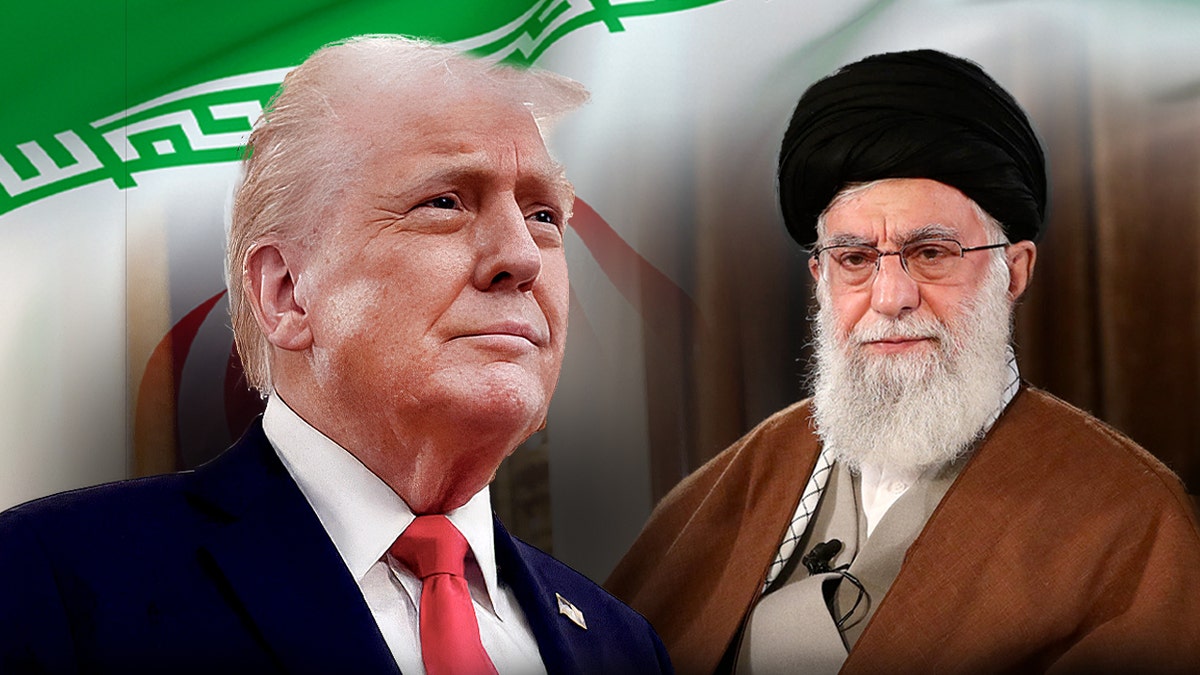
Fact-checkers have specifically examined what the President once wrote about bin Laden before the 2001 attacks to determine the validity of these claims. While the President has framed these past actions as evidence of his strategic foresight, the lack of corroborating evidence has led to a wider debate over the use of historical revisionism during active military conflicts. As noted by WRAL, these assertions were made in the James Brady Press Briefing Room while the President was simultaneously praising the rescue of two U.S. Service members and declaring a victory in the war with Iran.
Disputes Over Iranian Air Defenses
Beyond the historical claims, President Trump and Defense Secretary Pete Hegseth have repeatedly asserted that Iran is currently at its “weakest point,” claiming the country possesses no navy, no air force, and—most controversially—no anti-aircraft weaponry or radar. During the April 6 briefing, Trump stated explicitly that Iran has “no anti-aircraft” weaponry and “no communication,” according to WRAL.
These claims appear to be in direct contradiction to recent battlefield events. Reports indicate that Iran successfully shot down two U.S. Aircraft, a fact that undermines the administration’s narrative of a total absence of Iranian air-defense capabilities. This discrepancy has raised concerns among analysts regarding the intelligence being presented to the public and the potential for underestimating the adversary’s capabilities during an active conflict.
The April 7 Ultimatum and Civilian Infrastructure
The press conference also served as a platform for a stark ultimatum directed at the Iranian government. President Trump threatened to target Iran’s civilian infrastructure if a deal is not reached by April 7, 2026, specifically demanding the reopening of the Strait of Hormuz. The President warned that “every bridge in Iran will be decimated by 12 o’clock tomorrow night (and) every power plant in Iran will be out of business, burning, exploding and never to be used again,” according to WRAL.
This threat has sparked immediate legal and ethical concerns. When questioned about whether such an offensive would violate the Geneva Conventions, President Trump reportedly skirted the issue. International law generally classifies the bombing of civilian infrastructure as a war crime, adding a layer of legal complexity to the U.S. Strategy in the region.
The February 28 Strikes and the ‘Islamic 9/11’ Debate
The current tensions are rooted in a massive escalation that occurred on Saturday, February 28, 2026, when the United States and Israel launched coordinated military strikes against the Islamic Republic of Iran. These joint airstrikes targeted government, intelligence, and military facilities in major cities, including Tehran, Isfahan, and Tabriz, as part of what Israel described as a campaign to eliminate an “existential threat,” according to Times Now.
The timing of the February 28 strikes has fueled a global debate. Observers and social media users noted that the date coincided with the 11th day of the ninth month of the Islamic calendar, as well as occurring during the holy month of Ramadan. This has led to speculation and accusations that the U.S. Intentionally timed the attack to mirror “9/11” on the Islamic calendar, as reported by Times Now.
The human cost of the February 28 offensive has been severe. The Iranian Red Crescent Society reported at least 200 deaths and hundreds of injuries, with strikes affecting roughly two-thirds of the country’s provinces. One of the most devastating incidents occurred in the southern city of Minab, where a strike on an all-girls school reportedly killed at least 85 pupils and injured dozens more, according to Times Now.
Iran responded to these assaults with a massive barrage of missiles and drones targeting Israel and U.S. Military bases throughout the region, which triggered air-raid sirens in multiple Gulf states.
Timeline of Recent Escalations
| Date | Event | Key Detail |
|---|---|---|
| February 28, 2026 | Coordinated US-Israel Strikes | Targets in Tehran, Isfahan, and Tabriz; 200+ reported dead. |
| February 28, 2026 | Minab School Tragedy | Strike on all-girls school kills at least 85 pupils. |
| April 6, 2026 | White House Press Conference | Trump claims 9/11 foresight and denies Iranian air defenses. |
| April 7, 2026 | Proposed Deadline | Ultimatum for reopening the Strait of Hormuz to avoid infrastructure strikes. |
The combination of disputed historical claims, contradictory intelligence regarding air defenses, and the threat of targeting civilian power plants has placed the U.S. Administration under intense international scrutiny. As the deadline for the Strait of Hormuz deal passes, the world awaits whether the administration will follow through on its threats or seek a diplomatic resolution to avoid further civilian casualties.
The next critical checkpoint will be the official confirmation of whether a deal has been reached regarding the Strait of Hormuz and the status of Iranian civilian infrastructure following the April 7 deadline.
World Today Journal encourages readers to share this report and join the discussion in the comments below regarding the implications of these military threats.
Worth a look
- Apple CEO Transition: John Ternus Faces Supply Constraints & AI Challenges
- Côte d’Ivoire Selects 30 Startups and SMEs Under Startup Act to Build Digital Champions
- BP Q2 Profit Hits $5.7 Billion Amid Trump Criticism of Big Oil Windfalls (time.news)
- Trump Administration Begins Systematic Appropriation of Japanese Manga (newsdirectory3.com)