
For decades, the medical community has viewed Parkinson’s disease primarily through the lens of genetics and aging. However, a persistent question remains: why do some individuals develop this debilitating neurodegenerative condition even as others, with similar genetic predispositions and lifestyles, remain healthy? The answer may not lie solely within our DNA, but in the “exposome”—the totality of environmental exposures a person encounters from conception throughout their entire life.
Recent collaborative efforts in Germany are now pivoting toward this holistic view of health. A new research initiative involving the University Hospital Bonn (UKB), the University of Bonn and the University of Augsburg is investigating how the intersection of environmental triggers, the gut microbiome, and metabolic products may contribute to the onset of Parkinson’s disease. By analyzing blood and the composition of the gut, researchers hope to uncover the specific external catalysts that trigger the disease in vulnerable individuals.
This shift toward environmental analysis marks a critical evolution in neurology. Rather than focusing only on the brain, scientists are increasingly looking at the “gut-brain axis,” exploring how pollutants and particles entering the digestive tract can send signals—or toxins—that eventually impact the central nervous system. As we encounter an increasingly synthetic environment, the role of anthropogenic pollutants, including microplastics, has moved to the forefront of this investigation.
The Exposome: Mapping the Lifetime of Environmental Exposure
The core of the current research conducted by the University of Bonn and the University of Augsburg is the study of the exposome. Unlike the genome, which is relatively static, the exposome is dynamic and cumulative. It encompasses everything from the air we breathe and the water we drink to the chemicals in our food and the pollutants in our urban environments. A joint project between Bonn and Augsburg is specifically examining how these cumulative factors influence the risk of developing Parkinson’s.
In Augsburg, researchers are employing high-precision measurements to analyze blood samples and metabolic products. The goal is to identify biomarkers—chemical signatures—that indicate a high load of environmental toxins or a disrupted metabolic state. By comparing these markers in patients with Parkinson’s against healthy control groups, the team aims to determine which specific environmental stressors are most strongly associated with the disease’s progression.
This approach acknowledges that Parkinson’s is likely not caused by a single “smoking gun” but by a combination of genetic susceptibility and a series of environmental “hits.” For instance, a person might have a genetic predisposition that makes their nervous system more sensitive, but the disease only manifests after years of exposure to specific pollutants or a chronic imbalance in their internal microbiome.
The Gut-Brain Axis and the Impact of Microplastics
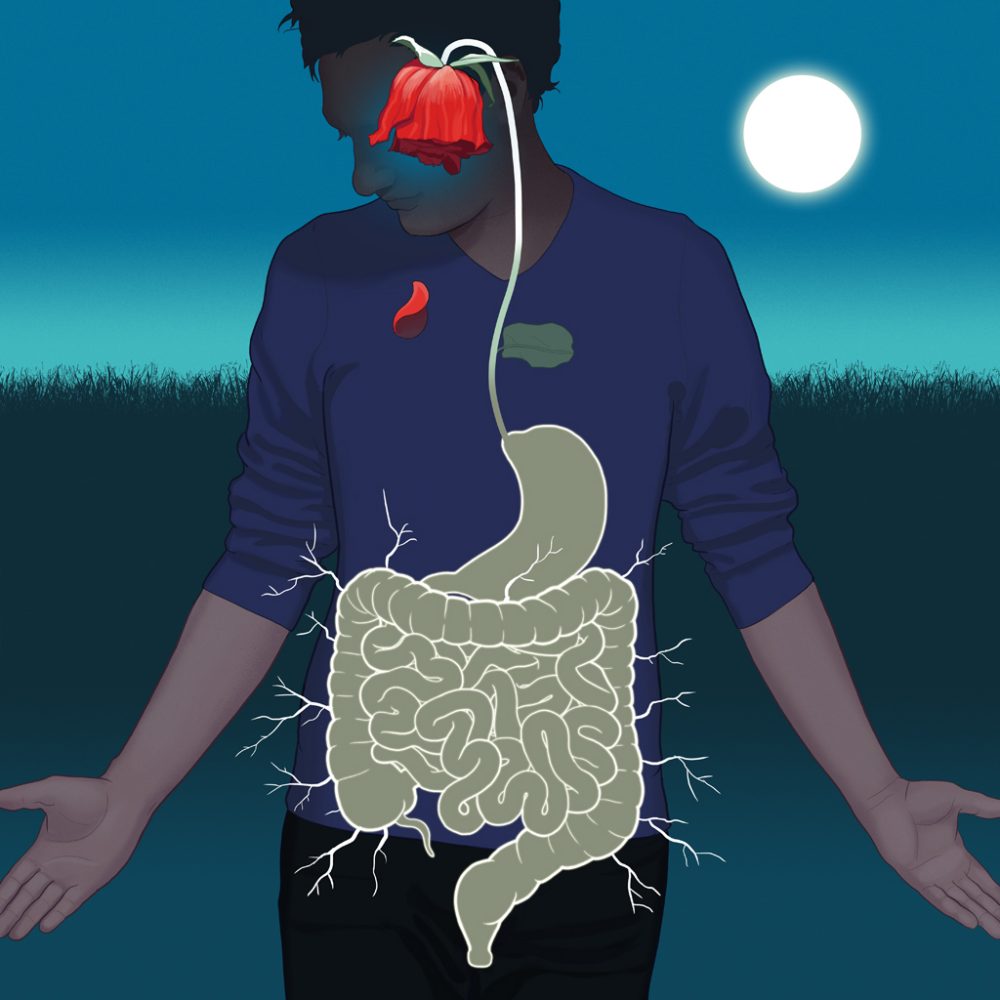
One of the most intriguing angles of this research is the focus on the gut microbiome. The gut is often referred to as the “second brain” given that of its vast network of neurons and its constant communication with the brain via the vagus nerve. When the balance of bacteria in the gut—the microbiome—is disrupted, it can lead to systemic inflammation that may eventually reach the brain.
Adding to this complexity is the pervasive presence of microplastics. These tiny plastic particles are now found globally in air, water, and soil, and they inevitably enter the human body through cosmetics, food packaging, and drinking water. Research indicates that these particles are not merely passing through the digestive tract; they are detectable in the blood, lungs, brain, and gut.
The scale of exposure is significant. It’s estimated that the average person ingests approximately five grams of microplastics per week, a quantity roughly equivalent to the weight of a credit card according to findings discussed via the MicroOne project at the Medical University of Graz. This constant influx of synthetic material may be fundamentally altering our internal chemistry.
How Microplastics Alter Bacterial Metabolism
The MicroOne project, led by ecologist Christian Pacher-Deutsch, has provided evidence that microplastics—specifically types like polyethylene terephthalate (PET), polypropylene, and polystyrene—can significantly shift the composition and function of the human gut microbiome. In laboratory bioreactors simulating human microbiomes, researchers found that even concentrations of microplastics consistent with typical dietary intake led to significant changes in bacterial metabolism.
These changes include a shift in the metabolic products produced by gut bacteria and a trend toward a more acidic pH value within the gut environment. Most concerningly, the resulting microbiome patterns mirror those observed in patients with other serious conditions, such as colorectal cancer and depression. While the direct link to Parkinson’s is still being actively researched by the Bonn and Augsburg teams, the evidence that microplastics can rewrite the “chemical language” of the gut provides a plausible mechanism for how environmental pollutants could trigger neurodegenerative processes.
the danger may not only lie in the plastic particles themselves but in the additives they carry. Plasticizers and other chemical stabilizers can dissolve in the gut, releasing substances into the bloodstream whose long-term health consequences remain largely unknown.
What This Means for Public Health and Future Prevention
The transition from treating Parkinson’s as an inevitable consequence of aging to treating it as a potentially preventable environmental condition is a paradigm shift. If researchers can pinpoint the specific components of the exposome that trigger the disease, the focus of healthcare can shift toward prevention and early intervention.
For the general public, this research underscores the importance of reducing exposure to known environmental pollutants. While it is nearly impossible to avoid microplastics entirely, understanding their impact on the microbiome highlights the value of maintaining gut health through diet and lifestyle, which may provide a layer of resilience against environmental stressors.
From a policy perspective, this data provides a scientific basis for stricter regulations on plastic additives and environmental pollutants. If the “credit card’s weight” of plastic we ingest weekly is contributing to a rise in neurodegenerative diseases, the economic and social cost of plastic pollution extends far beyond litter in the oceans—it is a matter of internal human health.
Key Takeaways on Environmental Parkinson’s Research
- The Exposome Approach: Researchers are studying the sum of all lifetime environmental exposures to understand why some people develop Parkinson’s and others do not.
- Gut-Brain Connection: The University of Bonn and University of Augsburg are investigating how the gut microbiome and metabolic products in the blood correlate with the disease.
- Microplastic Influence: Studies from the Medical University of Graz indicate that microplastics (PET, polystyrene, polypropylene) alter bacterial metabolism and lower gut pH.
- Exposure Levels: Humans ingest an average of 5 grams of microplastics weekly, which can be detected in vital organs, including the brain and lungs.
- Preventative Potential: Identifying specific environmental triggers could lead to new prevention strategies and a better understanding of neurodegenerative risks.
The Path Forward
The investigation into the exposome is a long-term endeavor. The researchers in Bonn and Augsburg are continuing to collect and analyze data to move from observed correlations to proven causations. By integrating blood analysis, microbiome sequencing, and environmental tracking, they aim to create a comprehensive map of the triggers that lead to Parkinson’s.
As we wait for further results from these institutional collaborations, the current findings serve as a stark reminder of the intimacy between our external environment and our internal biological health. The health of the brain, it seems, begins long before a signal reaches the skull—it begins in the air we breathe and the integrity of the microbiome in our gut.
The next phase of this research will likely involve larger patient cohorts to validate the biomarkers identified in the blood and gut. We will continue to monitor these developments as the University of Bonn and University of Augsburg release further findings on the environmental drivers of neurodegeneration.
Do you believe environmental regulations should be tightened based on the link between pollutants and neurodegenerative health? Share your thoughts in the comments below or share this article to start a conversation.
Keep reading