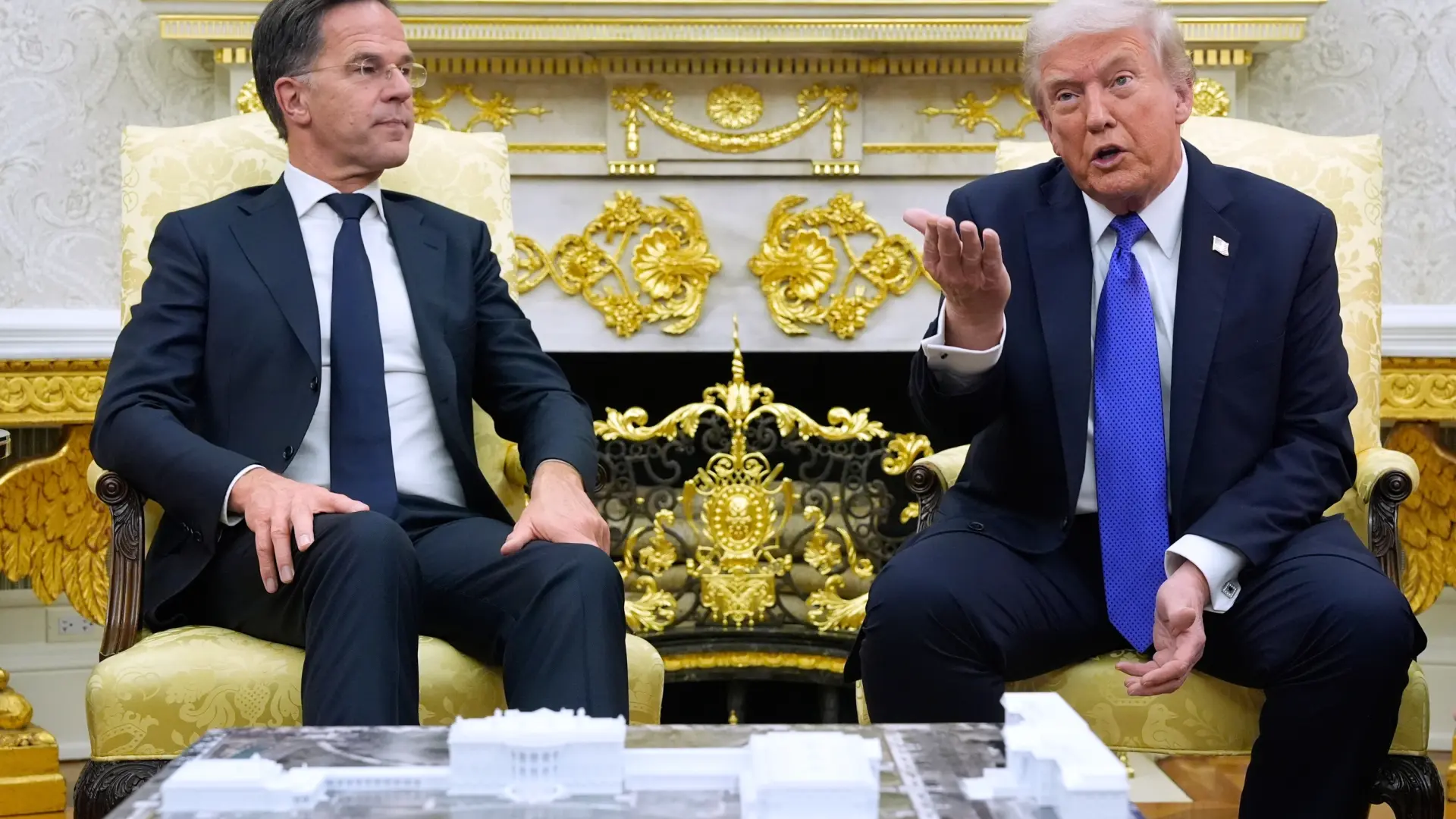
President Donald Trump met with NATO Secretary-General Mark Rutte in Washington on Wednesday, April 8, 2026, for a high-stakes discussion that centered on the future of the United States’ relationship with the military alliance. The meeting took place amid intensifying rhetoric from the White House regarding the lack of support from allied nations in conflicts involving Iran.
The discussions, which were held behind closed doors, focused on critical geopolitical flashpoints, including the reopening of the Strait of Hormuz according to reports from The Washington Post. This meeting comes at a volatile moment for the North Atlantic Treaty Organization, as President Trump continues to muse about the possibility of the U.S. Pulling out of the alliance entirely.
White House press secretary Karoline Leavitt confirmed during her weekly briefing that the potential withdrawal of the United States from the alliance was a primary topic of conversation. Leavitt stated that the president had already addressed the matter and expected to discuss it further with Secretary-General Rutte during the encounter.
U.S. Grievances and the “Paper Tiger” Rhetoric
The tension between Washington and its NATO partners has escalated over the last several weeks. President Trump has publicly criticized various alliance members for what he perceives as a failure to provide adequate operational support during the conflict with Iran. Specific grievances include the closure of allied airspace and the denial of access to military bases for U.S. Operations targeting Iran.
the administration has expressed frustration over the reluctance of member states to deploy naval vessels to the Strait of Hormuz to secure global maritime traffic. This lack of cooperation has led the president to describe some NATO members as “cowards” and to characterize the alliance itself as a “paper tiger.”
These criticisms underscore a growing rift regarding the distribution of security burdens and the expectations of mutual defense. The White House has signaled that the current arrangement is insufficient, with the administration suggesting that the U.S. May no longer see the value in maintaining its membership if allies do not increase their contributions to regional security efforts.
The Strait of Hormuz and the Iran Ceasefire
The timing of the meeting is particularly significant, occurring just one day after Washington and Tehran reached an agreement for a two-week ceasefire. A central component of this agreement is the reopening of the Strait of Hormuz, a vital maritime corridor for the export of global hydrocarbons.
The security of this waterway has been a primary point of contention. Whereas the ceasefire provides a temporary reprieve, the U.S. Administration remains critical of NATO’s perceived hesitation to secure the passage. The closed-door session between Trump and Rutte was expected to address how to maintain the openness of the Strait and whether the alliance can provide a more robust security guarantee moving forward as reported by The Washington Post.
Secretary of State Marco Rubio was likewise involved in the day’s diplomatic activities, appearing for a photo opportunity with Secretary-General Rutte at the State Department on Wednesday per AP News.
Key Takeaways from the Diplomatic Encounter
- Potential Withdrawal: The White House explicitly confirmed that the possibility of the U.S. Leaving NATO was on the agenda for discussion.
- Iran Conflict: The U.S. Is demanding more active support from allies, specifically regarding airspace and base access for operations against Iran.
- Maritime Security: The reopening of the Strait of Hormuz following a two-week ceasefire with Tehran is a critical focal point for current U.S. Foreign policy.
- Strained Relations: President Trump has labeled the alliance a “paper tiger” and criticized member states for their lack of resolve.
What Happens Next for the Alliance
Despite the high-level meeting, neither the White House nor NATO has released detailed minutes or a formal joint communiqué outlining the specific outcomes of the two-hour session. The lack of immediate, concrete agreements suggests that the fundamental disagreements regarding the alliance’s utility and the burden-sharing of allies remain unresolved.
The international community now looks toward the expiration of the two-week ceasefire with Iran to see if the diplomatic efforts in Washington translate into a stable security environment in the Persian Gulf. Whether the U.S. Continues to move toward a formal exit from NATO or reaches a new understanding with Secretary-General Rutte will depend on the willingness of European and North American allies to meet the administration’s demands for increased military cooperation.
Official updates regarding the status of the U.S.-NATO relationship are expected as the ceasefire window concludes and the administration reviews the level of allied participation in maritime security.
World Today Journal encourages readers to share this report and leave their comments below on how a potential U.S. Exit from NATO would impact global security.
Worth a look