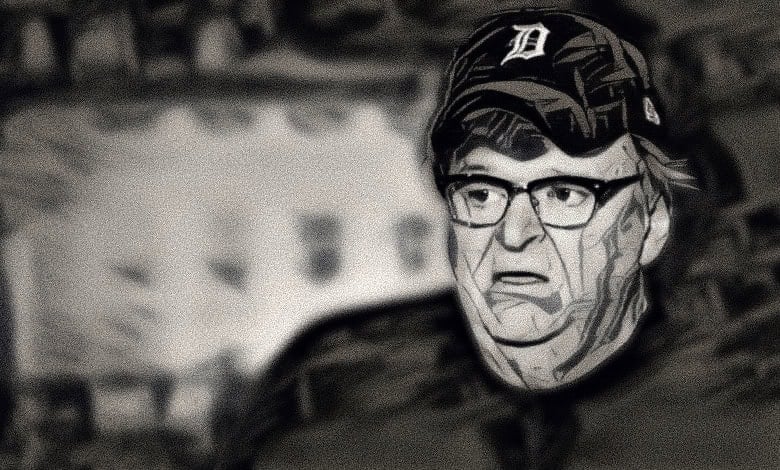
Documentary filmmaker Michael Moore has sparked significant controversy following a series of comments in which he praised Iran and criticized the United States’ role in international conflicts. The filmmaker, once a central figure in Hollywood’s progressive circle, used his Substack platform to argue that the U.S. Is “the bad guys” in its dealings with the Middle Eastern nation.
Moore’s remarks arrive at a time when his influence in the film industry has noticeably waned. He has not directed a feature film since 2018’s “Fahrenheit 11/9,” and his box office performance has seen a steady decline since the massive success of his 2004 breakout hit, “Fahrenheit 9/11.”
The latest discourse surrounding Moore suggests a shift in his rhetorical strategy, with some observers noting that his current approach mirrors the provocative style of right-wing commentators. By hailing Iran as the cradle of one of the world’s greatest civilizations, Moore has drawn criticism for omitting the current regime’s record on human rights and its history of state-sponsored violence.
A Shift in Rhetoric: Michael Moore Praises Iran, Trashes U.S.
In a recent Substack post, Moore delivered a scathing critique of American foreign policy, claiming that previous administrations—and specifically mentioning Donald Trump—have “ripped off the mask” to reveal the true nature of the U.S. Government. He explicitly stated, “We’re the bad guys!” regarding the Iranian war.
Moore’s praise for Iran focused heavily on the region’s ancient history and intellectual contributions. He credited the Persians with writing the world’s first declaration of human rights and establishing a multicultural empire that treated conquered people with dignity. He further noted that the region provided the world with algebra and medicine, and even jokingly referenced the theme song to “Game of Thrones.”
Despite acknowledging “harsh government crackdowns and censorship today,” Moore maintained that Iran continues to produce some of the world’s greatest filmmakers. He attributed the ongoing tension to the fact that “America has been meddling with and attacking Iran since 1953.”
Controversies and Omissions in the Narrative
Critics have pointed out that Moore’s historical praise ignores the brutal realities of the modern Iranian regime. Reports have highlighted the government’s systemic violence against its own citizens, including the slaughter of protesters. Some reports suggest a death toll as high as 30,000 people, though this figure is noted as potentially conservative.
Moore’s commentary did not address the regime’s treatment of the LGBTQ+ community, where engaging in same-sex relationships remains punishable by death. By describing these atrocities as merely “harsh government crackdowns,” Moore has been accused of cherry-picking history to fit a specific political narrative.
This trend of provocative political commentary is not limited to Moore. Other figures in the progressive sphere, such as Hasan Piker and Jennifer Welch, have also been noted for their candid and often polarizing views, which have garnered attention from high-profile journalists and politicians alike.
Katie Couric to Jennifer Welch and Angie Sullivan on their “I’ve Had It“ podcast: “So proud of what you’ve built here and what you’re doing and using your voices and talking about important things and raising a little h*ll… I approve this message.”pic.twitter.com/Meg3Romp3H
— Thomas Sowell Quotes (@ThomasSowell) December 17, 2025
The intersection of media and political litmus tests has become increasingly complex, as seen in the reactions to figures like Piker, whose appearances with political figures such as Ro Khanna have drawn sharp criticism from some quarters.
Concha slams Ro Khanna’s ‘pathetic’ defense of appearance with anti-Israel commentator Hasan Piker https://t.co/cj2WXMZPNx
— Todd Piro (@ToddPiro) April 6, 2026
The Diminishing Influence of the ‘Progressive Darling’
For years, Michael Moore was the preeminent voice of far-left documentary filmmaking in Hollywood. However, the landscape of political commentary has shifted toward digital platforms and podcasters, leaving traditional documentary filmmakers in a more precarious position. The decline in Moore’s box office receipts suggests that his brand of political activism may no longer resonate with the same breadth of audience that supported his early 2000s work.

In the current entertainment climate, such controversial commentary regarding foreign regimes might typically hinder a creator’s ability to get new projects greenlit. However, for a filmmaker whose career has been built on provocation and counter-narratives, some suggest that these stances may serve as a way to maintain visibility in an increasingly crowded media market.
As the debate over the U.S.’s role in the Middle East continues, Moore’s decision to side with a regime accused of totalitarianism and human rights abuses ensures that he remains a point of contention in the cultural divide.
We will continue to monitor updates regarding Michael Moore’s future projects and any official responses to his recent statements. We invite our readers to share their perspectives on the intersection of art, politics, and foreign policy in the comments below.
Worth a look