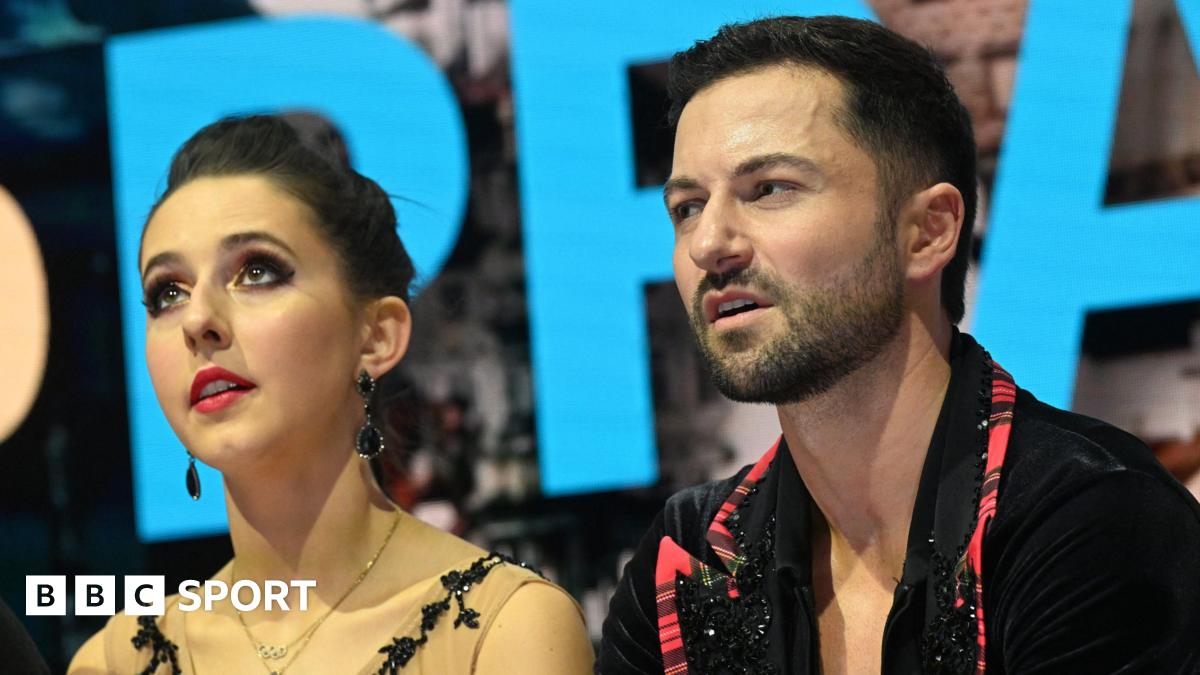
British Ice Skating has launched a formal challenge against the International Skating Union (ISU) after ice dancers Lilah Fear and Lewis Gibson were denied a bronze medal at the World Figure Skating Championships in Prague. The pair, who were in third place following the rhythm dance, finished fourth overall after a controversial two-point deduction for an “illegal element” during their free dance performance.
The penalty proved decisive in the final standings, leaving Fear and Gibson just 0.22 of a point behind the American duo of Emilea Zingas and Vadym Kolesnik. British Ice Skating (BIS) has described the deduction as “incorrect,” arguing that the judges’ decision did not accurately reflect the performance delivered on the ice according to reports from the BBC.
The dispute centers on the technical execution of an overhead lift. Under ISU Rule 704, a penalty is triggered if the point of contact between the lifting partner’s arms and the lifted partner is sustained with fully extended arms higher than the lifting partner’s head. However, the rule provides an exception if only one arm is fully extended above the head, provided it serves as the supporting arm.
While the ISU confirmed receipt of the protest submission, subsequent reports indicate that the governing body has maintained that the original score stands and cannot be appealed as reported by Reuters.
The Technical Dispute Over ISU Rule 704
The core of the appeal rests on a precise interpretation of the height and extension of Lewis Gibson’s arms during a specific lift. In figure skating, technical deductions can drastically shift the podium, and a two-point penalty is significant given the narrow margins at the world championship level.
British Ice Skating has emphasized that the principles of fairness, clarity, and transparency were not upheld in this instance. In an official statement, the organization asserted: “We believe this deduction was applied incorrectly and does not accurately reflect the performance delivered on the ice.” The organization further stated that all athletes deserve to be judged with “consistency, integrity, and transparency at the highest level of competition.”
The tension highlights the often-contentious nature of technical judging in ice dance, where the difference between a legal element and an illegal one can come down to a few inches of arm extension or the specific role of a supporting limb.
Impact on the World Championship Standings
The championships in Prague saw a highly competitive field, with the gold medal going to French Olympic champions Laurence Fournier Beaudry and Guillaume Cizeron, who finished with a score of 230. For Fear and Gibson, the deduction transformed a likely podium finish into a fourth-place result.
The narrow margin of 0.22 points between the British pair and the Americans, Zingas and Kolesnik, underscores how critical the two-point penalty was. Without the deduction, Fear and Gibson would have comfortably secured the bronze medal.
Key Event Summary
| Rank | Athletes | Nation | Notes |
|---|---|---|---|
| 1 | Laurence Fournier Beaudry & Guillaume Cizeron | France | Gold Medalists (Score: 230) |
| 3 | Emilea Zingas & Vadym Kolesnik | USA | Bronze Medalists |
| 4 | Lilah Fear & Lewis Gibson | UK | Deducted 2 points for illegal element |
What Happens Next for British Ice Skating
Despite the formal protest and the strong stance taken by British Ice Skating, the International Skating Union’s initial response suggests a rigid adherence to the judges’ on-ice decision. The ISU has indicated that the score stands, effectively closing the door on the appeal for the bronze medal.

This development leaves the British pair in fourth place, though the public challenge by their national governing body serves as a significant statement regarding the perceived lack of consistency in the application of Rule 704. The case may serve as a point of reference for future interpretations of lift height and arm extension in international competition.
For those following the official proceedings, updates regarding the ISU’s final ruling and any further communications from British Ice Skating will be the primary checkpoints for this story.
Do you believe technical rules in figure skating are too subjective? Share your thoughts in the comments below and share this article with other skating fans.
Keep reading