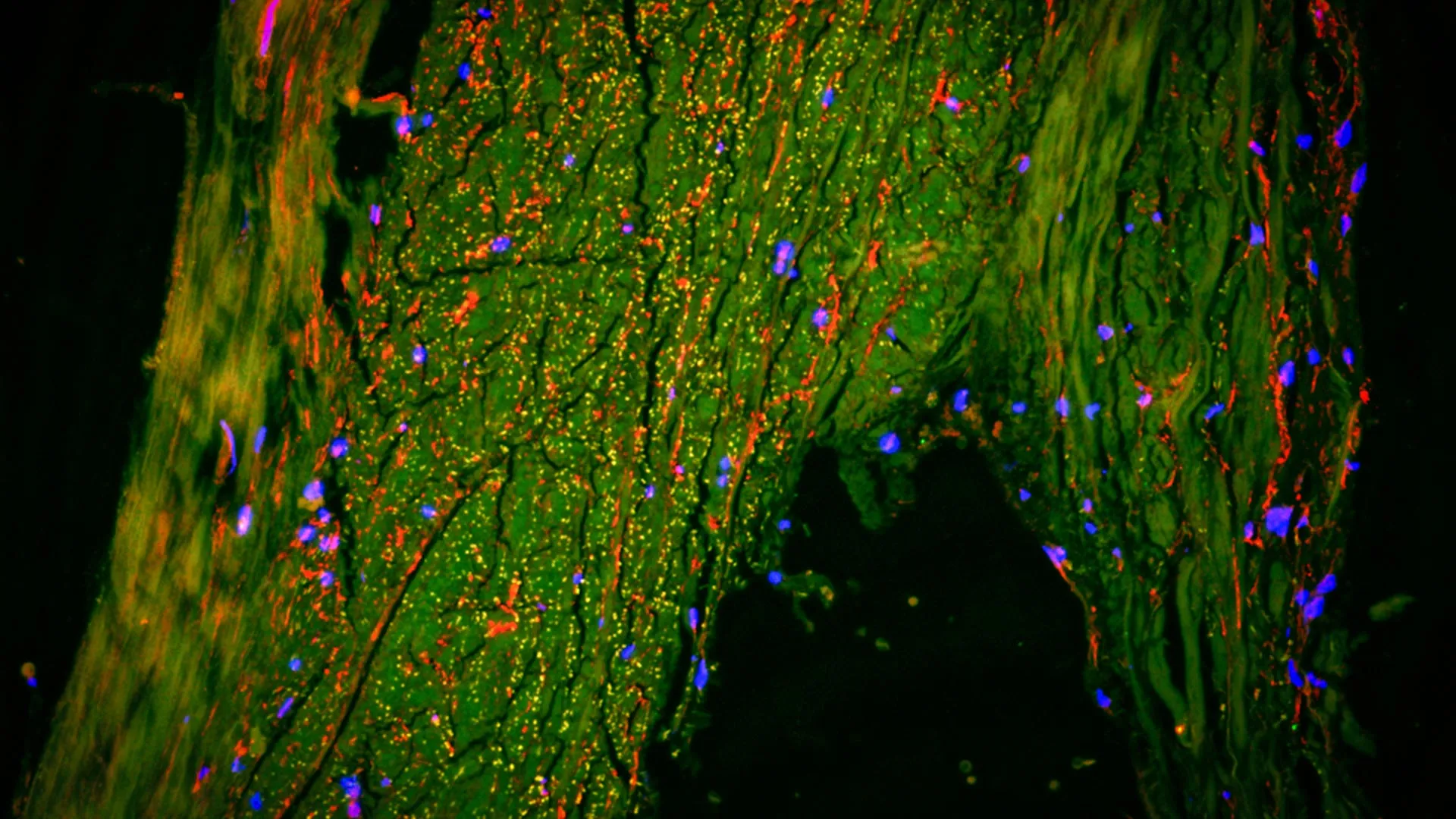
Medical science may have just unlocked a critical piece of the puzzle in how the human brain maintains its health and fights off decay. Researchers have identified a hidden “drain” inside the brain—a waste-removal pathway that could fundamentally change the way we approach neurodegenerative conditions and brain aging.
The discovery centers on a previously unknown drainage hub in humans. Using advanced imaging, scientists found that fluid moves along the middle meningeal artery in a slow, lymphatic-like pattern. This process is distinct from the way blood flows, acting instead as a specialized system to clear out fluids and cellular waste from the brain’s environment.
This breakthrough, published in iScience by researchers at the Medical University of South Carolina (MUSC), provides the first direct evidence in humans of this specific control point. The findings suggest that the middle meningeal artery (MMA) plays a key role in the brain’s lymphatic system, which is essential for removing the “trash” that accumulates in neural tissues.
The Role of the Middle Meningeal Artery in Waste Removal
For years, scientists have sought to understand the complexities of the brain’s lymphatic system. While the body has a well-defined network of vessels to remove waste, the brain’s version has remained elusive and challenging to image. The modern study reveals that the middle meningeal artery serves as a critical conduit for this process.
The research team, led by Onder Albayram, Ph.D., utilized cutting-edge real-time MRI tools. These specific imaging techniques were developed through a collaboration with NASA, originally intended to monitor how spaceflight affects the movement of fluids within the brain. By applying this technology to human subjects on Earth, the team was able to visualize the slow, lymphatic-like flow of fluid along the MMA.
This drainage network is located within the dura, the brain’s outer protective layer. The presence of this hub confirms that the brain has a more complex waste-removal infrastructure than previously understood, allowing for the efficient transport of metabolic byproducts away from the central nervous system.
Implications for Alzheimer’s and Brain Disease
The ability to visualize and understand this “drain” has immediate implications for the study of Alzheimer’s disease and other forms of dementia. Neurodegenerative diseases are often characterized by the buildup of toxic proteins and waste products that the brain fails to clear, leading to cellular damage and cognitive decline.
By identifying the middle meningeal artery as a key control point in the drainage system, scientists may now be able to investigate why this system fails in patients with Alzheimer’s. If the “drain” becomes clogged or inefficient, it could accelerate the accumulation of waste, contributing to the progression of the disease. This discovery opens the door to new therapeutic strategies aimed at enhancing the brain’s natural waste-clearance mechanisms.
The importance of neuroimaging in this field cannot be overstated. As noted in recent clinical reviews, magnetic resonance imaging (MRI) is already a pivotal tool for understanding the pathophysiology of dementia. While structural and functional MRI help clinicians identify early brain changes and monitor disease progression, the discovery of this specific waste-removal pathway adds a new dimension to how MRI can be used to assess brain health and monitor responses to therapies.
Why This Discovery Matters
- Brain Aging: Understanding how waste is removed may help scientists slow the biological processes of brain aging.
- Traumatic Brain Injury: The discovery could lead to better treatments for brain injuries by improving how the brain clears debris after a trauma.
- Targeted Therapy: Identifying the MMA as a drainage hub provides a potential target for drugs designed to clear amyloid plaques or other toxins associated with Alzheimer’s.
The Evolution of Brain Imaging Technology
The discovery of the brain’s hidden drain was made possible by the convergence of two different fields: aerospace medicine and neurology. The real-time MRI tools provided by NASA allowed researchers to see fluid movement that is too slow for standard MRI scans to capture. This level of precision is what allowed Dr. Albayram and his team to differentiate between the rapid flow of blood and the slow, lymphatic-like movement of waste fluid.
This advancement highlights a broader trend in medical innovation where “cross-pollination” between agencies—such as NASA and academic medical centers—leads to breakthroughs in human health. The ability to observe these processes in real-time in living humans, rather than relying solely on animal models or post-mortem tissue, is a significant leap forward for clinical neuroscience.
Current radiology reports emphasize that while imaging alone cannot provide a definitive diagnosis for dementia, it is fundamental for managing the disease in its early stages when clinical manifestations are minimal. The addition of data regarding the brain’s drainage efficiency could potentially provide a new biomarker for early detection.
Key Takeaways
- New Discovery: Researchers found a hidden waste-removal “drain” in the human brain.
- Key Structure: The middle meningeal artery (MMA) acts as a critical control point for clearing fluids and waste.
- Technology Used: Advanced real-time MRI tools, developed via a NASA collaboration, were used to catch the fluid flow in action.
- Medical Potential: This finding could transform treatments for Alzheimer’s, brain injuries, and age-related cognitive decline.
- Mechanism: The fluid flows in a slow, lymphatic-like pattern, which is distinct from the flow of blood.
As researchers continue to analyze the data from the MUSC study, the next step will likely involve determining if the efficiency of this drainage hub varies between healthy individuals and those with neurodegenerative diseases. This could lead to the development of new diagnostic tools to assess “brain drainage” as a measure of neurological health.
We encourage our readers to share this story and leave their thoughts in the comments section below regarding the future of medical imaging and brain health.