
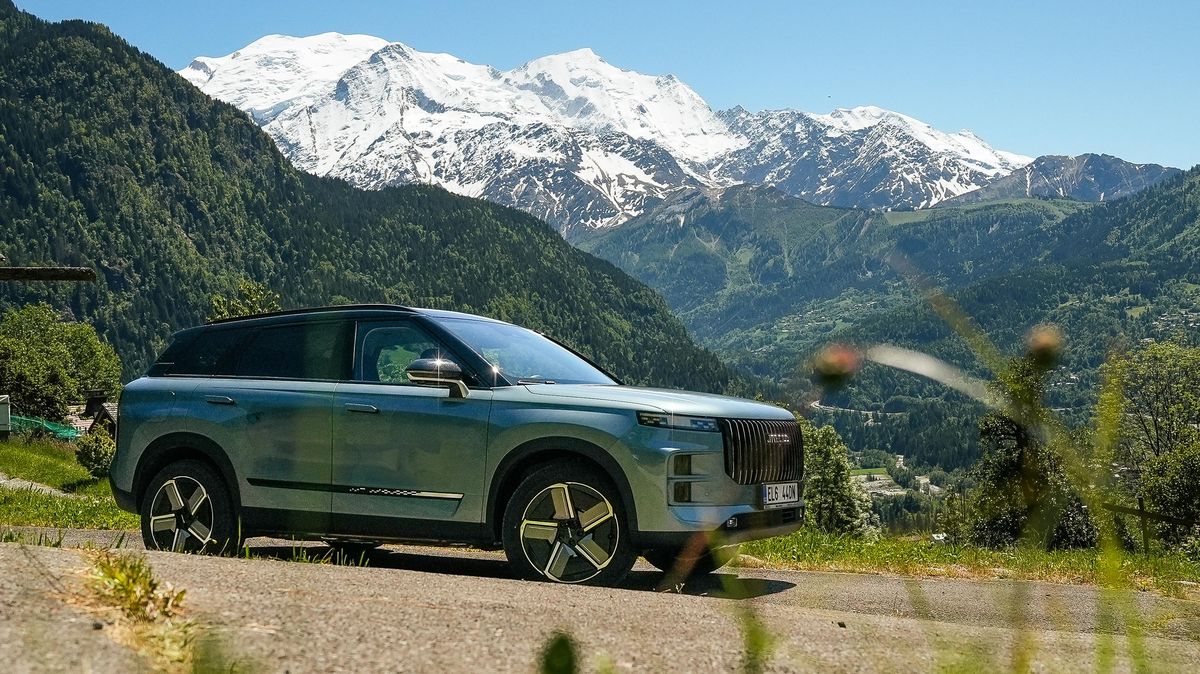
The landscape of the British automotive market has shifted dramatically, signaling a recent era of global competition. In a move that has sent ripples through the industry, a brand that has existed for only three years has managed to climb to the very top of the sales charts in one of the world’s most competitive automotive environments.
The Jaecoo 7, a model from the Chinese automotive sector, became the best-selling car in Great Britain in March 2026, recording 10,064 units sold according to industry data. This achievement marks a pivotal moment for Chinese car sales in the UK, demonstrating that new entrants can achieve market dominance in a remarkably short timeframe.
This represents not an isolated incident of a single model finding success, but rather the result of a coordinated and aggressive expansion by Chinese manufacturers. While the UK has historically been dominated by European and Japanese brands, a combination of strategic pricing, advanced technology, and a vacuum in domestic manufacturing has opened the door for a surge of vehicles from the East.
For those of us tracking technology and software integration in consumer electronics, this shift is particularly interesting. The rapid adoption of these vehicles suggests that the “tech-first” approach of Chinese automakers—prioritizing software-defined vehicle architectures and integrated digital ecosystems—is resonating with Western consumers.
The Rise of Jaecoo and the Chinese Surge
The ascent of the Jaecoo 7 is a testament to the speed of modern market penetration. The brand, backed by the Chery group, only began selling in the UK last year. Despite its late entry, it performed strongly throughout 2025, ending the year in 13th place overall with 26,048 units sold as reported by Auto.cz.
However, Jaecoo is not the only player redefining the charts. The broader trend shows that Chinese brands are securing a firm foothold across the United Kingdom. By the end of 2025, vehicles imported from China accounted for approximately 10% of all new car sales in the country according to data cited by Novinky.cz. In total, Chinese brands sold more than 200,000 new vehicles in the UK during 2025 per analyst Matthias Schmidt.
The distribution of this success is spread across several key brands, though some lead more than others:
- MG: Continues to lead the pack with a significant margin, selling over 70,000 vehicles in 2025 via Novinky.cz. MG previously set the stage for this trend in January 2023, when the MG HS became the first Chinese car to hit the top of the UK charts with 3,481 units according to Auto.cz.
- BYD: Showed explosive growth, increasing sales from fewer than 9,000 units in 2024 to more than 40,000 in 2025 per Novinky.cz.
- Jaecoo and Omoda: Jaecoo sold over 20,000 vehicles in 2025, while Omoda reached a similar figure via Novinky.cz.
- Others: Chery, Polestar, and Leapmotor have also gained traction, albeit on a smaller scale per Novinky.cz.
Why the UK Market is Particularly Vulnerable
The rapid growth of Chinese car sales in the UK can be attributed to a specific set of economic and political circumstances. While the European Union has taken steps to protect its domestic industries, the UK’s position outside the EU has created a different dynamic.
One of the most significant factors is the implementation of high tariffs on electric vehicles (EVs) manufactured in China, introduced by EU legislators late last year to protect home-grown manufacturers according to Novinky.cz. However, these tariffs specifically target EVs. They do not apply to hybrid or internal combustion engine (ICE) models, leading to a sharp increase in the sales of these non-electric Chinese alternatives via Novinky.cz.
the UK market suffers from a lack of large-scale domestic manufacturers. Without a strong national champion to compete on price and volume, the market has become “wide open” for international brands that can offer high-specification vehicles at lower price points as noted by Novinky.cz.
The Strategic Impact on the Global Auto Industry
The success of the Jaecoo 7 and its peers is more than just a sales victory; it is a signal of a shifting power balance in automotive technology. For years, the industry standard was set by German and Japanese engineering. Now, the value proposition is shifting toward “smart” vehicles—cars that act more like smartphones on wheels than traditional mechanical machines.

The ability of brands like BYD and Chery to scale production and enter a sophisticated market like the UK so quickly suggests a level of supply chain efficiency that is difficult for legacy automakers to match. By integrating battery production and software development in-house, these companies can iterate on their products faster and offer more features—such as advanced driver-assistance systems (ADAS) and oversized infotainment screens—as standard equipment rather than expensive add-ons.
This trend is not limited to the UK. While growth is more gradual in some highly developed markets, Chinese brands are already dominating in regions such as Israel and showing significant strength in Albania per Auto.cz.
Key Market Takeaways
- Rapid Penetration: The Jaecoo 7 reached the #1 spot in the UK in March 2026 despite the brand being only three years old.
- Diversified Portfolio: Growth is being driven not just by EVs, but by hybrid and ICE models that bypass EU tariffs.
- Market Vacuum: The absence of major UK-based manufacturers has accelerated the adoption of Chinese imports.
- Scale of Impact: Over 200,000 Chinese vehicles were sold in the UK in 2025, representing roughly 10% of the new car market.
What Happens Next?
As we move further into 2026, the primary question is how legacy European manufacturers will respond. We are likely to see a wave of “defensive” pricing and a rush to accelerate software updates in existing models to match the feature sets offered by Chinese competitors.
the industry will be watching to see if the UK government follows the EU’s lead in implementing its own tariffs on Chinese EVs, or if it continues to maintain an open-door policy to keep vehicle prices low for consumers. For now, the momentum clearly favors the newcomers.
The next critical checkpoint for the industry will be the release of the consolidated Q2 2026 sales data, which will reveal if the Jaecoo 7’s March peak was a seasonal anomaly or the start of a permanent shift in British consumer preference.
Do you think the rise of Chinese automotive brands is a positive move for consumer choice, or a risk to industrial stability? Share your thoughts in the comments below.