
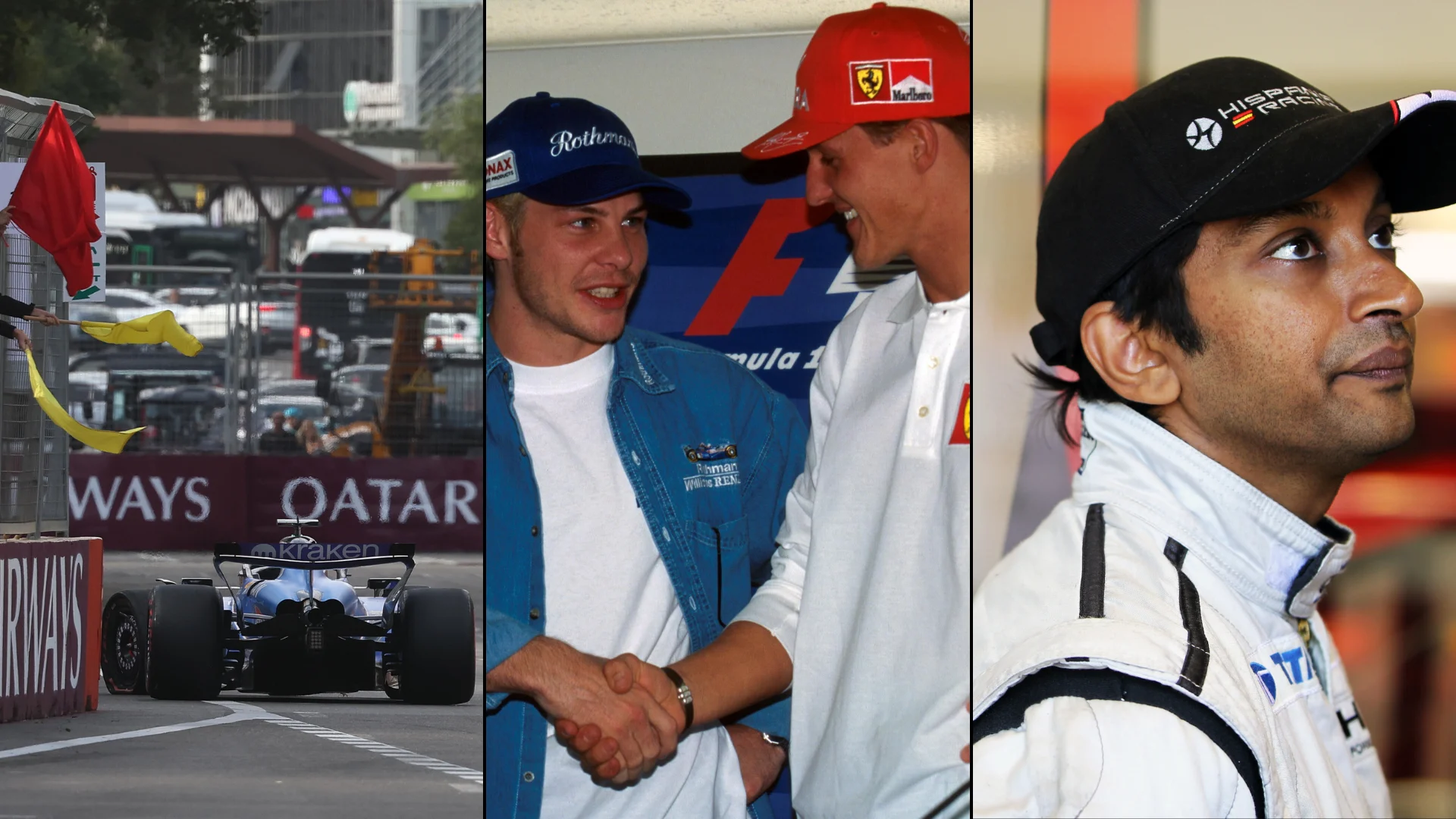
Formula 1 is often viewed through the lens of precision engineering and clinical efficiency, where milliseconds separate victory from defeat. Yet, beneath the polished surface of the modern paddock lies a history defined by anomalies—statistical outliers and bizarre occurrences that defy the standard logic of motorsport. From the early days of the 1950s to the high-tech era of 2026, the sport has produced a series of milestones that are as strange as they are impressive.
As a veteran of the press box, I have seen the sport evolve from a dangerous pursuit of bravery into a data-driven science. However, the most compelling stories are rarely found in a telemetry chart; they are found in the Formula 1 driver records that seem almost impossible. Whether it is a level of dominance that feels unnatural or the sheer misfortune of a record-breaking low finish, these anomalies provide the true texture of the sport’s legacy.
The current landscape of the sport continues to be shaped by these benchmarks. While new stars like Andrea Kimi Antonelli are already making their mark—claiming victory at the 2026 Japanese Grand Prix on March 29—the ghosts of the past still haunt the record books. Understanding these “weird and amazing” records allows us to appreciate the scale of achievement required to reach the pinnacle of racing.
From the legendary battles of the 1980s to the current era of hybrid dominance, the following records highlight the extremes of human and mechanical performance in the world’s fastest sport.
The Titans of Dominance: Most Wins and Poles
When discussing the most amazing records in F1, the conversation inevitably begins with the “big numbers.” For decades, the benchmark for greatness was set by Michael Schumacher, but the modern era has seen those figures pushed to heights previously thought unreachable. Lewis Hamilton currently holds the record for the most race wins in history, with 105 victories Formula 1 Archive.
Hamilton’s dominance is not limited to race day. He also holds the record for the most pole positions, having secured the top spot on the grid 104 times. This level of qualifying precision is a testament to his consistency across different eras of regulation. To put this in perspective, the second-most successful driver in this category, Michael Schumacher, recorded 91 wins and 68 poles Formula 1 Archive.
The pursuit of these records has created some of the most intense rivalries in sports history. The statistical gap between the top drivers often tells a story of technological superiority as much as driver skill. For instance, Max Verstappen has rapidly climbed the ranks, accumulating 71 wins and 48 pole positions, placing him among the elite few to ever challenge the historical benchmarks set by Hamilton and Schumacher Formula 1 Archive.
The Battle for World Championships
While race wins provide the glamour, the World Championship is the ultimate currency of F1. The record for the most titles is currently shared by two men: Lewis Hamilton and Michael Schumacher, both of whom have secured seven championships Formula 1 Archive.
This shared record represents a peak of professional longevity, and adaptability. To win seven titles, a driver must not only be the fastest on the track but must also navigate the political complexities of team management and the evolving nature of automotive engineering. Other legends, such as Juan Manuel Fangio with five titles and Sebastian Vettel with four, remain etched in the history books as the architects of the sport’s early and middle eras Formula 1 Archive.
The Anomalies: Podiums and Persistence
Beyond the championships, there are records that speak to a driver’s ability to consistently “be there”—to finish in the top three regardless of whether they have the fastest car. Lewis Hamilton again leads this category with a staggering 203 podium finishes Formula 1 Archive.
The sheer volume of podiums is often a better indicator of a driver’s “racing IQ” than wins alone. It demonstrates an ability to salvage a result when a win is out of reach. Michael Schumacher follows with 155 podiums, while Max Verstappen has already reached 127, signaling a trajectory that could potentially challenge the all-time record if his current form persists Formula 1 Archive.
These statistics are not just numbers; they are reflections of the eras in which these drivers competed. The shift from the raw, mechanical nature of the 1950s to the simulated precision of 2026 has changed how records are accumulated. In the early years, reliability was the primary hurdle; today, the challenge is finding a single tenth of a second in a sea of optimized data.
Comparing the Greats: A Statistical Snapshot
To truly understand the scale of these records, it is helpful to look at how the sport’s most successful drivers stack up against one another. The following table summarizes the career achievements of the most dominant figures in the history of the World Championship of Drivers.
| Driver | World Championships | Race Wins | Pole Positions | Podium Finishes |
|---|---|---|---|---|
| Lewis Hamilton | 7 | 105 | 104 | 203 |
| Michael Schumacher | 7 | 91 | 68 | 155 |
| Max Verstappen | 4 | 71 | 48 | 127 |
| Sebastian Vettel | 4 | 53 | 57 | – |
| Alain Prost | 4 | 51 | 33 | – |
Note: Data based on verified records as of the 2026 Japanese Grand Prix Formula 1 Archive.
The Evolution of the Record Books
The nature of F1 records is constantly shifting. The introduction of the Sprint format and the changing points systems indicate that the “most amazing” records of the future may look very different from those of the past. We are currently seeing a transition where the legends of the 2010s are being challenged by a new generation of drivers who have grown up in the era of simulation.
The 2026 season has already provided a glimpse of this shift. The emergence of Andrea Kimi Antonelli, who won both the Chinese Grand Prix (March 15, 2026) and the Japanese Grand Prix (March 29, 2026), suggests that the record books are about to be rewritten by a new wave of talent Formula 1 Archive.
What makes these records “weird” is the context. A qualifying dead heat or a record-low finish—events that are rare in the modern era of precision—remind us that Formula 1 is still a sport played by humans. Despite the carbon fiber and the artificial intelligence, the element of chaos remains. Whether it is a mechanical failure that leads to a historic low or a freak timing coincidence in qualifying, these moments define the “amazing” side of the sport’s history.
For those following the current season, the next major checkpoint will be the upcoming rounds of the 2026 World Championship, where the battle for these historic benchmarks continues to unfold. As the season progresses, we will see if the new generation can bridge the gap to the records set by Hamilton and Schumacher.
Do you think the current records are unbreakable, or will the new generation of drivers surpass them? Share your thoughts in the comments below and join the conversation on the future of Formula 1.