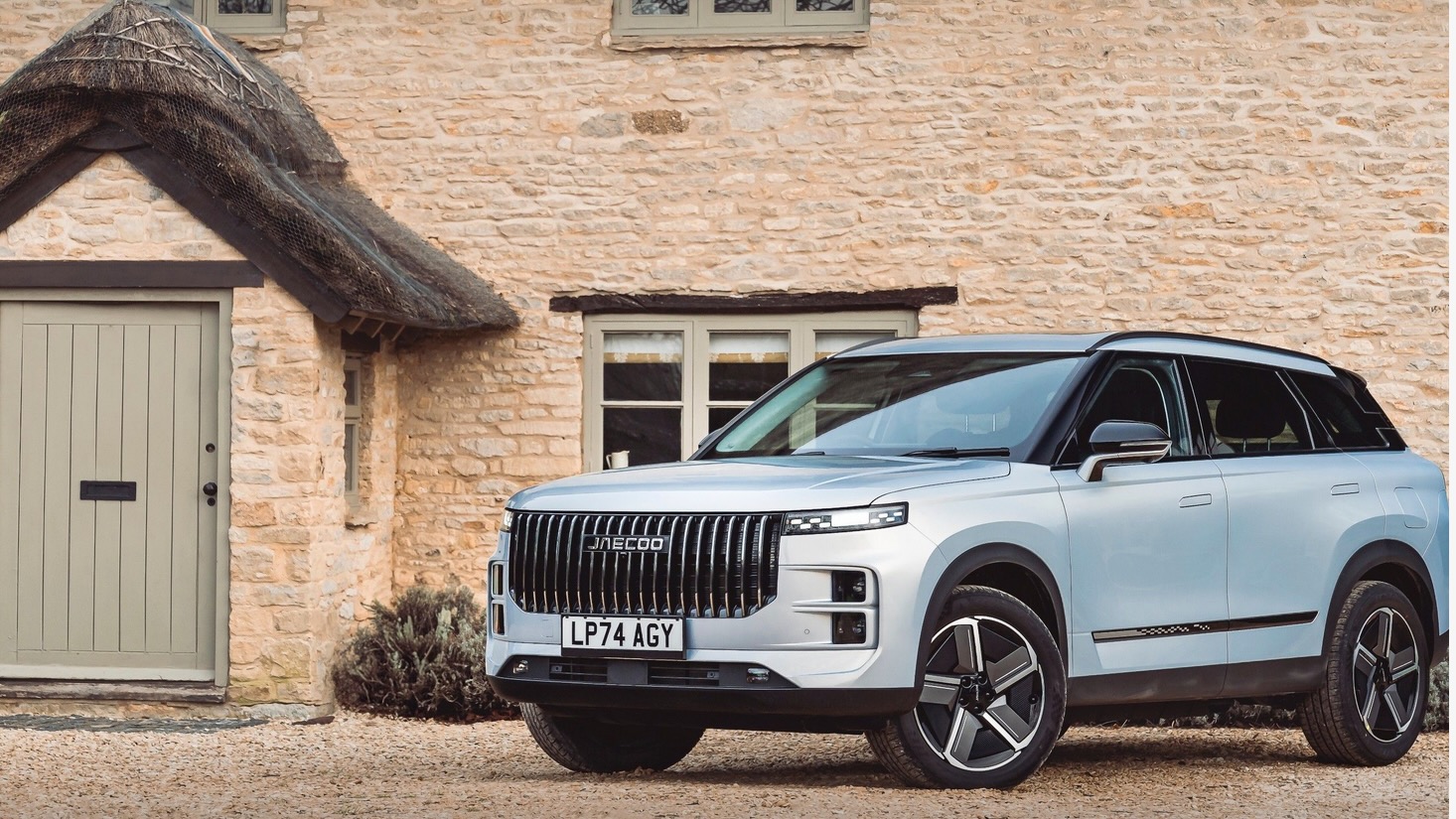
The European automotive landscape is witnessing a historic shift as Chinese manufacturers move from the periphery to the center of the market. In a development that signals a changing of the guard in the UK, the Jaecoo 7 has emerged as a significant player in new vehicle registrations, marking a rare instance where a Chinese-branded model has surged to the top of specific registration charts in the United Kingdom.
For decades, the UK market has been dominated by a mix of German engineering, Japanese reliability, and domestic brands. Still, the arrival of the Jaecoo 7—a rugged, off-road styled SUV—represents more than just a new model launch; We see a litmus test for how quickly Chinese automotive brands can scale their infrastructure and consumer trust in one of the world’s most competitive car markets.
This surge comes amid a broader strategic push by Chery International, the parent company behind Jaecoo, to establish a foothold in Europe. By leveraging a combination of competitive pricing, high-tech interiors, and aggressive styling, these brands are challenging the traditional hegemony of European OEMs (Original Equipment Manufacturers). As the UK serves as a primary entry point, the success of the Jaecoo 7 is being closely watched by industry analysts as a potential blueprint for expansion into other EU member states.
The Rise of Jaecoo 7 in the UK Market
The Jaecoo 7 is designed to bridge the gap between urban sophistication and off-road capability. Its sudden visibility in UK registration data is attributed to a coordinated market entry strategy that emphasizes “premium accessibility.” Unlike many early Chinese imports that competed solely on price, the Jaecoo 7 positions itself as a lifestyle vehicle, targeting consumers who want the aesthetic of a luxury 4×4 without the prohibitive price tag of established European rivals.
From a technical perspective, the vehicle integrates advanced driver-assistance systems (ADAS) and a heavily digitized cockpit, features that are often locked behind expensive trim levels in traditional brands. This “feature-rich” approach is a hallmark of the Chinese EV and ICE (Internal Combustion Engine) transition, where software integration is treated as a primary selling point rather than an add-on.
The impact is not merely anecdotal. The registration spikes reflect a growing appetite for alternative brands among UK buyers, who are increasingly open to non-traditional marques if the value proposition is clear. This trend is further accelerated by the UK’s transition toward greener fleets, although the Jaecoo 7’s specific appeal lies in its versatile design and perceived robustness.
Chery’s European Ambitions and the ‘Gateway’ Strategy
The success of the Jaecoo 7 is a calculated move by Chery International. The company has identified the UK as a strategic gateway due to its high volume of SUV sales and a consumer base that is historically receptive to new brands. By establishing a distribution network and after-sales service infrastructure in Britain, Chery is creating a operational template that can be exported to Germany, France, and Spain.
However, this expansion does not happen in a vacuum. Chinese automakers are entering Europe at a time of intense regulatory scrutiny. The European Commission has recently investigated subsidies provided to Chinese EV manufacturers, leading to the implementation of provisional countervailing duties. Whereas the Jaecoo 7 competes in a broader category, the geopolitical tension surrounding “green protectionism” creates a volatile environment for these brands.
To mitigate these risks, Chery and its sub-brands are focusing on “localization.” This involves not just selling cars, but building partnerships with local dealerships and investing in regional marketing that resonates with European sensibilities. The goal is to move away from the image of a “cheap import” and toward that of a “global technology leader.”
Comparing the Competitive Edge: China vs. Europe
To understand why a model like the Jaecoo 7 can suddenly climb the registration ranks, it is necessary to look at the structural differences in how these cars are brought to market. Chinese OEMs typically have shorter development cycles, allowing them to integrate the latest consumer electronics trends into their vehicles faster than European counterparts.
| Feature | Chinese New Entrants (e.g., Jaecoo) | Established European OEMs |
|---|---|---|
| Development Cycle | Rapid iteration; software-first approach | Longer cycles; focus on mechanical refinement |
| Pricing Strategy | Aggressive penetration pricing | Premium pricing based on brand equity |
| Tech Integration | Standardized high-end infotainment | Tiered feature sets (Upselling) |
| Market Entry | Digital-first and strategic hubs | Extensive, legacy dealer networks |
What This Means for the Global Automotive Industry
The emergence of the Jaecoo 7 at the top of UK registration charts is a signal to the rest of the world that the “barrier to entry” for the European market is lowering. For years, the consensus was that European consumers would remain loyal to heritage brands regardless of price. The current data suggests that this loyalty is eroding in favor of tangible value and modern technology.
For the consumer, this means more choice and downward pressure on prices. When a new competitor enters the market with a high-spec vehicle at a lower cost, legacy brands are forced to either innovate faster or offer more competitive financing and trim packages. We are likely to see a “feature war” where luxury amenities—previously reserved for top-tier models—become standard across the board.
For the industry, this represents a shift in the center of gravity for automotive innovation. While Europe and the US still lead in high-performance engineering and luxury branding, China has become the global epicenter for battery technology and software-defined vehicles. The Jaecoo 7 is a physical manifestation of this shift, bringing that software-centric philosophy to the streets of London and Birmingham.
The Role of Infrastructure and After-Sales Trust
The biggest hurdle for any new brand is not the first sale, but the fifth. The “registration spike” seen with the Jaecoo 7 is a victory of marketing and initial appeal, but the long-term success depends on the “ownership experience.” This includes the availability of spare parts, the quality of warranty service, and the stability of resale values.
Chery is attempting to solve this by building a robust network of service centers. If they can prove that a Jaecoo 7 is as reliable and easy to maintain as a Volkswagen or a Toyota, the “Chinese car” stigma will vanish entirely. This is the critical phase of their European journey: moving from a “trend” to a “staple.”
Potential Ripple Effects Across Europe
If the UK model proves successful, we can expect a rapid rollout in other European markets. The “UK-first” strategy allows Chery to refine its messaging and iron out logistical kinks before facing the more protectionist environments of the EU mainland. We are already seeing early indicators that other countries may follow suit, as interest in affordable, tech-heavy SUVs continues to grow.
The ripple effect will likely be felt most strongly in the “C-SUV” segment. This is the most contested space in the market, where families and urban professionals look for a balance of space and efficiency. The Jaecoo 7 targets this exact demographic, and its success suggests that the “lifestyle” branding of Chinese cars is starting to work.
this trend will likely push European governments to reconsider their trade policies. While tariffs may slow the influx of vehicles, they cannot stop the demand for high-value technology. The tension between protecting domestic industry and providing consumers with affordable, modern transportation will be the defining political struggle of the European auto industry over the next decade.
Key Takeaways for Consumers and Investors
- Market Shift: The Jaecoo 7’s success in UK registrations proves that Chinese brands can compete with European heritage marques on a large scale.
- Value Proposition: High-tech interiors and rugged design at a competitive price point are the primary drivers of this growth.
- Strategic Gateway: The UK is serving as a testing ground for Chery International’s wider European expansion strategy.
- Industry Pressure: Legacy European brands will likely respond with more aggressive pricing or accelerated tech updates to remain competitive.
- Regulatory Headwinds: While demand is high, trade tariffs and subsidies investigations remain the primary risks to this growth trajectory.
The Road Ahead: What Happens Next?
The automotive world is now waiting to see if the Jaecoo 7’s registration peak is a temporary launch spike or the beginning of a sustained market share gain. The next critical checkpoint will be the release of the first full year of ownership data and reliability reports from UK users. These metrics will determine whether the brand can transition from a “curiosity” to a trusted household name.
industry observers will be monitoring the European Commission’s final decisions on tariffs for Chinese vehicles. Any significant increase in import costs could alter the pricing strategy that made the Jaecoo 7 attractive in the first place, potentially slowing the momentum in mainland Europe.
As we move toward a more electrified and software-driven future, the arrival of brands like Jaecoo is a reminder that the global map of innovation is being redrawn. Whether you are a car buyer, a tech enthusiast, or an investor, the trajectory of Chinese automotive exports is a metric that cannot be ignored.
What do you think about the rise of Chinese automotive brands in Europe? Would you consider a Jaecoo or similar brand over a traditional European manufacturer? Let us understand in the comments below and share this article with your network.