
Quality sleep is not merely a luxury; It’s a fundamental pillar of public health. As a physician and health journalist, I have seen firsthand how chronic sleep deprivation can erode cognitive function and compromise the immune system. For many, the barrier to a restful night is not the desire to sleep, but the inability to quiet the mind or block out disruptive environmental noise.
One of the most effective non-pharmacological interventions for improving sleep hygiene is the use of sound machines. Whether you are dealing with a noisy urban apartment or the oppressive silence of a hotel room, the right auditory environment can signal to your brain that it is time to wind down. By introducing a consistent, soothing frequency, these devices help mask sudden noises that would otherwise trigger a wake response.
Finding the best sound machines to help you fall asleep and stay asleep requires a balance of acoustic quality, portability and ease of use. From high-fidelity white noise generators to multifunctional alarm clocks, the options vary significantly depending on whether you need a permanent bedside companion or a compact solution for travel.
In this guide, we examine the top choices for sound-based sleep aids, focusing on how different modalities—such as nature sounds, mechanical white noise, and digital frequencies—impact the sleep cycle and overall sleep quality.
The Science of Sound Masking and Sleep Hygiene
To understand why sound machines work, we must look at the concept of “sound masking.” What we have is not the same as noise cancellation, which uses active technology to eliminate sound. Instead, sound masking introduces a consistent background noise that reduces the “signal-to-noise ratio.” When the background noise is steady, a sudden loud sound—like a car horn or a slamming door—becomes less jarring as the contrast between the silence and the noise is minimized.
For many individuals, white noise, pink noise, and brown noise provide different benefits. White noise contains all audible frequencies at equal intensity, whereas pink noise filters out higher frequencies, resulting in a deeper, more balanced sound often associated with steady rain. Brown noise focuses even more on lower frequencies, mimicking the deep rumble of a distant thunderstorm or a low roar.
Integrating these tools into a nightly routine is a key part of sleep hygiene. By consistently using a sound machine, you create a Pavlovian response where the sound itself becomes a trigger for your brain to enter a state of relaxation, facilitating a faster transition from wakefulness to light sleep.
Top Recommendations for Sleep Sound Devices
Based on testing and functional analysis, the following types of devices offer the most reliable support for those struggling with insomnia or environmental disturbances.
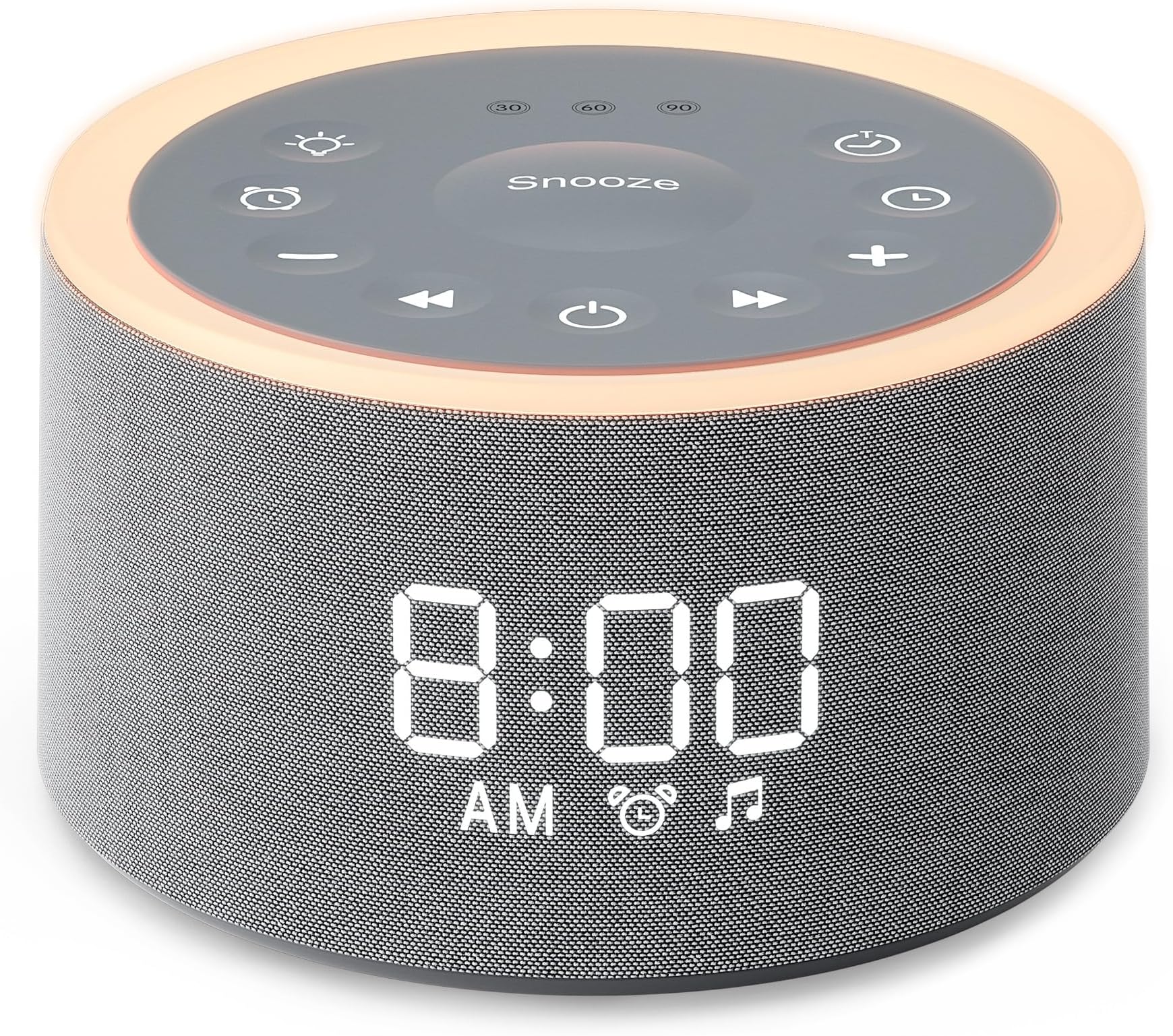
The Multifunctional Alarm Clock with Nature Sounds
For those who prefer a streamlined bedside table, a hybrid device that combines a wake-up alarm with integrated soundscapes is ideal. These machines often feature a variety of “ocean sounds” and other nature-based recordings. This approach is particularly effective for those who discover mechanical white noise too sterile and prefer the organic rhythm of water or wind to soothe their nervous system.
The Classic Mechanical Model
There is a reason some models have remained staples of sleep health since 1962. Mechanical sound machines use a physical fan or rotating disk to create a consistent, non-looping sound. Unlike digital recordings, which can sometimes have a perceptible “seam” when the track restarts, mechanical devices produce a continuous stream of sound that is often more effective at masking erratic noises in a home environment.
The Palm-Sized Travel Option
Sleep disturbances are frequently exacerbated by travel, a phenomenon often linked to “first-night effect,” where one hemisphere of the brain remains more alert in an unfamiliar environment. A palm-sized sound machine is essential for maintaining a consistent sleep environment across different locations. These compact devices allow users to replicate their home auditory environment in hotels or planes, reducing anxiety and promoting deeper REM cycles.
The Digital Frequency Generator
Modern digital machines offer the most customization, allowing users to toggle between white, pink, and brown noise. These are often preferred by individuals with sensory processing sensitivities who need to fine-tune the frequency to find the exact tone that quiets their mind.
The High-Fidelity Nature Soundscape Machine
High-conclude models often include high-fidelity recordings of forests, rainfall, and streams. These are designed to simulate a natural environment, which can lower cortisol levels and heart rate, preparing the body for the physiological transition into sleep.
Choosing the Right Device for Your Needs
When selecting a device, it is important to consider the specific nature of the noise you are trying to block. If you live in a city with heavy traffic and low-frequency rumbles, a machine capable of producing brown noise or deep mechanical sounds will be more effective.
If your primary goal is to ease anxiety and “turn off” a racing mind, nature sounds—such as the rhythmic ebb and flow of ocean waves—are often more psychologically soothing. For those who travel frequently, portability and battery life are the primary considerations. A device that is too bulky will likely be left at home, defeating the purpose of maintaining a consistent sleep routine.
It is also worth noting the importance of volume control. While the goal is to mask noise, excessively loud sound machines can interfere with the quality of sleep or, in rare cases, lead to auditory fatigue. The ideal volume is one that creates a “blanket” of sound without becoming the focal point of your attention.
Practical Tips for Optimizing Your Sleep Environment
A sound machine is a powerful tool, but it works best when paired with other evidence-based sleep practices. To maximize the efficacy of your sound machine, consider the following adjustments to your environment:
- Temperature Control: Ensure your room is cool, typically between 60-67°F (15-19°C), as a drop in core body temperature is a biological trigger for sleep.
- Light Management: Use blackout curtains or an eye mask to eliminate blue light, which suppresses melatonin production.
- Consistent Timing: Start your sound machine 15 to 30 minutes before you intend to sleep to signal to your brain that the wind-down period has begun.
- Device Placement: Place the machine between your head and the source of the noise (e.g., near the window or the door) to create the most effective acoustic barrier.
By combining auditory masking with these environmental controls, you can create a “sleep sanctuary” that minimizes the likelihood of midnight awakenings and ensures you wake up feeling restored.
Frequently Asked Questions About Sound Machines
Is it safe to exit a sound machine on all night?
For the vast majority of adults, leaving a sound machine on throughout the night is safe and effective for maintaining sleep. However, it is recommended to use a timer if you are concerned about the device running indefinitely or if you prefer to wake up to natural silence.
Can I use a phone app instead of a dedicated machine?
While apps can provide similar sounds, dedicated machines often have better speaker quality and do not expose the user to the blue light or notifications associated with smartphones, which can disrupt sleep cycles.
What is the difference between white noise and pink noise?
White noise contains all frequencies equally, sounding like static. Pink noise has more power at lower frequencies, which many find more natural and soothing, similar to the sound of steady rain.
As we continue to spot a rise in sleep-related disorders globally, the adoption of simple, non-invasive tools like sound machines represents a practical step toward better public health. While these devices are not a cure for clinical insomnia or sleep apnea, they are invaluable for managing the environmental stressors that plague modern sleep.
For those seeking further guidance on sleep hygiene, I recommend consulting with a healthcare provider to rule out underlying medical conditions. Stay tuned for our upcoming series on circadian rhythm optimization and the impact of light therapy on seasonal affective disorder.
Do you have a favorite sound for sleeping, or a specific device that has changed your nightly routine? Share your experiences in the comments below.
Keep reading