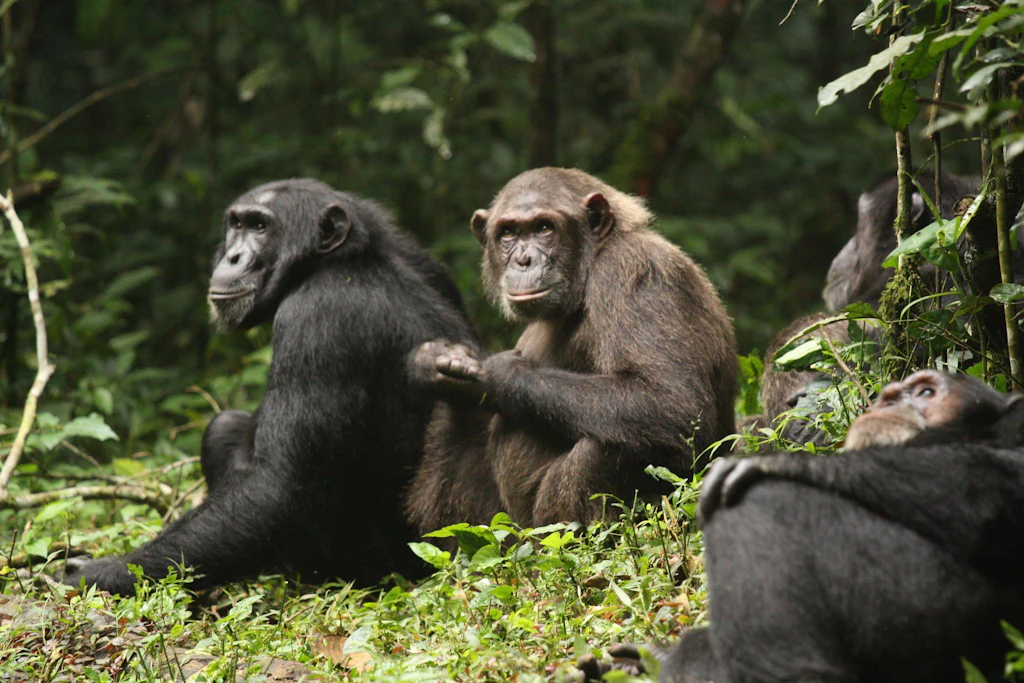
The social fabric of the world’s largest known chimpanzee community has undergone a dramatic and permanent transformation. In a rare instance of primate societal collapse, a massive group of wild chimpanzees in Uganda has split into two separate entities following a period of intense and violent conflict.
This fragmentation, detailed in a study published in the journal Science, provides a stark look at the volatility of primate social structures. The research was conducted by an international team including scientists from the University of Texas at Austin, who have spent years monitoring the complex dynamics of these great apes in their natural habitat.
At the center of this research is Aaron A. Sandel, an Associate Professor in the Department of Anthropology at the University of Texas at Austin and Co-Director of the Ngogo Chimpanzee Project. Sandel, who has studied chimpanzees in Uganda since 2012, has focused his perform on the emotions and social bonds that animate our closest living relatives, as well as the factors that cause those bonds to disintegrate.
The split of the world’s largest known chimpanzee community represents more than just a biological curiosity; it offers a window into the nature of polarization and conflict. By analyzing how a once-cohesive society fractured, researchers hope to gain insights into the fundamental mechanisms of social bonding and the triggers that lead to systemic violence.
The Fracture of the Ngogo Community
The Ngogo chimpanzees have long been a focal point for primatologists due to the sheer size of their community. Although, this scale similarly introduced unique social pressures. The transition from a single, large community to two distinct groups was not a peaceful divergence but the result of a rare and violent conflict.
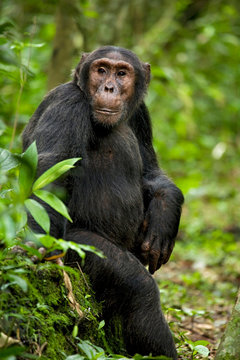
According to the findings associated with the Ngogo Chimpanzee Project, the conflict led to a permanent division. Such events are uncommon in chimpanzee societies to this magnitude, making the Ngogo case a critical data point for understanding primate life history and the physiology of stress and aggression.
The research team utilized a sophisticated array of tools to track this collapse. To move beyond simple observation, Sandel and his colleagues employed network analysis and machine learning to map the shifting alliances and hostilities within the group. The team used endocrinology to measure the physiological markers of stress and emotion, providing a biological layer to the behavioral data.
The Science of Social Bonds and Polarization
For Professor Sandel, the study of chimpanzees is deeply linked to understanding human behavior. He posits that modern society is currently facing crises of loneliness, polarization, and conflict, partly because humans do not fully understand the nature and importance of the social bonds that hold communities together.
By studying the “social glue” that maintains primate groups—and the forces that dissolve it—researchers can draw parallels between chimpanzee aggression and human social fragmentation. The study draws from a multidisciplinary approach, blending evolutionary biology, anthropology, and psychology to explore how bonds are formed, maintained, and eventually broken.
The research focuses on several key areas of primate existence, including:
- Friendship and Emotions: How specific emotional ties prevent conflict and foster cooperation.
- Adolescence: The role of developmental stages in how young primates integrate into or disrupt social hierarchies.
- Cognition: The mental processes that allow chimpanzees to navigate complex social networks.
- Comparative Methods: Using data from different species to identify universal patterns of social behavior.
Broader Implications for Conservation and Biology
Beyond the sociological implications, the split of the Ngogo community has significant consequences for conservation. The stability of large primate communities is often a marker of environmental health and resource availability. When a community fractures violently, it can alter the distribution of the species across the landscape and change the competitive dynamics between different groups.
The use of machine learning in this study marks a shift in how primatology is conducted. By processing vast amounts of behavioral data, researchers can now identify patterns of “social decay” that might be invisible to the human eye during standard field observations. This allows for a more precise understanding of the tipping points that lead a community from cooperation to conflict.
Future Directions in Primate Research
The findings from the Ngogo Chimpanzee Project are serving as a foundation for expanded research. Professor Sandel is currently extending his investigations beyond chimpanzees to include mountain gorillas and humans.
The goal is to determine if the patterns of social bonding and fragmentation observed in Uganda are consistent across other great apes and whether they mirror the sociological trends seen in human populations. By comparing these species, the research team aims to uncover the evolutionary roots of conflict and the biological requirements for maintaining long-term social stability.
As the two novel chimpanzee communities in Uganda continue to evolve independently, researchers will remain on-site to monitor whether these groups remain separate or if the social bonds can eventually be repaired—or if the violence of the split has left a permanent psychological scar on the surviving members.
The next phase of this research involves the integration of data from mountain gorilla populations to compare the conflict-resolution strategies of different primate species.
World Today Journal encourages readers to share their thoughts on the parallels between animal social structures and human society in the comments below.
Related reading