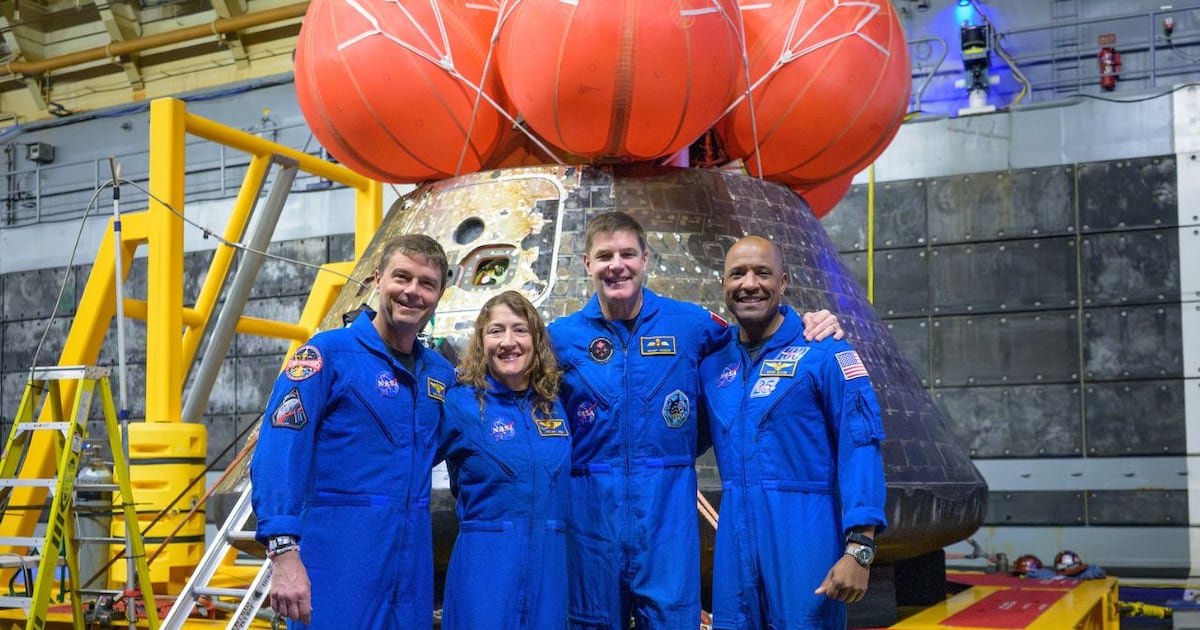
The return of the Artemis II crew to Earth marks a historic milestone in human space exploration, signaling the first time in five decades that astronauts have ventured back into the vicinity of the Moon. After a mission that tested the limits of deep space systems, the crew has returned to Houston to reunite with their families and share the results of their journey.
The Artemis II crewed lunar flyby served as a critical test flight for NASA’s human deep space capabilities. Launching on April 1, 2026, the mission spanned a total duration of 9 days, 1 hour, and 32 minutes, concluding with a successful splashdown on April 10, 2026, as detailed by NASA’s official mission page.
This mission was not designed for a lunar landing, but rather as a high-stakes rehearsal for future surface missions. By orbiting the Moon, the crew validated the life-support and navigation systems of the Orion spacecraft, ensuring that the technology is safe and reliable for the long-term return to the lunar surface and eventual missions to Mars.
The crew—composed of NASA astronauts and a specialist from the Canadian Space Agency—faced the immense challenge of navigating the lunar far side and executing precise return burns to ensure a safe re-entry into Earth’s atmosphere. Their successful return provides the necessary data to move forward with the Artemis program’s ambitious goals.
The Journey Around the Moon: Capturing the Unseen
One of the most significant achievements of the Artemis II mission was the collection of unprecedented imagery of the lunar surface. During a seven-hour pass over the lunar far side on April 6, 2026, the crew captured photos of regions that no human had ever seen before, including a rare in-space solar eclipse captured by the crew.
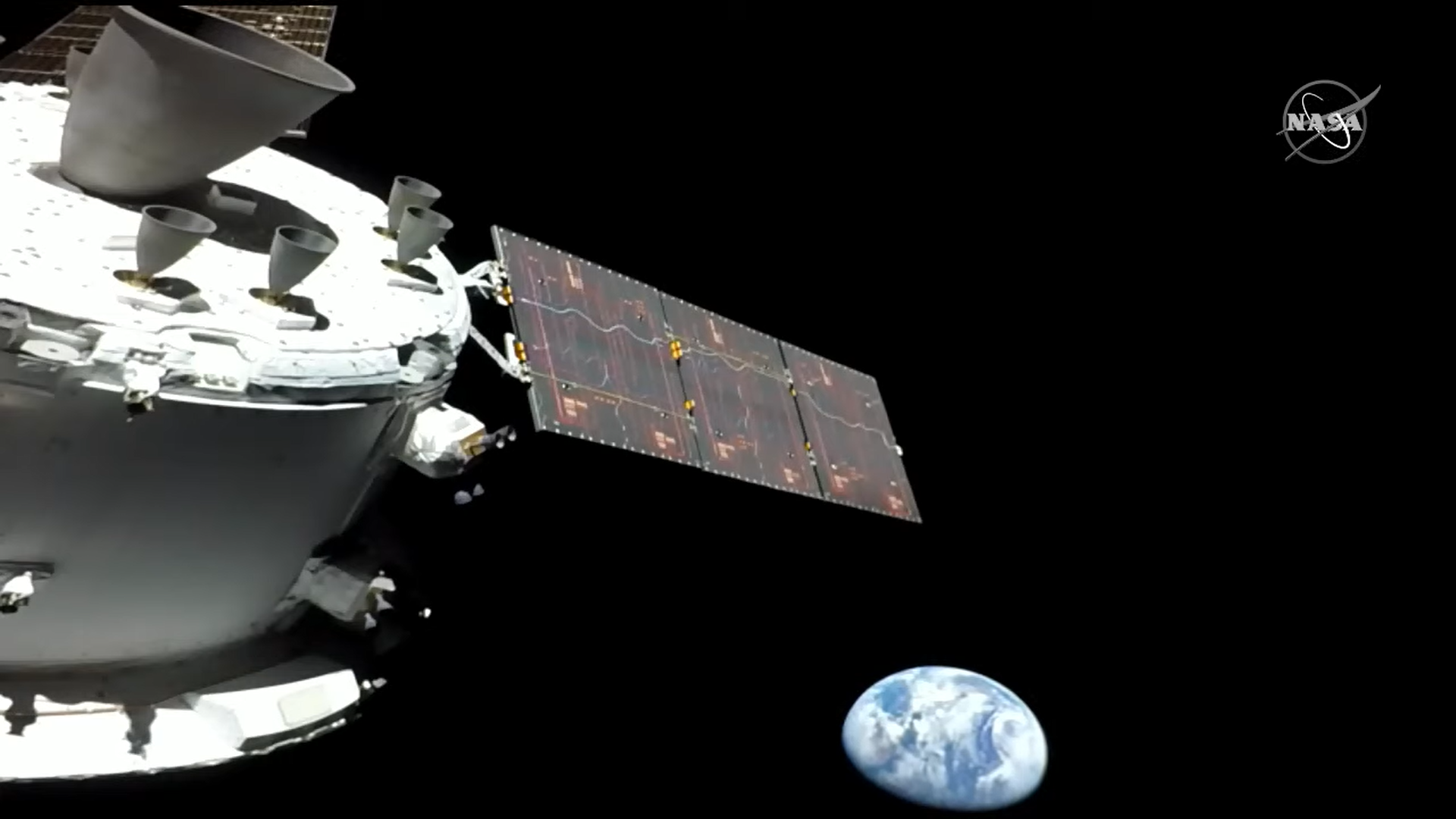
The imagery released by NASA on April 7, 2026, includes a variety of perspectives from the Orion spacecraft. Among the highlights is an “Earthset” image captured at 6:41 p.m. EDT on April 6, showing the planet drawing closer to passing behind the Moon. The crew also documented the “terminator,” the stark boundary between the lit and dark sides of the Moon, and the heavily cratered terrain of the eastern edge of the lunar far side.
These visual records are more than just photographs; they are essential data points for scientists studying lunar geography. The ability of the crew to operate high-resolution imaging equipment while navigating the spacecraft demonstrates the operational readiness of the Orion vehicle for future crewed missions.
The Crew Behind the Mission
The Artemis II mission was powered by a diverse team of experienced explorers. The crew included NASA astronaut and Pilot Victor Glover, as well as Canadian Space Agency (CSA) astronaut and Mission Specialist Jeremy Hansen documented in mission imagery. Also among the crew was Mission Specialist Christina Koch.
Each member played a vital role in the success of the flyby. From managing the complex burns required to change the spacecraft’s trajectory to monitoring the health of the Orion systems, the crew’s coordination was essential. Their experience in the deep space environment provides NASA with invaluable human-centric data on how astronauts handle the psychological and physical stresses of a lunar trajectory.
The Technology: Orion and the Space Launch System
The success of the Artemis II crewed lunar flyby was made possible by two primary pieces of hardware: the Orion spacecraft and the Space Launch System (SLS) rocket. Orion is specifically developed to carry and sustain astronauts on missions to the Moon and eventually to Mars, serving as the primary exploration vehicle for the Artemis program according to NASA.
The SLS rocket is NASA’s newest heavy-lift launch vehicle. It is designed to provide more payload mass, volume, and departure energy than any other single rocket, allowing it to push the Orion spacecraft out of Earth’s orbit and toward the Moon. The integration of these two systems was a primary focus of the Artemis II test flight.
Before launch, the Orion spacecraft and its launch abort system were visible at Launch Complex 39B at Kennedy Space Center in Florida as early as February 10, 2026. The flight’s successful execution confirms that the SLS can reliably deliver a crewed vehicle to deep space and that Orion can protect its occupants during the extreme heat of atmospheric re-entry.
Mission Timeline and Key Milestones
| Date | Event | Details |
|---|---|---|
| February 10 | Pre-launch Readiness | Orion and abort system at Launch Complex 39B |
| April 1 | Launch | SLS lifts off for the crewed lunar flyby |
| April 6 | Lunar Far Side Pass | Crew captures images of unseen lunar regions |
| April 7 | Image Release | NASA releases first flyby images of the Moon |
| April 10 | Splashdown | Crew returns to Earth after 9+ days |
What This Means for the Future of Space Exploration
The completion of Artemis II is not an end goal, but a “key step toward long-term return to the Moon and future missions to Mars” as stated by NASA. By proving that a crew can safely orbit the Moon and return, NASA has cleared the path for Artemis III, which intends to land humans on the lunar surface for the first time since the Apollo era.
The mission also reinforces international cooperation in space. The inclusion of a Canadian Space Agency astronaut highlights the collaborative nature of the Artemis Accords, aiming to establish a sustainable presence on the Moon through global partnerships.
For the global community, the images of a crescent Earth viewed from the lunar horizon serve as a reminder of the fragility of our home planet and the ambition of human curiosity. The technical data gathered—ranging from radiation exposure to the performance of the Orion’s life support—will be analyzed for months to ensure the safety of the next crew to step foot on the lunar soil.
The next phase of the Artemis program will focus on the transition from flybys to landings. NASA will use the data from the April 2026 mission to refine the landing profiles and surface habitat requirements for the upcoming lunar expeditions.
Stay tuned for official updates from NASA regarding the analysis of the Artemis II flight data and the scheduling of the next Artemis mission. We welcome your thoughts on this historic achievement in the comments below.
Related reading