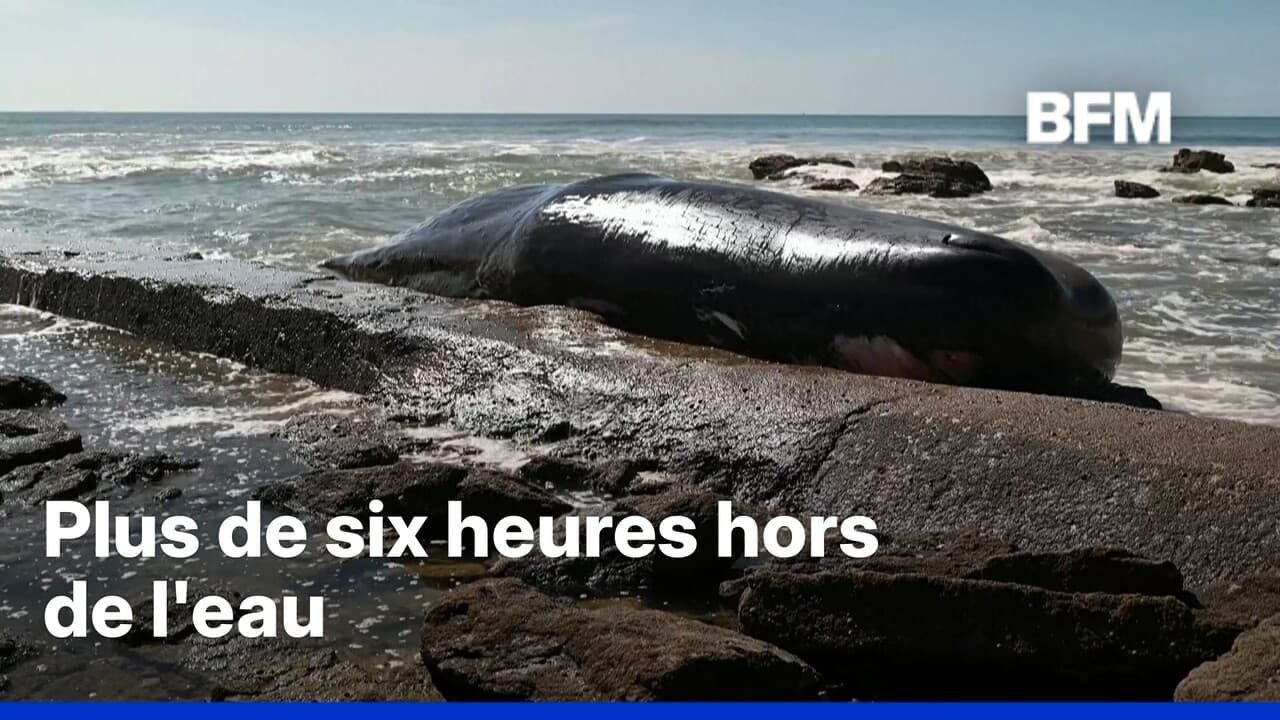
In a distressing discovery that has captured international attention, a 12-meter sperm whale has died after beaching itself on a shore in Loire-Atlantique, France. The event serves as a somber reminder of the precarious nature of marine life and the complexities involving the rescue and recovery of massive oceanic mammals.
The incident, which occurred on the coast of Loire-Atlantique, involved a specimen measuring 12 meters in length. Despite the efforts of local authorities and specialists to manage the situation, the whale succumbed to the conditions following its stranding.
While the loss of such a magnificent creature is a tragedy for nature enthusiasts and marine biologists alike, the event highlights the ongoing challenges of coastal management and the environmental factors that lead to these rare but devastating occurrences.
Understanding the Impact of Marine Strandings
The beaching of a sperm whale is a significant biological event. When a mammal of this size becomes stranded, the sheer weight of its own body, which is supported by the buoyancy of the ocean, becomes a crushing force against its internal organs once it is on land. This often leads to rapid physiological decline, making successful rescues extremely challenging even with professional intervention.
Local authorities in Loire-Atlantique typically coordinate with marine experts to determine the cause of the stranding. Factors can range from disorientation due to illness or injury to environmental shifts that lead the animal away from deeper waters into shallow coastal zones.
Recovery and Scientific Analysis
Following the death of the 12-meter whale, the primary focus shifts to the recovery and potential necropsy of the animal. Analyzing the remains of a stranded sperm whale provides invaluable data to the scientific community regarding the health of the species, their migration patterns, and the presence of pollutants or plastics within their digestive systems.

The removal of a carcass of this magnitude requires specialized heavy machinery and a coordinated effort between municipal services and environmental agencies to ensure the beach is cleared safely and the animal is handled with dignity for research purposes.
For those following updates on marine conservation and wildlife incidents in France, official reports from regional environmental agencies in Loire-Atlantique remain the primary source for confirmed data regarding the animal’s health and the final cause of death.
We invite our readers to share their thoughts on marine conservation in the comments below and share this story to raise awareness about the protection of our oceans.