
The cryptocurrency market has once again demonstrated its sensitivity to global geopolitical friction, as Bitcoin experienced significant price volatility linked to the fluctuating diplomatic relations between the United States and Iran. For investors, the recent swings serve as a stark reminder of how quickly digital assets can react to headlines emerging from the Middle East.
The volatility began as the market held steady while U.S.-Iran negotiations commenced, leaving Bitcoin and the broader market relatively flat. However, this equilibrium was short-lived, as the intersection of diplomatic failure and military tension triggered a rapid sequence of price corrections and subsequent recoveries.
As a financial journalist who has spent nearly two decades analyzing the intersection of economic policy and global markets, I have observed that Bitcoin often finds itself in a contradictory position during geopolitical crises. While some proponents view it as a “digital gold” or a hedge against instability, the reality is that in moments of extreme uncertainty, many traders treat it as a high-risk asset, leading to the sharp liquidations we are seeing today.
Geopolitical Tension and Market Reaction
The volatility was compounded by escalating tensions on the ground. In a reflection of the global anxiety surrounding the conflict, protesters gathered in New York City to demonstrate against U.S. Military actions involving Iran. Such events often amplify market sentiment, pushing traders toward a “risk-off” approach where they exit volatile positions in favor of more stable currencies or commodities.
Following reports that diplomatic talks between Washington and Tehran had collapsed, the market faced immediate pressure. While not independently verified by global financial regulators, local reports from outlets such as Siam Blockchain and efinancethai indicate that Bitcoin’s price dropped sharply, with some data suggesting it dipped toward the $71,000 and $72,000 levels.
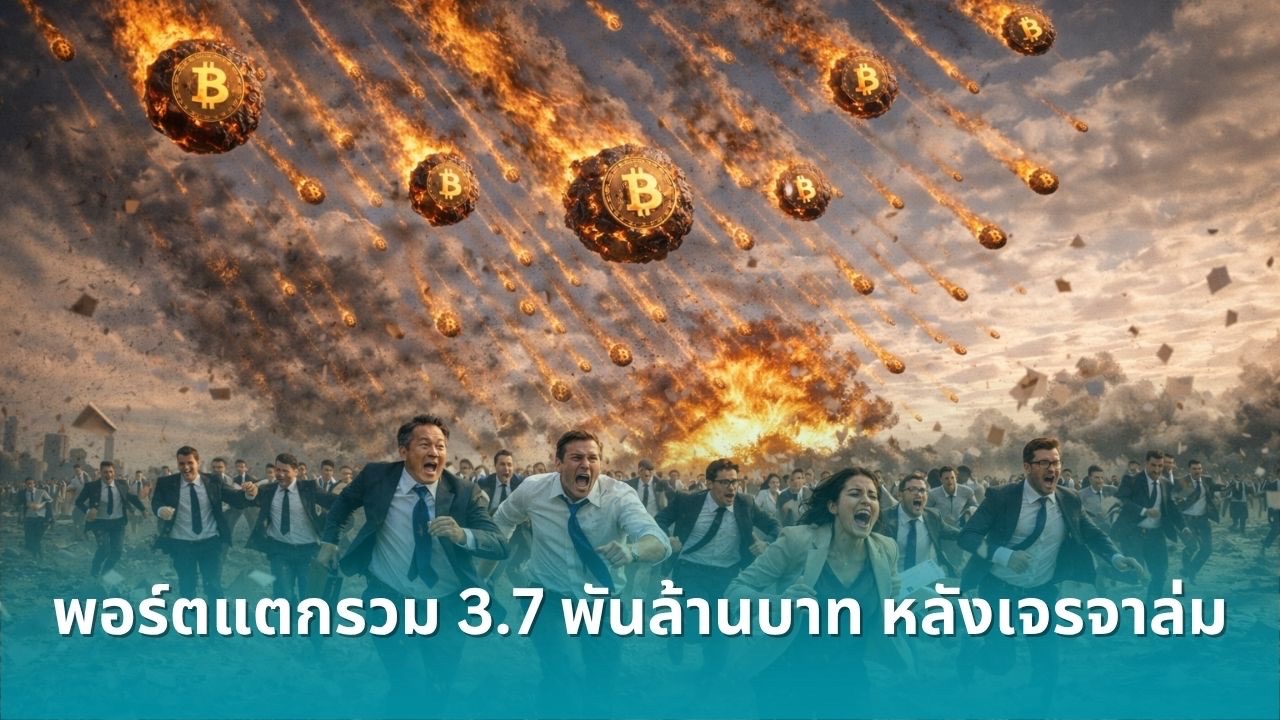
This sudden price drop had a devastating effect on those utilizing high leverage in the futures market. According to unconfirmed reports from Siam Blockchain, the resulting “margin calls” and liquidations may have cost futures traders a combined total of 3.7 billion baht. In the world of derivatives trading, such a rapid descent often triggers a cascade of automatic sell-offs, accelerating the price decline in a feedback loop of losses.
The Recovery and the Role of Institutional Inflows
Despite the initial shock, the market showed resilience in the following sessions. By April 12, 2026, the price of Bitcoin had rebounded, with some market trackers reporting a recovery to approximately $73,039. This recovery appears to be driven by two primary factors: a slight easing of immediate geopolitical fears and a surge in institutional appetite.
Reports suggest that a significant influx of capital—potentially as much as $350 million—flowed into Bitcoin ETFs, providing the necessary liquidity to push the price back above the $73,000 threshold. This trend highlights a growing divide in the market: while retail traders often suffer during volatility due to leverage, institutional investors frequently utilize these dips as buying opportunities, effectively creating a price floor for the asset.
Understanding the “Fragility” of the Current Market
However, the recovery has not silenced the warnings of market analysts. Merkel has indicated that the cryptocurrency market remains fragile, even as the immediate concerns regarding the U.S. And Iran begin to subside. This fragility is often a result of “over-leveraging,” where traders borrow heavily to amplify their gains, making the entire ecosystem susceptible to sudden crashes when a single geopolitical event triggers a sell-off.

From an economic perspective, this fragility is a symptom of a market that is still transitioning from a speculative playground to a mature asset class. When a market is driven more by headlines than by underlying utility or systemic value, it remains hostage to the whims of international diplomacy.
Key Takeaways for Global Investors
- Geopolitical Sensitivity: Bitcoin continues to react sharply to U.S.-Iran diplomatic tensions, proving that it is not yet a fully decoupled “safe haven.”
- The Danger of Leverage: The reported loss of 3.7 billion baht among futures traders underscores the extreme risk of using high leverage during periods of geopolitical instability.
- Institutional Support: Large-scale ETF inflows act as a stabilizing force, often offsetting the panic selling seen in retail sectors.
- Market Fragility: Despite price recoveries, experts warn that the structural fragility of the crypto market persists, leaving it open to further shocks.
As we move forward, the primary indicator for Bitcoin’s stability will be the permanence of the diplomatic resolution between the U.S. And Iran. Until a stable agreement is reached, traders should expect continued “headline risk,” where a single official statement can erase billions in market value within minutes.
The next critical checkpoint for market participants will be the official updates from the U.S. State Department and Iranian diplomatic channels regarding the resumption or final termination of negotiations. These announcements will likely dictate whether Bitcoin maintains its current support levels or faces another round of liquidations.
Do you believe Bitcoin is evolving into a true safe-haven asset, or is it still too tied to traditional geopolitical risks? Share your thoughts in the comments below or share this analysis with your network.