Maintaining physical vitality after 55 often becomes a matter of targeted effort rather than general activity. For many men, a daily routine of walking or light movement is sufficient for cardiovascular health, but it frequently leaves a critical gap in functional strength: the midsection. As a physician with over a decade of experience in internal medicine and medical journalism, I have observed a recurring pattern where stability declines not because of a lack of effort, but because of a lack of targeted engagement.
The ability to restore core strength for men over 55 is entirely possible, but it requires a shift in strategy. Core strength does not vanish overnight; rather, it fades when the deep stabilizing muscles are no longer challenged with purpose. When these muscles are trained directly and consistently, the results often return faster than many expect, manifesting as improved balance, reduced lower back discomfort and a more stable gait.
From a clinical perspective, a strong core serves as the body’s central anchor. It does far more than improve aesthetic appearance; it stabilizes the spine, supports upright posture, and facilitates the efficient transfer of power between the upper and lower body. Without this foundation, basic movements—from lifting groceries to walking—become less efficient and increase the risk of strain. The key to rebuilding this stability lies in simple, repeatable movements that emphasize control over intensity.
Daily consistency is the primary driver of results. Short, controlled exercises performed every day create constant activation, helping to rebuild the deep stabilizers that tend to weaken with age. By focusing on the lower abdominals, obliques, and deep core, men can regain the stability necessary for long-term mobility. For those looking for a benchmark of success, some trainers suggest that the ability to maintain a plank for a significant duration after age 55 is an indicator of top-tier core stability **.
Five Essential Daily Exercises to Rebuild Core Stability
To effectively restore core strength for men over 55, the focus must remain on abdominal bracing and controlled resistance. The following movements are designed to activate the deep core without placing undue strain on the lower back.
1. The Dead Bug
The dead bug is a foundational movement for building deep core stability. Its primary value lies in teaching the body to maintain a stable torso while the limbs are in motion, which is essential for protecting the spine during daily activities. By forcing the core to resist the movement of the arms and legs, it strengthens the muscles responsible for stabilizing the torso.
- Lie flat on your back with both arms and legs raised.
- Slowly lower the opposite arm and leg toward the floor.
- Ensure your lower back remains flat against the surface throughout the movement.
- Return to the starting position and alternate sides steadily.
2. Standing Knee Drives With Hold
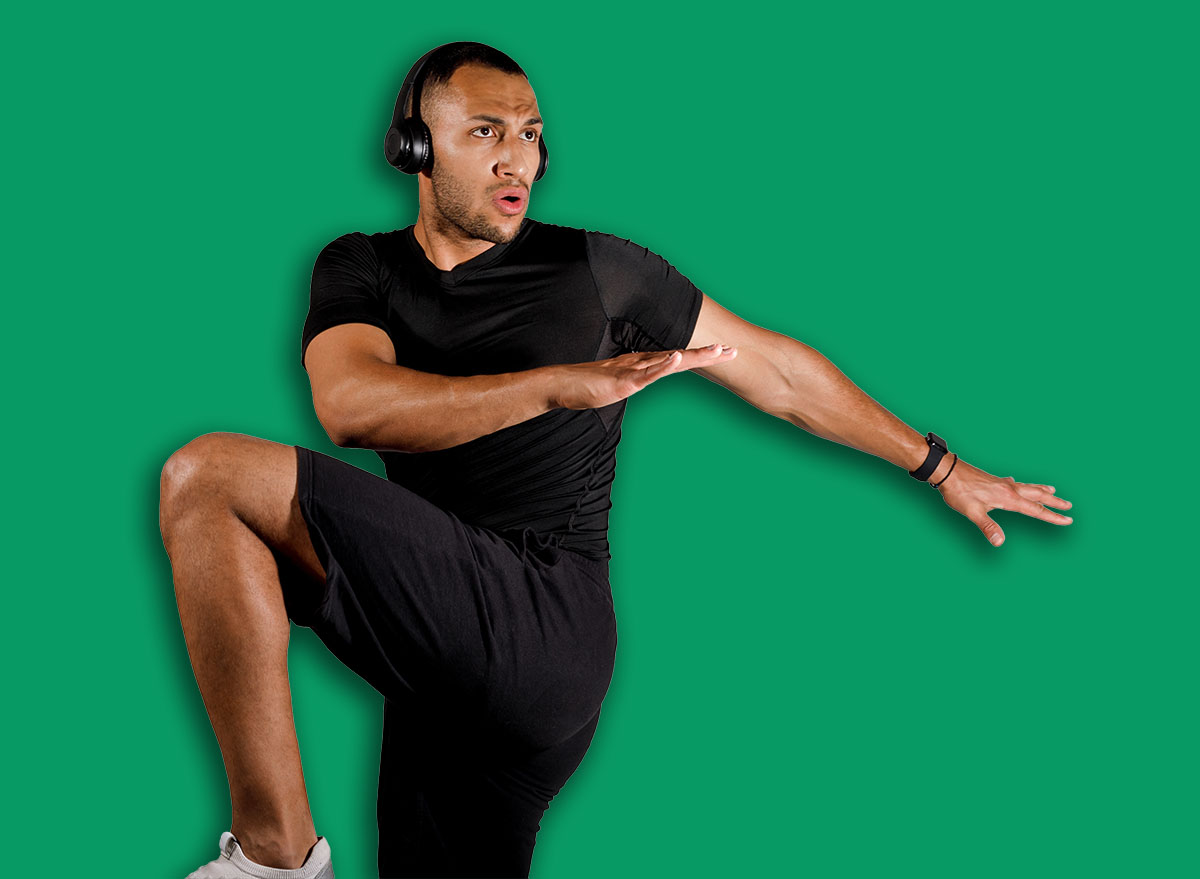
Unlike floor-based exercises, standing knee drives train the core in an upright position, which translates directly into real-life movement and improved balance. The “hold” at the top of the movement is critical; this sustained tension forces the abdominal muscles to stabilize the entire body, which is more effective for building lower core strength than rapid repetitions.
- Stand tall with your feet positioned hip-width apart.
- Lift one knee upward until it reaches hip height.
- Hold the position for 2–3 seconds while keeping your core tight.
- Lower the leg and alternate sides slowly.
3. The Bird Dog
The bird dog is an integrative exercise that improves coordination and balance while strengthening the entire core. It is particularly effective because it requires stability across the hips, back, and shoulders simultaneously. By extending opposite limbs, the core must function to stabilize the spine, building endurance in the deep muscles that support everyday movement.
- Begin on your hands and knees in a tabletop position.
- Extend one arm forward and the opposite leg backward.
- Maintain a flat back, avoiding any arching in the spine.
- Hold the position briefly before returning to the start and switching sides.
4. Seated Knee Tucks
For those who prefer to avoid floor work, seated knee tucks provide a way to target the lower abdominal muscles while remaining supported. This exercise creates continuous tension in the midsection, as the core must engage both to pull the knees in and to extend the legs back out with control.
- Sit near the edge of a sturdy chair.
- Lean back slightly to engage the abdominal wall.
- Pull your knees toward your chest, contracting the lower abs deeply.
- Extend the legs forward slowly and repeat with control.
5. Standing Cross-Body Crunch
To address rotational strength and the oblique muscles, the standing cross-body crunch is an ideal addition. This movement ties together the entire abdominal wall, improving the body’s ability to rotate and stabilize during twisting motions.

- Stand tall with your hands placed behind your head.
- Lift one knee across your body toward the opposite side.
- Simultaneously bring the opposite elbow toward the knee to create a contraction across the midsection.
- Return to the starting position slowly and alternate sides continuously.
Optimizing Results Through Proper Form
The efficacy of these exercises depends entirely on the quality of the movement rather than the quantity of repetitions. The goal is not to complete the movement quickly, but to maintain constant activation of the midsection. I always advise focusing on “tightening” the midsection during every rep; What we have is what restores strength where it matters most.
For men over 55, the risk of injury increases if form is sacrificed for speed. Moving with control and staying tall during standing exercises ensures that the core—rather than the joints—is doing the work. When these stabilizing muscles “approach back online,” the improvement is often felt immediately in posture and overall ease of movement.
Key Takeaways for Core Recovery
- Targeted Engagement: General activity like walking is helpful, but specific core exercises are necessary to reverse age-related strength loss.
- Spinal Protection: Exercises like the Dead Bug and Bird Dog prioritize a flat back to protect the spine while building stability.
- Functional Integration: Standing exercises improve balance and coordination, making daily movements more efficient.
- Consistency Over Intensity: Short, daily sessions of controlled movement are more effective for rebuilding deep stabilizers than occasional intense workouts.
As you integrate these movements into your daily routine, remember that the core is the foundation for all other physical activity. Whether your goal is to reduce back discomfort or improve your athletic performance, a stable midsection is the prerequisite.
Before beginning any novel exercise regimen, the next confirmed step for any individual is to consult with their primary healthcare provider to establish a baseline health assessment and ensure these specific movements are appropriate for their current medical history.
Do you have a specific routine that has helped you maintain stability as you’ve aged? Share your experiences in the comments below or share this guide with someone who could benefit from restoring their core strength.