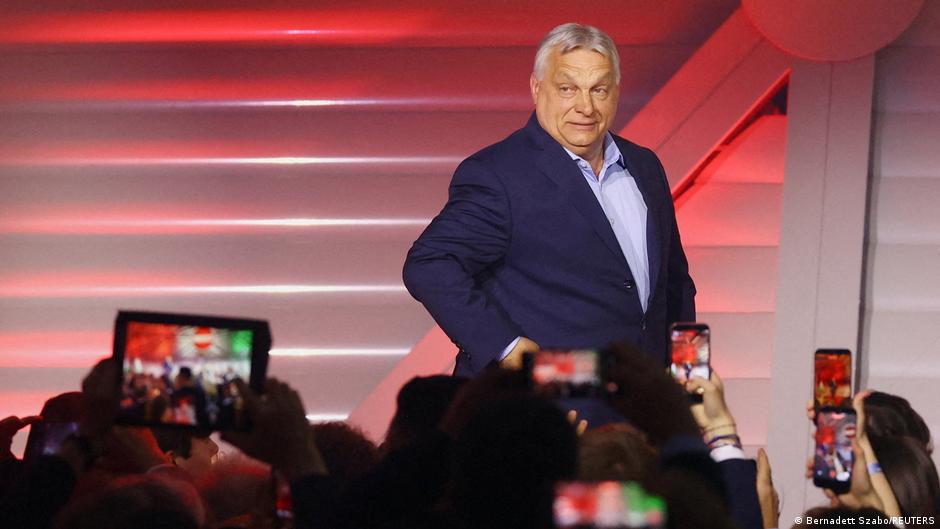
In a stunning reversal of political fortunes that has sent shockwaves through Central Europe, veteran Prime Minister Viktor Orbán conceded defeat in Hungary’s parliamentary elections on Sunday, April 12, 2026. The concession marks the finish of Orbán’s 16-year tenure in power, a period defined by a tightening grip on state institutions and a frequently adversarial relationship with the European Union.
Orbán, who has led the Fidesz party to four successive victories, described the election result as “painful” but “clear.” He offered his congratulations to Péter Magyar, the leader of the center-right opposition Tisza party, who is now set to form the next government in Budapest according to CNN.
The scale of the defeat is unprecedented for the Fidesz-led government. With more than 98% of the vote counted, the Hungarian Election Information Office indicates that Orbán’s Fidesz party is projected to secure approximately 55 of the parliament’s 199 seats—a precipitous drop from the 135 seats the party previously controlled as reported by CNN.
The Rise of the Tisza Party and Péter Magyar
Péter Magyar has emerged as the primary architect of this political shift. Leading the Tisza party, Magyar ran a campaign focused heavily on domestic grievances, specifically targeting government corruption and the state of Hungary’s stagnating economy and poor health care system. Addressing a jubilant crowd of supporters in Budapest, Magyar declared that the victory had “liberated Hungary” from the Orbán regime.
The victory is not merely a plurality but a potential mandate for sweeping change. Election officials state that Magyar’s Tisza party is on track to secure two-thirds of the seats in parliament per CNN reports. This supermajority could provide the new administration with the legislative power necessary to reverse many of the controversial constitutional and legal changes implemented during the Orbán era.
A Geopolitical Shift: Impact on the EU and US
The electoral outcome is expected to fundamentally alter Hungary’s standing within the international community. For years, Viktor Orbán, a lawyer and politician who first served as prime minister from 1998 to 2002 before returning to office in 2010 via Wikipedia, has been a persistent point of friction for the European Union. His nationalist policies and disputes over the rule of law made him a “thorn in the side” of EU leadership.
European leaders are expected to view Magyar’s victory as a significant relief, potentially opening the door for a more cooperative relationship between Budapest and Brussels. Conversely, the result represents a diplomatic blow to US President Donald Trump, who had endorsed Orbán during the campaign.
Contrasting Campaign Strategies
The path to this result was paved by two starkly different visions for Hungary’s future. While Magyar focused on internal systemic failures, Orbán attempted to maintain his hold on power by leveraging security fears. The incumbent prime minister spent much of the campaign stoking anxiety that Hungary could be dragged into the conflict in Ukraine if his leadership were to end.

the electorate prioritized domestic stability and integrity over the fear-based narratives of the incumbent. The transition from a Fidesz-dominated National Assembly to one led by the Tisza party signals a pivot toward the center-right opposition’s platform of anti-corruption and economic renewal.
Key Election Data at a Glance
| Metric | Viktor Orbán (Fidesz) | Péter Magyar (Tisza) |
|---|---|---|
| Projected Seats | ~55 seats | Two-thirds of parliament |
| Previous Seat Count | 135 seats | N/A |
| Primary Campaign Focus | National security/Ukraine war | Corruption, Economy, Health Care |
| Outcome | Conceded defeat | Set to form government |
As Hungary prepares for this transition, the global community will be watching closely to notice how Péter Magyar implements his promises of liberation and reform. The immediate next step is the formalization of the government and the appointment of a new cabinet to lead the nation out of the Orbán era.
We will continue to provide updates as the new government is formed in Budapest. Do you believe this shift will permanently mend Hungary’s relationship with the EU? Share your thoughts in the comments below.
Related reading