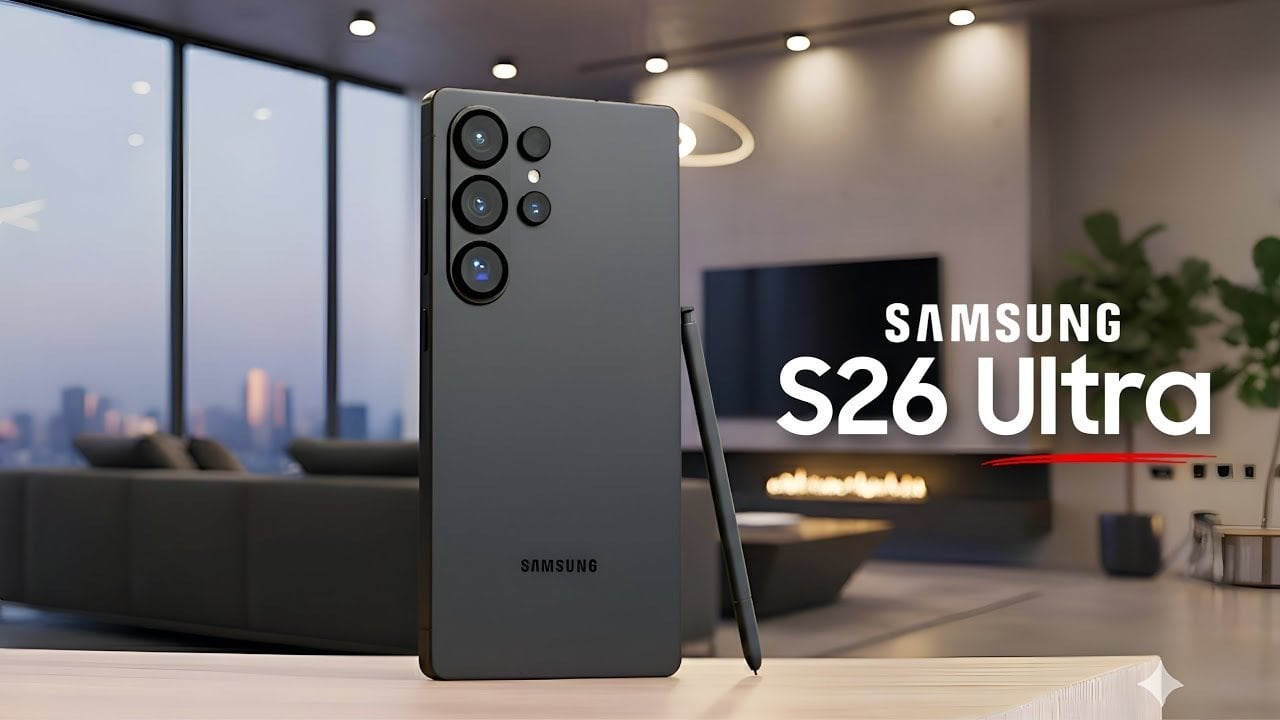
Samsung has officially entered the era of “agentic AI” with the release of the Samsung Galaxy S26 Ultra, a device designed to shift the smartphone from a passive tool to an active assistant. For those tracking the evolution of mobile hardware, the S26 Ultra represents a significant push toward a future where software anticipates user needs before they are explicitly requested.
The device officially hit the market on March 11, 2026, following a pre-order period that signaled strong consumer interest Tom’s Guide. While the physical design has grow thinner and lighter, the core of the experience is driven by a latest breed of artificial intelligence and high-end silicon designed to handle complex, background tasks without user intervention.
From a technical standpoint, the S26 Ultra is a powerhouse. It features a 6.9-inch display with a resolution of 1440×3120 pixels and is powered by the Snapdragon 8 Elite Gen 5 chipset GSMArena. With up to 16GB of RAM and storage options reaching 1TB, the hardware is built to support the demanding requirements of on-device AI processing and high-resolution media capture.
As a journalist who has spent nearly a decade at the intersection of software development and consumer electronics, I find the shift toward “agentic” features particularly compelling. We are moving away from the “app-centric” model—where a user must open a specific application to achieve a goal—and toward a system where the AI orchestrates these actions in the background.
The Rise of Agentic AI: Beyond Simple Chatbots
The defining characteristic of the Samsung Galaxy S26 Ultra is its focus on agentic AI. Unlike previous iterations of AI that primarily responded to prompts, the S26 Ultra aims to anticipate needs based on context. This is most evident in features like “Now Brief,” which analyzes the context of text messages to surface relevant recommendations. For instance, if a contact asks about a lunch meeting, the system automatically provides a calendar shortcut to streamline the scheduling process Tom’s Guide.
Samsung is introducing “Automated App Actions” via Gemini. This allows users to perform complex tasks—such as booking an Uber or placing a DoorDash order—using only their voice, while the AI handles the app navigation in the background. This evolution suggests a future where the traditional app grid becomes less relevant, as the AI becomes the primary interface for interacting with digital services.
These software innovations are paired with a “Privacy Display,” which is cited as one of the most innovative hardware additions to the series, providing a more secure viewing experience for the user Tom’s Guide.
Hardware Specifications and Performance Metrics
Under the hood, the S26 Ultra is designed for longevity and high performance. The device runs on Android 16 and Samsung has committed to up to seven major upgrades, ensuring the hardware remains viable for years to come GSMArena. The integration of Corning Gorilla Armor 2 provides enhanced durability for the 6.9-inch screen.
The camera system remains a central pillar of the Ultra experience. With a 200MP main sensor capable of 4320p video recording, the device offers significant improvements in low-light photography GSMArena. A standout addition is the “Horizontal Lock” in video mode, which provides a more stable and professional recording experience Tom’s Guide.
Although, the hardware is not without its compromises. Reviewers have noted that the camera bump is exceptionally large, and the viewing angles are narrower compared to the previous S25 Ultra Tom’s Guide. While the 5000 mAh battery provides strong life, the device still lacks silicon carbon battery technology and built-in Qi2 magnets Tom’s Guide.
Technical Specifications Overview
| Feature | Specification |
|---|---|
| Display | 6.9″ (1440×3120 pixels) |
| Processor | Snapdragon 8 Elite Gen 5 |
| RAM | 12GB / 16GB |
| Storage | 256GB / 512GB / 1TB |
| Battery | 5000 mAh (60W charging) |
| OS | Android 16 |
User Experience and Ecosystem Integration
For users migrating from older devices, Samsung has streamlined the transition process. The company has developed a series of steps to allow for the seamless transfer of contacts, photos, music, videos, messages, notes, and calendars Samsung US.

The S26 Ultra also continues to support the S-Pen, maintaining its position as a productivity tool for power users. The combination of the Snapdragon 8 Elite Gen 5 and 16GB of RAM ensures that multitasking remains fluid, even when running heavy AI-driven processes in the background.
Despite the high-end positioning, the market has already seen some price volatility. Reports indicate that some retailers have offered the flagship at prices up to 24 percent below the suggested retail price (UVP) shortly after launch, reflecting a competitive retail environment PC-WELT.
Key Takeaways for Potential Buyers
- AI-First Approach: The shift to agentic AI means the phone can now perform background tasks and anticipate needs via features like Now Brief and Automated App Actions.
- Hardware Power: Equipped with the Snapdragon 8 Elite Gen 5 and up to 16GB of RAM, it is built for high-intensity multitasking.
- Camera Excellence: A 200MP sensor and improved low-light performance make it a top choice for mobile photography, though the physical camera bump is prominent.
- Longevity: Android 16 support with up to seven major OS upgrades ensures a long operational lifespan.
- Design Trade-offs: While thinner and lighter, the device lacks Qi2 magnets and silicon carbon battery technology.
The Samsung Galaxy S26 Ultra is more than just a spec bump; it is a test case for how artificial intelligence will redefine our relationship with mobile hardware. By moving the AI from a “chat” interface to an “agent” interface, Samsung is attempting to solve the friction of app-switching and manual data entry.
As the rollout of “Automated App Actions” continues, the next major checkpoint for users will be the software updates that further integrate Gemini’s capabilities into the Android 16 ecosystem. We expect further refinements to these agentic features as Samsung gathers real-world usage data from its global user base.
Do you think agentic AI will finally make mobile apps obsolete, or is this just another layer of automation? Share your thoughts in the comments below and let us grasp if you’re planning to upgrade.
Keep reading