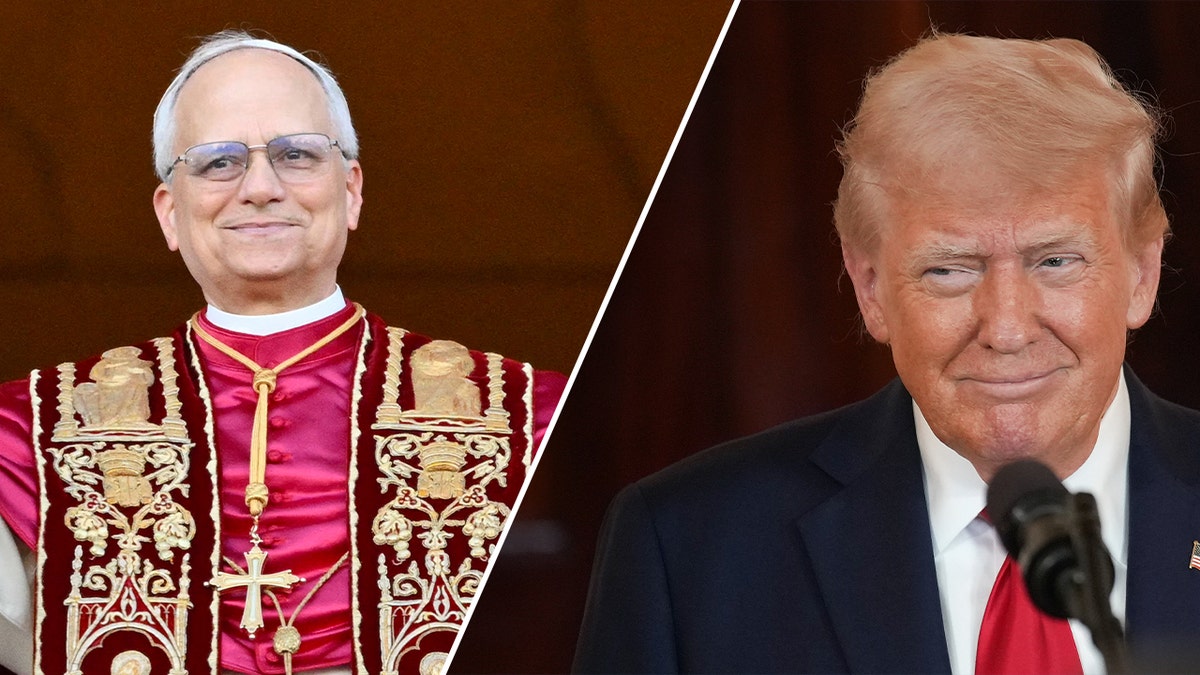
A deepening diplomatic rift has emerged between the White House and the Vatican as President Donald Trump unleashed a scathing tirade against Pope Leo XIV, labeling the pontiff “weak” and “terrible” for foreign policy. The confrontation centers on the Pope’s outspoken opposition to the U.S.-Israel war in Iran, marking a rare and public clash between a U.S. President and the leader of the Catholic Church.
The tension peaked on Sunday, April 12, 2026, when President Trump posted a series of attacks on Truth Social, accusing the U.S.-born Pope of “catering to the Radical Left” and suggesting he is not doing a “very good job.” The President’s broadside followed the Pope’s recent denunciation of U.S. Military actions and threats regarding the Iranian conflict, creating an unprecedented friction between the two leaders.
Pope Leo XIV, who is the first U.S.-born pontiff, responded on Monday, April 13, 2026, although en route to Algeria for an 11-day apostolic journey to Africa. Speaking to reporters aboard his flight, the Pope stated he has “no fear” of the Trump administration, asserting that the Vatican’s calls for peace and reconciliation are rooted in the Gospel via AP News.
This public feud over the Iran war highlights a fundamental disagreement over the use of military force and the morality of “civilizational” threats. While the Trump administration maintains a hardline stance on Tehran’s nuclear ambitions, Pope Leo has emerged as a staunch critic of the conflict, calling for an “off-ramp” to end the violence.
Trump’s Truth Social Attacks and Foreign Policy Disputes
President Trump’s criticism of Pope Leo XIV was not limited to the Iran conflict. In a series of posts on Truth Social, the President accused the Pope of being “WEAK on Crime and terrible for Foreign Policy” via BBC. He further claimed that the Pope “should receive his act together” and “use Common Sense” rather than acting like a “Politician.”

A primary point of contention is the U.S.-Israel war in Iran. Trump expressed frustration with the Pope’s stance on nuclear weapons, specifically regarding Tehran’s attempts to become a nuclear power. “I don’t want a Pope who thinks it’s OK for Iran to have a Nuclear Weapon,” Trump stated, suggesting the pontiff’s approach is detrimental to the Catholic Church and global security via Time.
The President likewise targeted the Pope’s criticism of U.S. Military operations elsewhere. Specifically, Trump cited the Pope’s denunciation of the U.S. Military campaign in Venezuela, which resulted in the capture of former President Nicolás Maduro earlier this year. Trump defended the operation, alleging that Venezuela had been sending “massive amounts of Drugs into the United States” and releasing dangerous criminals into the U.S. via Time.
In a more personal critique, Trump suggested that the Pope’s election was a strategic move by the Church to manage his presidency. He claimed the pontiff was elected “because he was American and they thought that would be the best way to deal with President Donald J Trump,” adding, “If I wasn’t in the White House, Leo wouldn’t be in the Vatican” via BBC.
Pope Leo XIV’s Stance on War and Peace
Pope Leo XIV has consistently pushed back against the rhetoric of total war. The Chicago-born pontiff recently denounced President Trump’s threat to destroy Iran’s “whole civilization,” describing such a prospect as “truly unacceptable” via Time.
The Pope’s opposition to the conflict reached a high point during a prayer vigil at St. Peter’s Basilica on Saturday, April 11, 2026. During the event, he called for an end to the “idolatry of self and money” and the “display of power,” explicitly stating, “Enough of war!” This vigil occurred on the same day that U.S. And Iranian officials were engaged in unsuccessful peace negotiations in Islamabad, Pakistan via Time.
Despite the President’s direct attacks, the Pope has largely avoided naming Trump specifically in his broader criticisms, instead focusing on the theological and humanitarian implications of war. However, following the Sunday broadside, the Pope told journalists that he does not intend to engage in a debate with the President but will continue to promote peace and reconciliation via BBC.
Apostolic Journey to Africa and Global Implications
The eruption of this feud coincided with the start of Pope Leo XIV’s first-ever papal trip to Algeria. The 11-day apostolic journey to Africa is intended to promote Christian-Muslim coexistence and honor St. Augustine, who was born in the region via AP News.
The timing of the trip is significant, as the Pope seeks to foster interfaith dialogue at a time of intense global conflict. The friction between the Vatican and the White House may complicate diplomatic efforts, particularly given the influence of the Catholic Church in the U.S. Approximately 20% of the U.S. Population—more than 70 million people—are Catholic, including high-ranking administration officials such as Vice-President JD Vance via BBC.
Key Points of the US-Vatican Conflict
| Issue | President Trump’s Position | Pope Leo XIV’s Position |
|---|---|---|
| Iran War | Advocates for strength; opposes nuclear capabilities in Tehran. | Calls the conflict “unacceptable”; urges an “off-ramp” for peace. |
| Venezuela Campaign | Defends military action to stop drug trafficking and prison releases. | Denounced the violence of the military campaign. |
| Papal Role | Claims the Pope is “weak,” “liberal,” and catering to the “Radical Left.” | States his appeals for peace are rooted in the Gospel. |
As Pope Leo XIV continues his journey through Africa, the international community remains focused on whether this public clash will hinder potential diplomatic breakthroughs in the Middle East. The next confirmed checkpoint is the continuation of the Pope’s 11-day mission in Africa, where he is expected to meet with local religious and political leaders to discuss coexistence.
World Today Journal encourages our readers to share their perspectives on the intersection of faith and foreign policy in the comments below.
Related reading