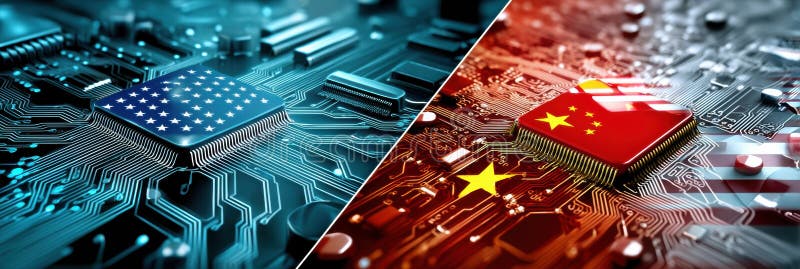
In an era defined by escalating geopolitical tensions and a race for technological supremacy, the intersection of science and diplomacy has become a critical frontier. As nations grapple with the rapid evolution of artificial intelligence (AI) and semiconductor dominance, scientific diplomacy is emerging as a strategic lever for international action, particularly for France and its global partners.
The current landscape is marked by a stark divide between the pursuit of open scientific collaboration and the reality of national security interests. This tension is most evident in the ongoing technological rivalry between the United States and China, which is fundamentally reshaping the global electronics sector. From export controls to market restrictions, the competition for dominance is creating a fragmented environment where scientific knowledge is increasingly weaponized or shielded.
Amidst this fragmentation, the call for a coordinated, science-based approach to governance has grown louder. The United Nations has recently emphasized that the speed of technological evolution—specifically in AI—is outstripping the rules designed to regulate it, necessitating a shift from political conjecture to reliable, shared facts.
The Rise of Technological Fragmentation and Global Rivalries
The global electronics and technology sectors are currently experiencing a profound transformation driven by the “tech war” between the U.S. And China. Since 2017, this rivalry has intensified through a combination of tariffs, export controls, and market access restrictions. This competition is not merely about trade but about the strategic control of the underlying infrastructure of the digital age.
The economic impact of these restrictions is significant. For instance, data suggests that the U.S. Has seen a tangible reorientation of imports away from China, resulting in a loss of nearly 150 billion USD in exports for the Chinese economy since 2017 Coface analysis. Despite these tensions, a deep structural interdependence remains; for example, 29% of U.S. Exports of semiconductor manufacturing machinery are still destined for China Coface analysis.
This environment of “technological rivalry” creates a precarious balance for countries attempting to maintain scientific openness even as protecting economic sovereignty. The risk of a “patchwork” of fragmented regulations threatens to hinder the global exchange of knowledge, which is essential for solving transnational challenges.
Science at the Heart of AI Governance
The challenge of managing AI is perhaps the most pressing example of why scientific diplomacy is required. On February 20, 2026, UN Secretary-General António Guterres warned that the world is “rushing into the unknown” regarding AI governance. Speaking at an event during the AI Impact Summit in New Delhi, India, Guterres argued that policies cannot be based on “hype” or “disinformation,” but must instead be grounded in reliable facts UN News.
To address this, the UN is implementing a cooperation architecture based on scientific expertise. Central to this effort is the International Scientific Report on Artificial Intelligence—an independent, diverse, and multidisciplinary group designed to bridge the knowledge gap and assess the actual impacts of AI on societies and economies UN News. This initiative reflects a broader strategic shift: moving away from “noise” and toward “knowledge” to ensure that AI serves humanity rather than deepening global divides.
Key Components of the UN’s Scientific Approach to AI
- Independent Expertise: The creation of a multidisciplinary panel to provide objective evaluations of AI’s societal impact.
- Knowledge Equity: Ensuring that countries, regardless of their current AI capacity, have access to the same clarity and data to inform their policies.
- Cross-Border Coordination: Recognizing that AI does not stop at national borders and requires a coordinated international response.
Strategic Implications for International Action
For nations like France, utilizing scientific diplomacy as a strategic lever allows for a “third way” between total isolation and unchecked interdependence. By championing a science-led approach to governance, countries can advocate for standards that prioritize human rights and ethical development without sacrificing technological progress.
The fragmentation of scientific spaces—where research is siloed by geopolitical alliances—poses a risk to global innovation. When the “geography of technology” is dictated by rivalry, the result is often a duplication of efforts and a slowdown in the discovery of solutions for global crises. The current trend of reorganizing supply chains to avoid unforeseen disruptions is a symptom of this instability AllianzGI.
Scientific diplomacy serves as a bridge. By focusing on shared scientific goals—such as climate change, pandemic prevention, or ethical AI—states can maintain channels of communication and cooperation even when political relations are strained. This “lever” allows for the projection of influence through expertise and leadership in global standards rather than through economic coercion alone.
Summary of the Current Technological Landscape
| Driver | Key Manifestation | Strategic Response |
|---|---|---|
| Sino-US Rivalry | Export controls on semiconductors; 150bn USD export loss for China | Supply chain diversification and “de-risking” |
| AI Acceleration | Technology evolving faster than regulatory frameworks | UN’s International Scientific Report on AI |
| Scientific Fragmentation | Siloed research and “patchwork” governance | Promotion of scientific diplomacy and shared facts |
As we move toward 2035, the competition for electronic and AI dominance will continue to redefine geopolitical dynamics. The ability of international actors to integrate science into their foreign policy will determine whether the future is one of fragmented “tech blocs” or a coordinated global framework for innovation.
The next critical checkpoint for global AI governance will be the continued rollout and reporting from the UN’s independent scientific group, as they seek to provide the factual foundation for international AI rules.
Do you believe scientific diplomacy can truly overcome geopolitical rivalries in the age of AI? Share your thoughts in the comments below.
Keep reading