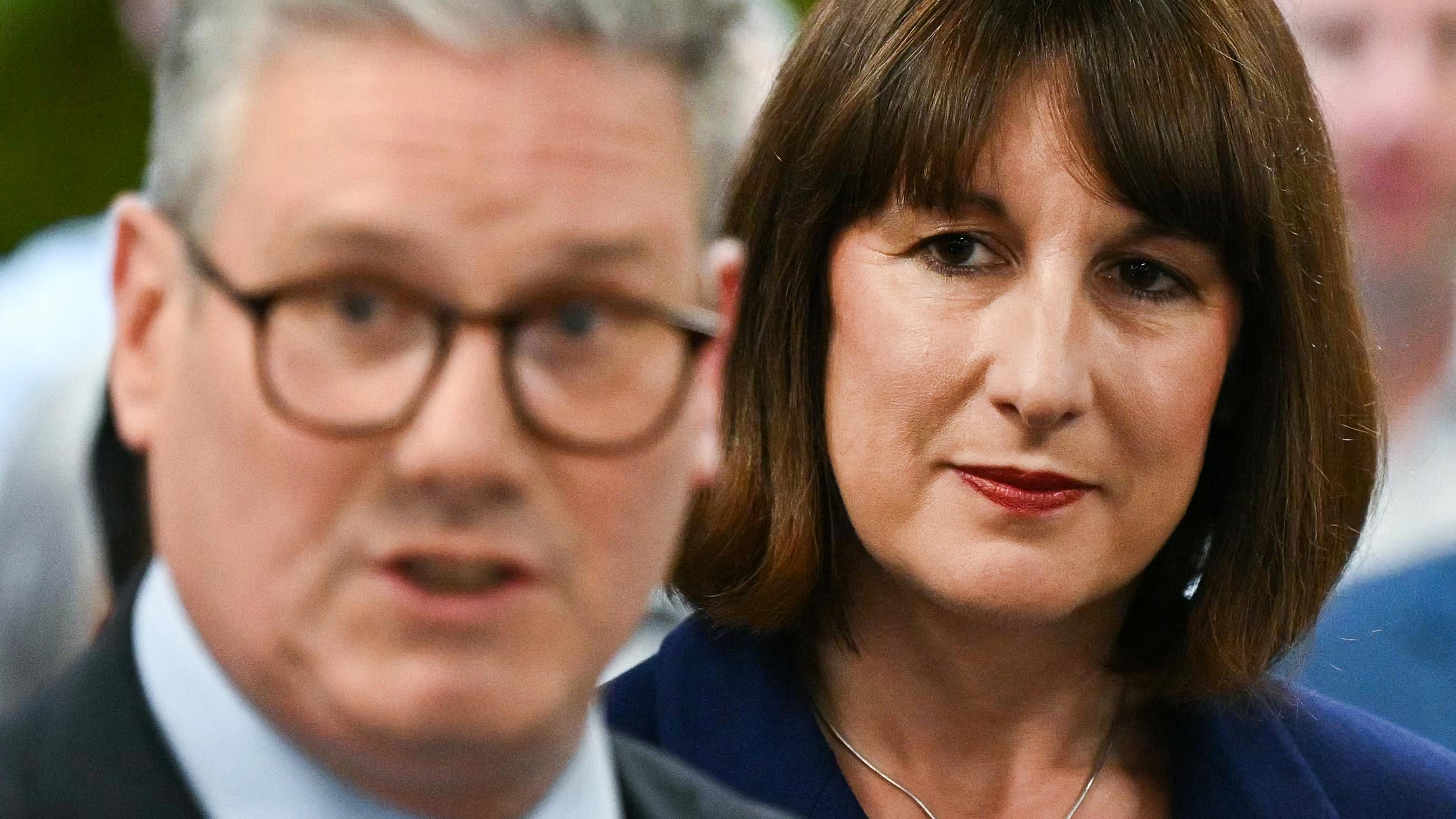
The “special relationship” between the United Kingdom and the United States is facing a period of severe strain as Britain’s top economic official has publicly condemned the U.S. Approach to the conflict in the Middle East. Chancellor of the Exchequer Rachel Reeves has hit out at President Donald Trump for entering the Iran war without a clear exit plan, describing the decision as a “folly” that is now exacting a heavy toll on global economic stability and British households.
Speaking en route to Washington, D.C., for the International Monetary Fund (IMF) spring meetings, Reeves expressed that she is “very frustrated and angry” with the actions of the U.S. Administration. The Chancellor emphasized that the United Kingdom did not start nor want this conflict, yet British families are now suffering the economic consequences of a war launched without a defined set of objectives or a strategy for withdrawal.
The economic fallout has been immediate and severe. The closure of the Strait of Hormuz—a critical maritime artery through which 20% of the world’s oil was transported prior to the U.S. And Israeli attacks on Iran—has led to a sharp rise in gas prices according to reports from The Mirror. This disruption has forced the UK government to maintain a close watch on electricity and gas costs to protect consumers from further volatility.
Economic Shockwaves and IMF Warnings
The timing of the Chancellor’s remarks coincides with sobering forecasts from the International Monetary Fund. The IMF stated on Tuesday that the conflict between US-Israeli and Iranian forces has resulted in weaker than previously expected economic growth for the United Kingdom as reported by the Evening Standard. In a severe scenario linked to the conflict, the influential economic body warned that a global recession could be a “close call.”
Domestically, the financial pressure on UK citizens is mounting. The Resolution Foundation, a prominent think-tank, has warned that the average UK household could be £480 worse off over the current financial year compared to a scenario where the conflict had not occurred per The Mirror. While Ms. Reeves stated she did not recognize that specific figure, she maintained that the government is monitoring energy prices closely to mitigate the impact on families.
Reeves intends to use the IMF spring meetings in Washington to urge coordinated global action to tackle this economic shock. She plans to pitch Britain as a “rare safe haven” for investors, specifically targeting high-earners in the Gulf who may be seeking stability amid the ongoing volatility in the Middle East.
A Divergence in Strategy: De-escalation vs. Blockade
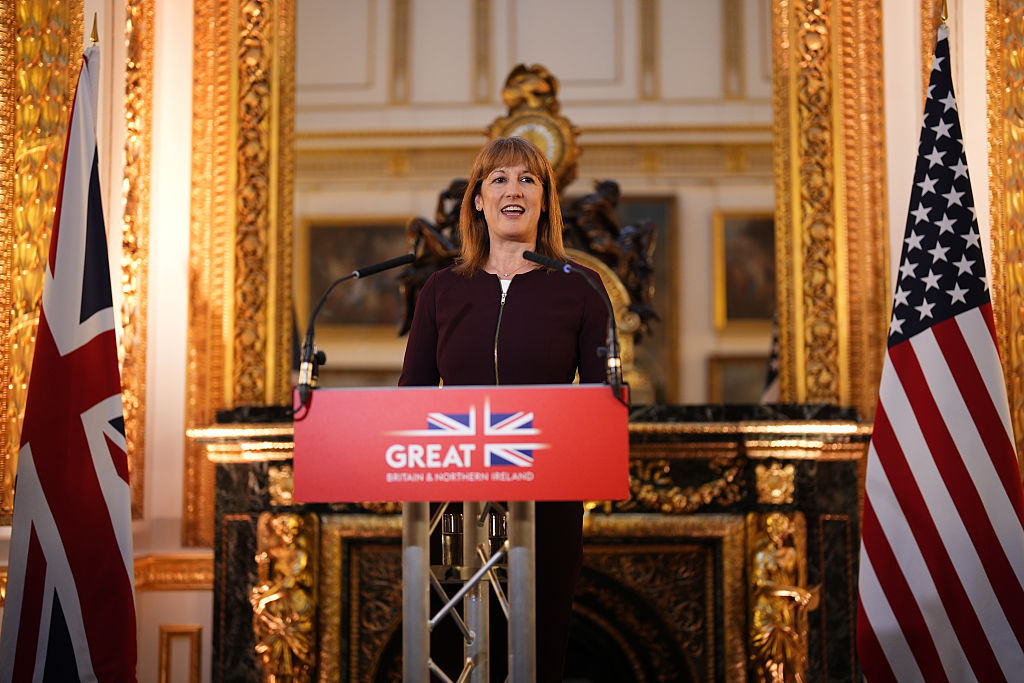
The rift between the two allies is not merely economic but strategic. Rachel Reeves has explicitly stated that the U.K. Will not participate in the U.S. Naval blockade of Iranian ports in the Strait of Hormuz, asserting that the government does not believe a blockade is the “right approach.” Throughout the conflict, the U.K. Position has remained consistent: a call for continuous de-escalation.
The Chancellor strongly backed Prime Minister Keir Starmer’s decision to maintain Britain out of active involvement in the war, despite facing criticisms from President Trump. Reeves described the decision to remain uninvolved as “absolutely the right decision,” emphasizing that the U.K. Must not be drawn into a conflict it did not initiate.
This tension is part of a broader pattern of disagreement that began early in the conflict. Tensions escalated after Prime Minister Starmer initially declined to grant U.S. Forces access to British bases following the start of the war on February 28. In response, President Trump has criticized the U.K. And other NATO allies for their lack of active participation, even going so far as to threaten the potential withdrawal of the U.S. From NATO.
Multilateral Efforts to Restore Navigation
Rather than following the U.S. Lead on a blockade, the U.K. Is pursuing a multilateral diplomatic route to reopen the Strait of Hormuz. Prime Minister Starmer is collaborating with European allies to find a solution that restores the freedom of navigation without further escalating military tensions.
As part of this effort, the U.K. Leader will join French President Emmanuel Macron in hosting a transit summit in Paris this Friday. The goal of the summit is to develop a coordinated approach to ensure the Strait is reopened. President Macron has already engaged in diplomacy, speaking with both President Trump and Iranian President Masoud Pezeshkian to encourage a return to negotiations and the inclusion of Lebanon in any potential cease-fire.
Macron has emphasized that the Strait of Hormuz must be “reopened unconditionally without restrictions or tolls,” a position that aligns with the U.K.’s goal of stabilizing global trade routes and lowering the cost of energy for consumers.
The Future of the Special Relationship
The public nature of the Chancellor’s frustration underscores a significant strain on the diplomatic ties between London and Washington. Prime Minister Starmer recently expressed that he was “fed up” with the economic instability British citizens are facing due to the actions of the Trump administration.
Despite these frictions, the U.K. Government maintains that the bilateral relationship remains vital. This will be put to a visible test later this month during a state visit to the White House by King Charles III and Queen Camilla. The visit is scheduled to mark the 250th anniversary of American independence.
When questioned by the opposition regarding the appropriateness of the royal visit given the current geopolitical climate, Prime Minister Starmer reaffirmed that the trip will proceed, stating that the relationship between the two nations remains “very important on a number of levels.”
The next critical checkpoint for these diplomatic efforts will be the transit summit in Paris this Friday, where the U.K. And France will seek to establish a framework for reopening the Strait of Hormuz.
World Today Journal encourages readers to share their views on the impact of global conflict on domestic economies in the comments section below.
Related reading