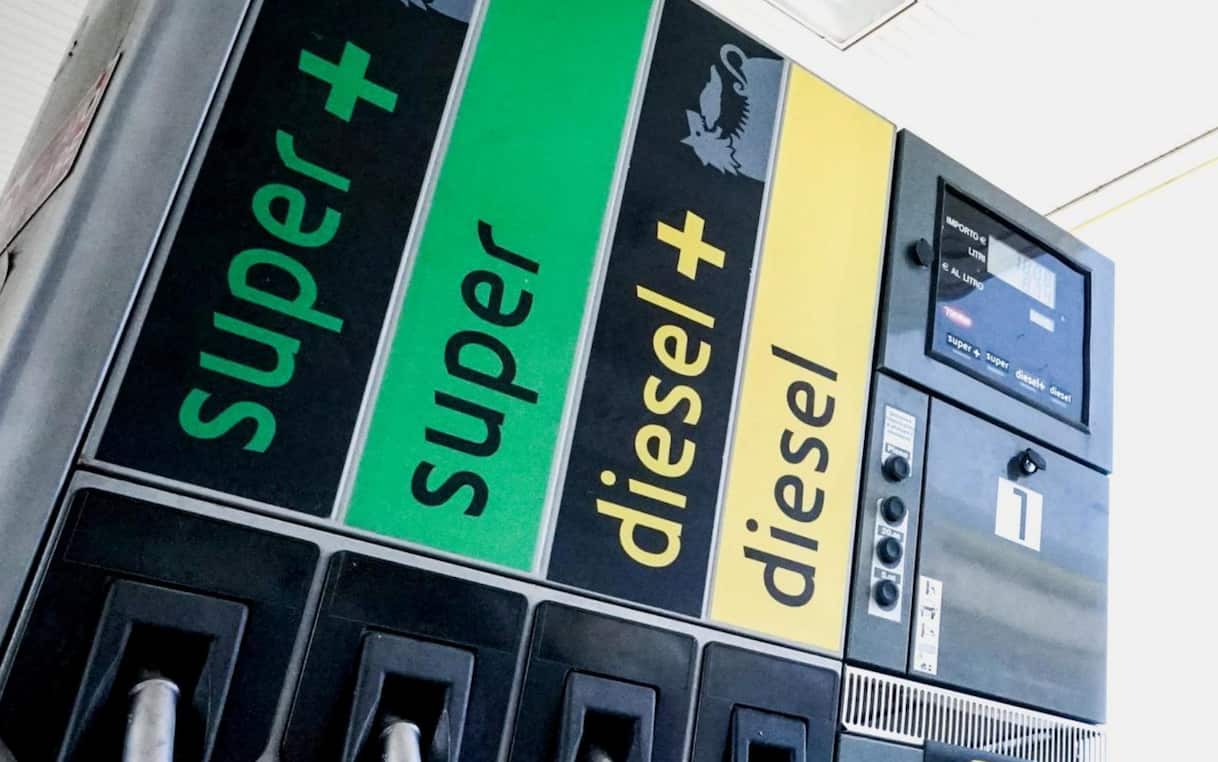
Italian motorists are seeing a slight, progressive decline in fuel costs this April, but the relief may be short-lived. Although current data shows a downward trend at the pump, economic analysts warn that these savings are largely temporary, tied to government interventions and volatile geopolitical tensions in the Middle East.
According to official data from the Fuel Price Observatory of the Ministry of Enterprises and Made in Italy (MIMIT), the average price for benzina e diesel in calo (gasoline and diesel on the decline) as of April 16, 2026, saw self-service gasoline at 1.773 euros per liter and diesel at 2.134 euros per liter via BlogSicilia. However, this dip is overshadowed by a looming deadline: the government-mandated excise tax cut is scheduled to expire on May 1.
The current price structure is heavily influenced by a reduction in excise duties of approximately 25 cents, a measure introduced and subsequently extended by the Meloni government via Virgilio Notizie. Without a further extension or a significant drop in global crude prices, consumers can expect costs to rise again once this subsidy ceases.
Beyond domestic policy, the primary driver of long-term fuel stability remains the geopolitical situation in the Persian Gulf. Market analysts highlight that a definitive decrease in prices will likely only occur once tensions surrounding the Strait of Hormuz are resolved, as this critical maritime chokepoint continues to disrupt global oil supply chains.
The ‘Rocket and Feather’ Effect in Fuel Pricing
To understand why prices do not drop as quickly as they rise, economists often refer to the “rocket and feather” phenomenon. In this model, fuel prices at the pump shoot up like a rocket when supply chain costs increase, but drift down slowly, like a feather, when the market normalizes via Virgilio Notizie.
Fuel retailers often move preemptively to protect profit margins. If market indicators suggest that future shipments will be more expensive due to crisis indicators, prices are raised immediately, even for fuel already stored in tanks. Conversely, when costs drop, the reduction is passed to the consumer more gradually, often lagging behind the actual market price of crude oil.
This lag is particularly evident in the current Italian market. While the MIMIT data shows a measurable ribasso (decrease), the gap between ordinary road networks and highways remains significant. On April 16, 2026, gasoline in self-service on highways reached 1.807 euros per liter, while diesel hit 2.169 euros via BlogSicilia. This disparity is attributed to highway concession costs rather than fluctuations in the global oil market.
Geopolitical Volatility: The Hormuz Crisis
The global energy market is currently grappling with a severe disruption in the Strait of Hormuz. According to the Strait of Hormuz Live Tracker, the region has faced 48 days of disruption as of mid-April, with the strait remaining largely closed to commercial shipping via Hormuz Tracker. This has rendered transit commercially unviable for most carriers due to the withdrawal of insurance and elevated risks.
The impact on crude oil benchmarks is stark. As of April 14, Brent Crude was priced at $94.45, a 31.2% increase compared to the pre-crisis price of $72.00 via Hormuz Tracker. Similarly, WTI Crude rose to $95.72, representing a 47.3% jump from its pre-crisis level of $65.00 via Hormuz Tracker.
The inability to reroute oil is a critical factor in maintaining high prices. While bypass pipelines exist, they cannot handle the full volume of normal strait flow. Total bypass capacity is approximately 7 million barrels per day (bbl/day), compared to the normal flow of 20 million bbl/day—a gap of 13 million bbl/day via Hormuz Tracker. This includes the Saudi East-West Pipeline (Petroline) and the UAE ADCOP Pipeline, but these are insufficient to offset the closure of the strait.
Shipping and Supply Chain Disruptions
The crisis extends beyond the price of crude. Major shipping lines have suspended operations in the Gulf. Maersk, for instance, has suspended all Hormuz transits, with 14 vessels trapped and approximately 70,000 TEU (Twenty-foot Equivalent Units) affected via Hormuz Tracker. This has led to emergency freight surcharges ranging from $1,500 to $4,000 per TEU, further inflating the cost of transporting refined products.

What Happens Next: Key Dates and Diplomatic Efforts
For Italian consumers, the next few days are critical. The primary focus is on two variables: the expiration of government subsidies and the outcome of high-level diplomacy.
On April 17, Prime Minister Giorgia Meloni is scheduled to attend a diplomatic summit in Paris alongside President Emmanuel Macron, Friedrich Merz and Keir Starmer via BlogSicilia. The outcome of this meeting could influence geopolitical strategies to stabilize the energy corridor in the Middle East.
Regardless of the diplomatic outcome, the fiscal deadline remains fixed. On May 1, the current cut in excise duties expires via Virgilio Notizie. Unless the government announces a modern proroga (extension), fuel prices are expected to rise immediately as the tax burden returns to previous levels.
Summary of Current Market Data (April 16, 2026)
| Fuel Type | Self-Service (Ordinary) | Self-Service (Highway) | Global Benchmark (Brent) |
|---|---|---|---|
| Benzina (Gasoline) | 1.773 €/L | 1.807 €/L | $94.45 |
| Gasolio (Diesel) | 2.134 €/L | 2.169 €/L | $94.45 |
The persistence of diesel prices above the 2-euro mark is particularly notable. Even with the active excise cut, diesel remains significantly higher than pre-crisis levels, reflecting the sustained pressure on the refining and distribution chain via BlogSicilia.
The next confirmed checkpoint for motorists is May 1, when the current excise tax reduction expires. Whether the government will intervene again or if the Paris summit yields a breakthrough in the Hormuz crisis will determine if the current “feather-like” descent in prices is reversed.
We invite our readers to share their experiences with local fuel pricing in the comments below.
Worth a look