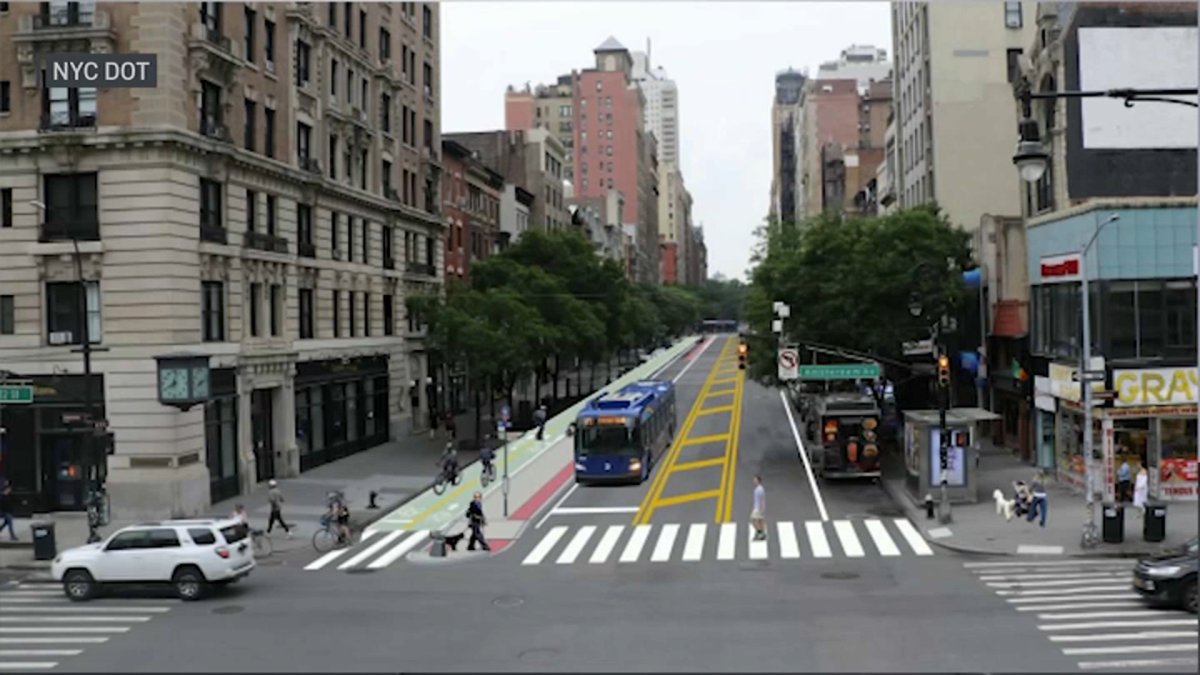
New York City officials are advancing a proposal to redesign 72nd Street in Manhattan, introducing protected bike lanes and reconfiguring traffic lanes in a move that has drawn both support and concern from local stakeholders. The plan, put forward by the New York City Department of Transportation (NYC DOT), aims to create a continuous, two-way protected bicycle route from the Hudson River Greenway to the East River Greenway, passing through Central Park.
The proposal would reduce the number of general traffic lanes on West 72nd Street from four to two, while adding a protected bike lane along the north side of the street and dedicated bus boarding islands. According to NYC DOT Commissioner Mike Flynn, the project would deliver “the first protected cycling connection river to river in this part of Manhattan,” addressing a longstanding gap in the city’s bike network.
Supporters argue the redesign will improve safety for all road users by reducing vehicle speeds and separating cyclists from motor traffic. Flynn cited data indicating that protected bike lane designs like the one proposed for 72nd Street reduce serious injuries and fatalities by 29% for all users, including pedestrians, drivers, and cyclists.
Community Board 7 reviewed the proposal and expressed strong support, with NYC DOT presenting the plans at a public meeting on April 14, 2026. The board’s approval clears a key procedural step, allowing the project to move toward implementation, with construction expected to start in late spring or early summer 2026.
However, some local business owners have voiced concerns about the potential impact on commerce and accessibility. Lester Wasserman, a fourth-generation owner of Tip Top Shoes—a family-run store operating on the Upper West Side for 85 years—said the changes could disrupt customer access and delivery logistics.
“This was done in the shadows,” Wasserman said, expressing frustration over the perceived lack of consultation. “I don’t understand how people are gonna park and come see us. I don’t know how the people are going to deliver boxes to us. Logistically how does it make any sense?” He warned that reducing traffic lanes and reconfiguring curb access could make it harder for customers to park and for suppliers to unload goods.
Wasserman’s concerns reflect broader anxieties among merchants about curb management under the new design. While the plan includes designated zones for parking, loading, and bus stops on the south side of the street, critics argue these may not adequately serve businesses that rely on frequent deliveries or customer drop-offs.
Advocates for the redesign, including Carl Mahaney of the street safety group Streetopia, counter that the current layout overly prioritizes vehicle traffic in a corridor with high pedestrian activity. “There is very much a bias toward the automobile in a space that is really dominated by pedestrians,” Mahaney said, adding that the goal is to create a safer, more balanced street that still supports local commerce.
Mahaney emphasized that proponents do not wish to see businesses suffer, but rather aim to reduce dangers caused by double parking and conflicts between cyclists and vehicles. “They don’t aim for to see the businesses go under. They don’t want to see the street remain clogged with double parking and cyclists riding in between it all,” he said.
The NYC DOT has framed the project as part of a broader effort to expand safe cycling infrastructure across Manhattan, noting that cycling trips in the city increased by 64% over the past decade, reaching 620,000 daily trips in 2023. The agency says the 72nd Street project will connect existing bike lanes on the Upper West Side to major greenways, enabling safer crosstown travel.
A similar redesign is under consideration for 72nd Street on the Upper East Side, though details and community board approval for that segment remain pending as of April 2026.
As the project advances, NYC DOT says it will continue to engage with community boards, local businesses, and residents to refine implementation details. Officials point to similar projects elsewhere in the city that have improved safety without harming business vitality, though they acknowledge that adjustments may be needed based on real-world use.
Construction on the West 72nd Street segment is expected to begin in mid-2026, pending final design approvals and procurement processes. No exact start date has been publicly confirmed.
For updates on the project timeline, design specifications, or opportunities for public input, residents and stakeholders are encouraged to monitor the official NYC DOT website and attend future community board meetings.
If you have thoughts on how street redesigns affect your neighborhood, share your experience in the comments below or join the conversation on social media using #NYCStreets.
Related reading