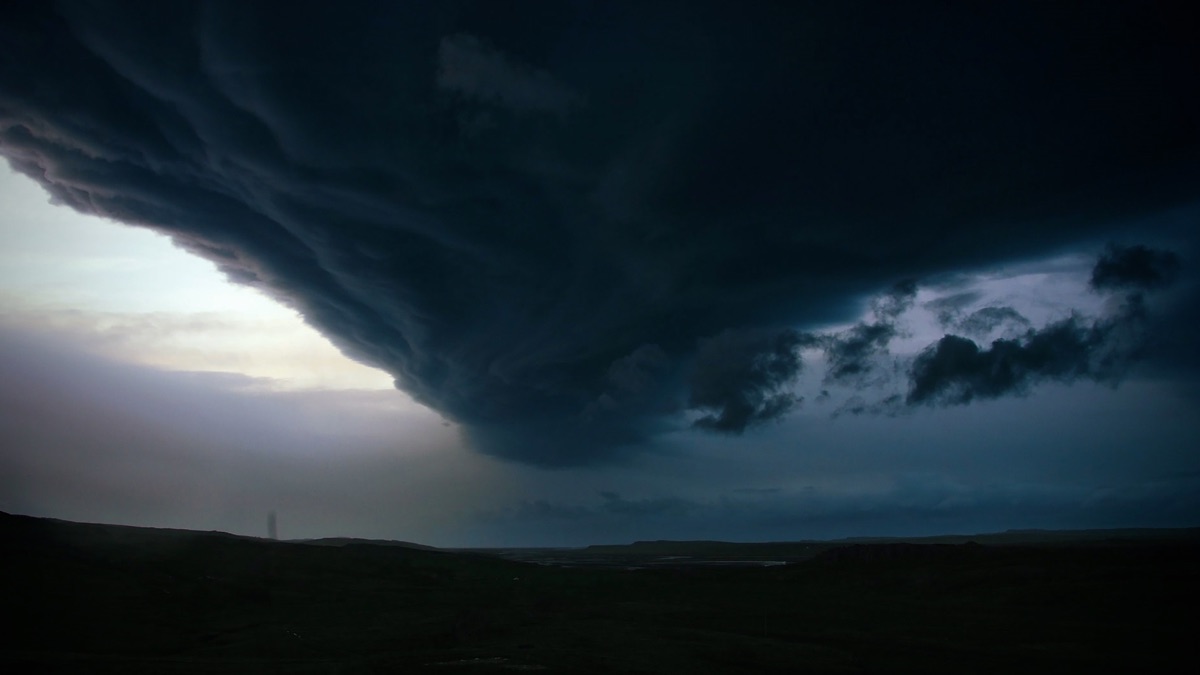
As atmospheric temperatures rise globally, the frequency and intensity of tornadoes are increasing, often extending beyond the traditional boundaries of ‘Tornado Alley’ in the central United States. This shift has drawn attention from meteorologists and climate scientists who are observing changes in storm patterns linked to broader climatic trends.
Tornadoes have been documented on every continent except Antarctica, with the highest occurrence in mid-latitude regions where conditions favor the development of severe thunderstorms. The United States experiences the highest number of tornadoes annually, averaging over 1,000 per year, many of which form in the central plains region colloquially known as Tornado Alley. However, recent trends indicate a possible eastward shift in tornado activity, with increasing reports in areas such as the Midwest and Southeast.
Canada ranks second in annual tornado frequency, reporting nearly 100 tornadoes per year, while the United Kingdom has the highest number of tornadoes per unit area globally, averaging 1.4 tornadoes per 10,000 square kilometers annually—though these are typically weaker in intensity.
The formation of tornadoes requires specific atmospheric conditions: abundant low-level moisture, atmospheric instability, a lifting mechanism such as a cold front or dry line, and strong directional and speed wind shear with height. In the central U.S., much of the low-level moisture originates from the Gulf of Mexico, which fuels thunderstorm development as warm, humid air moves northward during spring and early summer.
Tornadoes are most commonly observed during the afternoon and evening hours, coinciding with peak atmospheric heating. They become visible when water vapor condenses into a funnel cloud or when the rotating column of air lifts dust and debris. Not all thunderstorms produce tornadoes; only those with sufficient rotation and energy, often associated with supercell storms, are capable of generating them.
The intensity of tornadoes is assessed using the Enhanced Fujita (EF) Scale, which estimates wind speeds based on the damage caused to structures and vegetation. Ratings range from EF0 (65–85 mph) to EF5 (over 200 mph), with EF5 tornadoes representing the most destructive category. These evaluations are conducted post-event by meteorologists who analyze damage patterns to determine wind speed estimates.
Tornado activity exhibits a strong seasonal cycle, peaking in the spring and summer months in the Northern Hemisphere due to increased convective energy from solar heating. Winter tornadoes are less common but can still occur, particularly in southern U.S. States where warm, moist air masses may persist.
While the U.S. Remains the global leader in total tornado counts, other regions likewise experience significant activity, including parts of Europe, South Africa, Bangladesh, the Philippines, Argentina, Uruguay, southern and southeastern Brazil, Modern Zealand, and eastern Asia. In Europe, countries like the United Kingdom, Germany, and the Netherlands report notable tornado occurrences, though most are relatively weak compared to those in the U.S.
Climate researchers continue to study the relationship between rising global temperatures and tornado behavior. Although a direct causal link between climate change and increased tornado frequency remains complex and not fully established, observations suggest that warming may be altering the geographic and temporal distribution of favorable storm environments.
For the public, staying informed through official weather alerts from national meteorological services—such as the National Weather Service in the U.S. Or Environment Canada—is critical for safety. These agencies issue tornado watches and warnings based on radar and spotter data, providing lead time for individuals to seek shelter.
Understanding the evolving nature of tornadoes in a changing climate underscores the importance of continued investment in weather monitoring, forecasting technology, and public education. As atmospheric conditions shift, adaptation and preparedness will play key roles in mitigating risks associated with these powerful and unpredictable storms.
For the latest updates on severe weather and tornado safety guidelines, readers are encouraged to consult verified sources such as the National Oceanic and Atmospheric Administration (NOAA) and the Storm Prediction Center (SPC).
Stay informed, stay prepared, and share this information to help others stay safe during severe weather events.
Related reading
- Post-World Cup Argentina Faces Heated Social Media Debates
- School Suspensions in Chile: Latest Updates on Class Cancellations Due to Storms
- Beyond the Teeth: A Dentist’s Reflection on Human Connection (world-today-news.com)
- Beyond Robotic Dog Inspections: The Future of Industrial Automation (newsdirectory3.com)