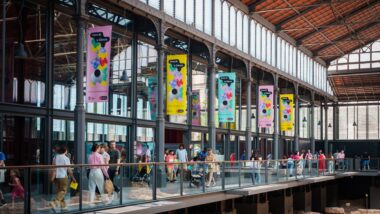
Science enthusiasts in Barcelona have a new reason to mark their calendars as the city prepares to welcome back one of its most beloved annual events: the Science Festival. Organized by Barcelona’s Institut de Cultura and supported by numerous research institutions, the festival returns with a vibrant program designed to make science accessible, engaging, and fun for people of all ages.
This year’s edition will feature hands-on workshops, interactive exhibits, live demonstrations, and talks hosted across several iconic venues in the city, including the Parc de la Ciutadella. Among the highlights are activities planned at the city’s historic greenhouse, the Invernadero, and the Martorell Exhibition Centre, both located within the park. These spaces will host collaborative efforts between scientists, educators, and artists aiming to bridge disciplines and spark curiosity.
The festival’s return comes after a brief pause in recent years, during which public gatherings were limited due to global health concerns. Now, with renewed momentum, organizers emphasize inclusivity and intergenerational learning, ensuring that activities cater not only to students and families but similarly to lifelong learners and curious adults.
According to the Barcelona City Council’s cultural agenda, the Science Festival forms part of a broader initiative to promote scientific literacy and STEM engagement across Catalonia. Events are typically free of charge and open to the public, reflecting the city’s commitment to equitable access to knowledge and innovation.
Visitors can expect a diverse lineup covering topics such as biodiversity, climate science, robotics, astronomy, and biomedical research. Past editions have included DNA extraction labs, virtual reality explorations of ecosystems, and chemistry shows featuring colorful, safe reactions — all designed to demystify complex subjects through play and discovery.
Where Science Meets the City: Key Venues in Parc de la Ciutadella
The Parc de la Ciutadella, one of Barcelona’s most cherished green spaces, serves as the central hub for this year’s Science Festival. Within its boundaries lie two distinctive venues that will play a pivotal role in the event’s programming: the Invernadero and the Martorell Exhibition Centre.
The Invernadero, or greenhouse, is a historic iron-and-glass structure dating back to the late 19th century. Originally built to house exotic plant species for the 1888 Universal Exposition, it has since been restored and repurposed for educational and cultural use. Its controlled environment makes it ideal for exhibits related to botany, climate adaptation, and sustainable agriculture.

Just a short walk away, the Martorell Exhibition Centre — named after the naturalist and paleontologist Francesc Martorell i Peña — functions as a flexible space for temporary installations and thematic displays. Managed by the Museu de Ciències Naturals de Barcelona, it has hosted exhibitions ranging from dinosaur fossils to urban wildlife studies, making it a natural fit for science outreach initiatives.
Both venues are easily accessible via public transit, with nearby stops including Arc de Triomf and Ciutadella-Vila Olímpica metro stations. The park itself is pedestrian-friendly and features wide paths, shaded areas, and seating, allowing visitors to move comfortably between activities.
What to Expect: Activities and Collaborative Programming
While the full schedule for this year’s festival is still being finalized, organizers have confirmed that collaboration will be a defining theme. Scientists from local universities such as the Universitat de Barcelona and the Universitat Politècnica de Catalunya are expected to partner with science communicators, artists, and educators to create immersive experiences.
Past festivals have featured joint projects like sound installations based on seismic data, textile art inspired by microbial patterns, and storytelling sessions where researchers share personal journeys into science. These interdisciplinary efforts aim to show that science is not confined to laboratories but is deeply woven into culture, creativity, and everyday life.
Special attention is being given to multilingual accessibility, with many activities offered in Catalan, Spanish, and English to reflect Barcelona’s diverse population and international visitor base. Sign language interpretation and sensory-friendly hours may also be available, though specific details should be confirmed closer to the event date through official channels.
Families are encouraged to participate together, with many workshops designed for intergenerational engagement. For example, parents and children might team up to build simple machines, decode encrypted messages, or observe microorganisms under microscopes — activities that foster both learning and bonding.
Why the Science Festival Matters for Barcelona and Beyond
In an era marked by rapid technological change and global challenges such as climate disruption and public health threats, fostering public understanding of science has never been more critical. Events like Barcelona’s Science Festival play a vital role in demystifying scientific processes, building trust in expertise, and inspiring the next generation of innovators.
Research from the European Commission’s Science Education Initiative indicates that informal science learning — such as that offered at festivals and museums — significantly increases interest in STEM fields, particularly among underrepresented groups. By bringing science into public parks and communal spaces, Barcelona helps break down barriers that might otherwise prevent engagement.
the festival underscores the city’s identity as a hub of innovation and knowledge. Home to leading research centers, biotech clusters, and a thriving design scene, Barcelona continues to position itself at the forefront of Southern Europe’s knowledge economy. Public events like this one reinforce that legacy while inviting everyone to be part of it.
As preparations continue, officials encourage residents and visitors to monitor the Barcelona Culture Institute’s website and social media channels for updates on the full program, workshop sign-ups (where required), and any last-minute changes. Admission remains free, but some activities may have limited capacity and require advance registration.
The return of the Science Festival is more than just a resumption of past traditions — it is a celebration of curiosity, community, and the enduring human drive to understand the world. Whether you’re a student, a teacher, a researcher, or simply someone who wonders how things work, there will be something to discover, touch, and question under the spring skies of Parc de la Ciutadella.
Stay tuned for official announcements regarding exact dates, featured guests, and special performances. In the meantime, let your curiosity lead the way — and remember, science is for everyone.
Have you attended a science festival before? What exhibit or activity left the biggest impression on you? Share your thoughts in the comments below, and don’t forget to share this article with friends who love to learn.