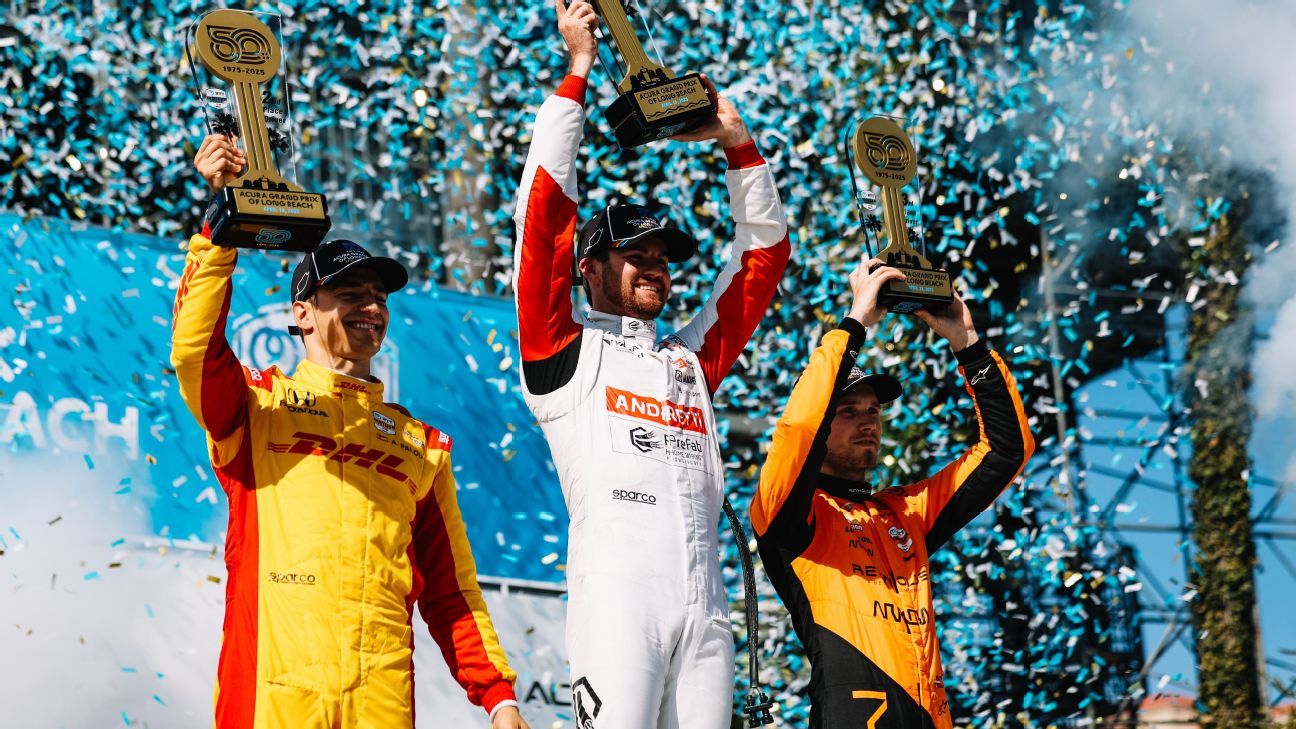
IndyCar is undergoing a generational shift as drivers born between 1997 and 2001 dominate the early-season championship standings, marking what analysts describe as a changing of the guard in North America’s premier open-wheel racing series. Through the first four races of the 2026 NTT IndyCar Series season, the top four positions in the points championship are held exclusively by drivers classified as Gen Z, a demographic cohort typically defined as those born from the mid-to-late 1990s through the early 2010s.
This development represents a notable departure from historical norms in IndyCar, where youth was traditionally associated with a need for extensive seasoning before earning opportunities at top-tier teams. For much of the series’ over-100-year history, young drivers were expected to spend years competing with smaller, less-funded operations to gain experience before being considered for drives with established powerhouses such as Team Penske, Chip Ganassi Racing, or Andretti Autosport.
While, the current landscape suggests a transformation in how talent is evaluated and deployed. Kyle Kirkwood, born in 1998 and driving for Andretti Global, leads the championship after strong performances in the season-opening events. Close behind is Álex Palou, the 1997-born Spaniard who has already secured four IndyCar championships in five seasons with Chip Ganassi Racing and remains a dominant force despite his relatively young age. Third in the standings is Christian Lundgaard (born 2001), driving for Arrow McLaren, while David Malukas, also born in 2001 and now competing for A.J. Foyt Racing, holds fourth place.
The prominence of these young drivers extends beyond the top four. Pato O’Ward, born in 1999 and competing for Arrow McLaren, sits sixth in the championship, while Marcus Armstrong, born in 2000, is ninth. Collectively, six of the top ten drivers in the 2026 IndyCar points standings were born between 1997 and 2001, underscoring the breadth of the generational shift underway.
This trend contrasts sharply with recent seasons in which experience was often prioritized. Over the past decade, two IndyCar champions have been aged 40 or older, reflecting a long-standing belief that veteran drivers possess the nuanced skill set required to master the series’ diverse mix of road courses, street circuits, and oval tracks of varying sizes. The prevailing wisdom once held that younger drivers, despite their reflexes and adaptability, lacked the maturity to consistently handle the intricate demands of multi-discipline racing without making costly errors.
The rise of this Gen Z cohort has been attributed in part to their upbringing in the digital era, particularly their familiarity with advanced racing simulators and data-driven training methods. Many of these drivers developed their skills extensively in virtual environments before transitioning to real-world competition, allowing them to arrive in IndyCar with a sophisticated understanding of vehicle dynamics, track positioning, and race strategy.
David Malukas exemplifies this blend of on-track performance and off-track digital engagement. Beyond his racing accomplishments, Malukas has gained recognition for his active presence on social media, where he shares memes, video game content, and behind-the-scenes glimpses of his life as a professional driver. His approach reflects a broader cultural shift within motorsports, where athletes are increasingly expected to connect with fans through platforms beyond traditional media.
While the early-season results highlight the competitiveness of young talent, the full implications of this shift remain to be seen as the season progresses. Veteran drivers such as Josef Newgarden, Will Power, and Scott Dixon—each of whom has won multiple IndyCar titles and remains among the series’ most successful active competitors—continue to contend for race wins and championship positions, demonstrating that experience still holds significant value.
The evolving dynamic between generations adds a compelling narrative layer to the 2026 IndyCar season, raising questions about whether the current trend will endure throughout the year or if established veterans will reassert their dominance as the schedule moves to different types of tracks and weather conditions.
As of mid-April 2026, the NTT IndyCar Series has not announced any immediate rule changes or structural adjustments in response to the generational shift. The next major event on the calendar is the Grand Prix of Long Beach, scheduled for Sunday, April 19, 2026, which will serve as a key indicator of whether the Gen Z-led trend continues or if the established order begins to respond.
For ongoing updates on driver standings, race results, and series developments, fans are encouraged to consult the official NTT IndyCar Series website and its verified social media channels.
If you found this analysis informative, consider sharing it with fellow motorsports enthusiasts or leaving a comment below to join the conversation about the future of IndyCar racing.
Worth a look