
On April 17, 2026, the International Crisis Group’s “On Our Radar” weekly briefing highlighted escalating tensions across multiple global flashpoints, from Libya’s fragile budget agreement to renewed violence in South Sudan and intensifying Russian strikes on Ukraine. The report, published by the Brussels-based sense tank, synthesizes field analysis to identify where diplomatic intervention or humanitarian action may prevent further deterioration. As conflicts overlap and strain international systems, the briefing serves as an early warning mechanism for policymakers, journalists, and aid organizations seeking to understand where attention is most urgently needed.
The April 17 edition notably features developments in Libya, where rival administrations in Tripoli and Benghazi approved a U.S.-mediated unified budget — the first in over 13 years — coinciding with the launch of Flintlock 26, a U.S.-led special forces exercise in Sirte involving Libyan military coalitions and troops from ten African nations. Analyst Claudia Gazzini notes the initiative aims to bridge divides between the Haftar and Dabaiba families, though many Libyans remain skeptical of arrangements that could entrench their power without transparency. In South Sudan, opposition forces retook the strategic town of Akobo after government troops withdrew, raising alarms about worsening humanitarian conditions in Jonglei state, where both sides have been accused of blocking aid and displacing civilians. Expert Daniel Akech warns that without stronger external pressure for de-escalation, the conflict is likely to deepen.
Meanwhile, Ukraine faced one of its deadliest air raids of the year as Russia launched over 600 drones and dozens of missiles at cities across the country, killing eighteen people. Moscow framed the barrage as retaliation for Ukrainian strikes on energy and military targets, but Kyiv’s leadership, including President Volodymyr Zelenskyy, has repeatedly warned of critical shortages in Patriot air defense systems amid global stockpile depletion. Lucian Kim of the International Crisis Group observes that as the war in Gaza continues to consume interceptor supplies, Ukraine’s vulnerability to Russian aerial attacks is increasing. These threads — budgetary progress amid mistrust in Libya, territorial reversals in South Sudan, and relentless pressure on Ukraine — illustrate how localized dynamics are shaped by broader geopolitical currents and external interventions.
Libya’s Unified Budget and Security Exercise Signal Fragile Progress
On April 11, 2026, the Tripoli-based House of Representatives and the Benghazi-aligned High Council of State jointly approved a unified national budget facilitated by U.S. Mediation, marking the first such agreement since 2012. The budget consolidates public spending across Libya’s divided administrations under a single financial framework, aiming to end years of parallel budgeting that fueled corruption and mismanagement. According to the United Nations Support Mission in Libya (UNSMIL), the deal includes provisions for salary unification, subsidy reform, and capital investment allocation, though detailed line items have not been publicly released, prompting concerns about accountability.
The budget’s approval coincided with the start of Flintlock 26, an annual U.S.-led special forces training exercise held this year in Sirte from April 12–20. The drill brought together elements of Libya’s western and eastern military coalitions alongside contingents from the United States, Italy, Chad, Niger, Senegal, and seven other African nations. U.S. Africa Command stated the exercise focuses on counterterrorism coordination, border security, and crisis response interoperability. Analyst Claudia Gazzini of the International Crisis Group interprets the dual moves as part of a broader Washington strategy to incentivize cooperation between Libya’s rival power centers by linking economic integration with security collaboration.
However, widespread public skepticism persists. Many Libyans view the budget and exercise as attempts to legitimize the enduring influence of the Haftar family in the east and the Dabaiba family in the west, particularly given the lack of public disclosure on revenue sharing, oil expenditure controls, or mechanisms for citizen oversight. Civil society groups have called for parliamentary oversight hearings and independent audits before funds are disbursed. Without transparent implementation, experts warn the agreement risks becoming another top-down arrangement that fails to address root causes of instability, including militia control of local economies and eroded trust in national institutions.
South Sudan’s Akobo Retaken Amid Humanitarian Alarm
In Jonglei state, opposition forces loyal to First Vice President Riek Machar retook the town of Akobo on April 14, 2026, after government troops withdrew following a brief occupation that began in early March. Akobo, located near the Ethiopian border and along key riverine trade routes, has changed hands multiple times since the resurgence of hostilities between the Sudan People’s Liberation Movement-in-Opposition (SPLM-IO) and the government in late 2025. Its strategic value lies in its role as a hub for humanitarian access to inland communities and as a symbolic stronghold for Machar’s support base among the Nuer and Shilluk populations.
The retaking occurred amid renewed warnings from the United Nations Office for the Coordination of Humanitarian Affairs (OCHA) and NGOs operating in Jonglei about catastrophic levels of food insecurity, disease outbreaks, and displacement. In its April 13 bulletin, OCHA reported that over 600,000 people in Jonglei are facing acute hunger, with famine-like conditions reported in parts of Pibor and Uror counties. Both government and opposition forces have been accused of obstructing aid convoys, imposing illegal checkpoints, and issuing sweeping evacuation orders that have displaced an estimated 200,000 civilians since January. The World Food Programme noted that access to Akobo itself had been severely restricted prior to its recapture, delaying food distributions and malnutrition screenings.
Crisis Group expert Daniel Akech emphasizes that the fighting shows no signs of abating and that Machar’s recent trial and detention by President Salva Kiir’s government have further eroded any remaining trust in the 2018 revitalized peace agreement. He notes that whereas regional actors like Uganda and Kenya have expressed concern, there has been no coordinated international push for a ceasefire or renewed mediation. Without such pressure, Akech warns, the cycle of territorial grabs and retaliatory attacks will continue to exact a heavy toll on civilians, particularly women and children who bear the brunt of disrupted farming, collapsed health services, and heightened risk of gender-based violence.
Russia’s Drone and Missile Barrage Highlights Ukraine’s Air Defense Strain
Early on April 16, 2026, Russian forces launched a large-scale aerial assault on Ukrainian cities, firing over 600 one-way attack drones and dozens of cruise and ballistic missiles across Kyiv, Kharkiv, Dnipro, and Odesa. Ukrainian military officials confirmed eighteen civilian deaths, with dozens more injured, marking one of the deadliest Russian air campaigns since the winter of 2024–2025. Russia’s Ministry of Defense claimed the strikes targeted Ukrainian military logistics hubs and energy infrastructure used to support frontline operations, framing them as a direct response to recent Ukrainian drone attacks on Russian oil facilities in Belgorod and Kursk regions.
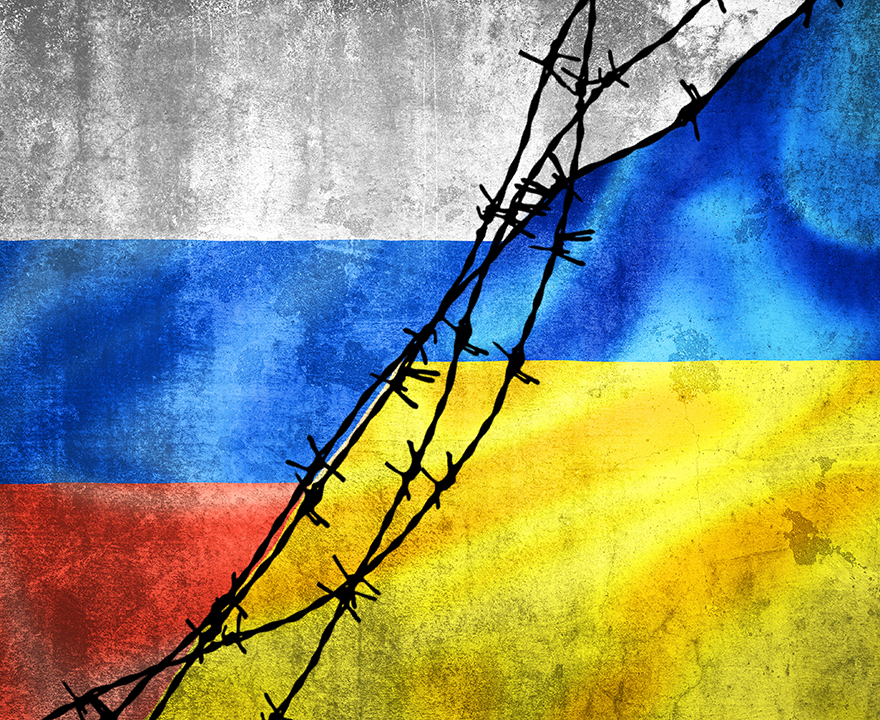
President Volodymyr Zelenskyy, who had concluded a diplomatic tour of Germany, Norway, and Italy earlier in the week to appeal for additional air defense systems, reiterated that Ukraine’s stock of Patriot and NASAMS interceptors is critically low. He urged allies to accelerate deliveries and share spare components, noting that global production capacity is being strained by concurrent demands from Israel, Taiwan, and other U.S. Partners. The situation is exacerbated by the ongoing conflict in Gaza, where Israeli interception efforts have consumed significant portions of the world’s supply of advanced missile defense interceptors, creating bottlenecks in replenishment cycles.
Lucian Kim, senior analyst for Russia and Ukraine at the International Crisis Group, explains that while Ukraine has successfully adapted its air defense tactics — using mobile launchers, dispersed radar networks, and electronic warfare — the sheer volume of Russian attrition-style attacks is overwhelming its ability to intercept every threat. He notes that even a small percentage of getting through can cause significant damage to civilian infrastructure and morale. Kim adds that without a sustained increase in Western military aid, particularly in interceptors and radar systems, Ukraine will face growing difficulty defending its cities and critical energy nodes as the war enters its fourth year.
Why These Developments Matter for Global Stability
Though geographically distinct, the situations in Libya, South Sudan, and Ukraine share common themes: the fragility of power-sharing agreements, the humanitarian cost of protracted conflict, and the outsized influence of external actors in shaping outcomes. In Libya, the U.S.-mediated budget and Flintlock exercise represent an attempt to stabilize a divided state through incentive-based diplomacy, but their success hinges on transparency and inclusive oversight — elements still missing. In South Sudan, the retaking of Akobo underscores how local power struggles can quickly override national peace accords when regional and global attention wanes. And in Ukraine, the relentless Russian aerial campaign reveals how conflicts far from the front lines — such as in Gaza — can indirectly weaken a nation’s ability to defend itself by consuming shared defensive resources.
These dynamics illustrate why early warning systems like “On Our Radar” are vital. By highlighting not just violence but as well diplomatic openings, humanitarian thresholds, and resource strains, the briefing helps identify windows for preventive action. For Libya, that means pushing for public budget disclosures and civil society monitoring mechanisms. For South Sudan, it involves urging regional bodies like IGAD to revive mediation efforts and conditioning aid access on unimpeded humanitarian corridors. For Ukraine, it underscores the need for sustained, coordinated Western support for air defense — not just in quantity, but in resilience against evolving drone and missile tactics.
As of April 17, 2026, the next key developments to watch include the public release of Libya’s unified budget details (expected by late April per UNSMIL timelines), the outcome of SPLM-IO efforts to consolidate control over Jonglei’s rural areas, and whether Ukraine’s Western partners will announce new air defense packages ahead of anticipated Russian offensives in May. Readers seeking real-time updates can follow the United Nations Mission in South Sudan (UNMISS) for humanitarian access reports, the U.S. Africa Command website for Flintlock exercise summaries, and the Ukrainian General Staff’s daily briefings for verified casualty and attack data.
Understanding where crises are escalating — and where openings for peace exist — allows global audiences to move beyond reaction and toward informed engagement. If you found this analysis useful, consider sharing it with others who follow international affairs or leaving a comment below with your perspective on what the world should be watching next.
Worth a look