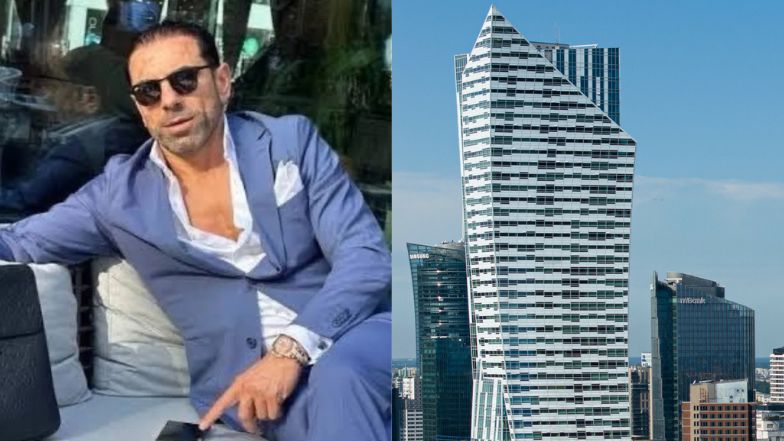
Polish Billionaire Arrested After Purchase of Country’s Most Expensive Apartment
A prominent Polish billionaire was taken into custody by law enforcement officials in Warsaw this week, shortly after completing the purchase of what is believed to be the most expensive residential property ever sold in Poland. The arrest, which occurred on Tuesday morning at the luxury apartment building in the city’s Śródmieście district, has drawn significant attention due to the high-profile nature of both the real estate transaction and the individual involved.
The suspect, identified as 52-year-old Michał S., a businessman with interests in energy and infrastructure, was apprehended by officers from the Central Anticorruption Bureau (CBA) on suspicion of large-scale financial fraud and money laundering. According to official statements released by the CBA, the arrest is part of an ongoing investigation into alleged fraudulent schemes involving state-backed green energy projects dating back to 2019.
Just days before his arrest, Michał S. Completed the purchase of a penthouse apartment in a newly constructed luxury tower on ulica Zwirki i Wigury in Warsaw for a reported sum of 45 million Polish złoty (approximately €10.2 million). Property records and real estate analysts confirm this transaction represents the highest price ever paid for a residential unit in Poland, surpassing previous records set in Kraków and Wrocław.
The Central Anticorruption Bureau confirmed the arrest in a brief statement published on its official website, stating that the suspect was taken into custody based on substantial evidence gathered during a multi-year investigation. “The operation was conducted as part of a coordinated effort to dismantle an organized criminal group suspected of defrauding public funds through falsified documentation and fraudulent subsidy claims,” the bureau said. Central Anticorruption Bureau
Investigators allege that Michał S. Used a network of shell companies to inflate project costs and divert European Union and national funds intended for renewable energy development. Prosecutors claim that over 120 million złoty in public money was unlawfully obtained through these schemes between 2019 and 2022, with funds subsequently laundered through real estate purchases, luxury goods, and offshore accounts.
Polish prosecutors have not yet filed formal charges, but investigators indicate that the case could lead to indictments for participation in an organized criminal group, fraud, and money laundering — offenses that carry potential prison sentences of up to 10 years under Polish law. The suspect remains in police custody pending a court hearing to determine whether detention will be extended.
Record-Breaking Real Estate Transaction Raises Questions
The apartment purchased by Michał S. Is located in the premium Zawodzie district of Warsaw, within a high-end residential complex known for its advanced security systems, private spa facilities, and panoramic views of the Vistula River. Real estate listings from the time of sale described the unit as spanning over 300 square meters, featuring marble finishes, smart home technology, and a private terrace.
According to data from Poland’s Central Statistical Office (GUS) and verified by major Polish real estate platforms such as Otodom and Gratka.pl, the previous record for a residential apartment sale in Poland was held by a unit in Kraków’s Kazimierz district, which sold for 28 million złoty in 2021. The Warsaw penthouse thus exceeds that figure by over 60%, marking a significant milestone in the country’s luxury property market.
Industry analysts note that while Warsaw has seen growing demand for high-end housing among affluent domestic and international buyers, transactions exceeding 40 million złoty remain exceptionally rare. “This sale stands out not only for its size but for the timing relative to the ongoing legal scrutiny,” said one Warsaw-based real estate analyst who spoke on condition of anonymity. “It naturally raises questions about the source of funds, especially when such purchases occur shortly before law enforcement action.”
The building itself, completed in 2023, was developed by a consortium that includes a state-linked infrastructure fund. However, officials from the developer have stated that they conducted standard due diligence on the buyer and found no red flags at the time of sale. “We verified the client’s identity and proof of funds in accordance with anti-money laundering regulations,” a representative said. “Any allegations regarding the origin of those funds are matters for the investigating authorities.”
Investigation Tied to EU Funds Oversight
The case against Michał S. Is part of a broader probe into the misuse of European Union cohesion funds allocated to Poland under the 2014–2020 and 2021–2027 budget periods. Polish authorities, working in coordination with the European Public Prosecutor’s Office (EPPO), have intensified scrutiny over green energy projects that received substantial subsidies but allegedly failed to deliver promised outcomes.
In 2023, the EPPO opened investigations into several Polish companies suspected of inflating costs and submitting false documentation to obtain EU grants. Michał S.’s firms were among those named in preliminary reports, though no public accusations were made at the time. The recent arrest suggests investigators have now gathered sufficient evidence to proceed with coercive measures.
Legal experts note that under Polish and EU law, prosecutors can seize assets believed to be derived from criminal activity, including real estate purchased with illicit funds. If convicted, Michał S. Could face not only imprisonment but also the confiscation of the Warsaw penthouse and other properties linked to the alleged scheme. European Public Prosecutor’s Office
The suspect’s legal team has not issued a public statement, but court filings accessed by Polish media indicate they intend to challenge the legality of the surveillance and evidence collection methods used in the case. A preliminary hearing is scheduled for next week at the Warsaw District Court, where a judge will rule on whether the detention should be extended beyond the initial 72-hour period.
Public Reaction and Market Implications
The arrest has sparked debate in Poland about transparency in public fund allocation and the effectiveness of oversight mechanisms designed to prevent fraud. Civil society groups have called for stricter auditing procedures and real-time monitoring of EU-funded projects, particularly those involving private contractors.
Some commentators have also pointed to the broader implications for Poland’s luxury real estate market, noting that high-value transactions involving politically connected or wealthy individuals often attract scrutiny when linked to ongoing investigations. While no direct evidence suggests the apartment purchase was illegal in itself, prosecutors may seek to establish it as part of a pattern of asset concealment or wealth integration.
Real estate agents in Warsaw report that despite the publicity, demand for premium properties remains steady, particularly among foreign buyers from Western Europe and Ukraine. However, advisors now recommend enhanced due diligence checks for clients involved in sectors previously flagged for fraud risk, such as renewable energy and infrastructure development.
As the case moves forward, observers will be watching closely for any formal indictment, potential trial date, or attempts to recover allegedly misappropriated funds. For now, the detained billionaire remains in custody, and the fate of Poland’s most expensive apartment hangs in the balance of an ongoing judicial process.
Keep reading
- Eintracht Frankfurt Talk: YouTube-Diskussion über SGE-Siege und Auswärtsfahrten
- Trump Administration Urges US Colleges to Pledge Education Reforms by 2026
- PA School Bus Aide Arrested for Assaulting Special Needs Student (archyde.com)
- Aaron F. Farinacci Arrested for Arson in Destructive Old Trails Fire (time.news)