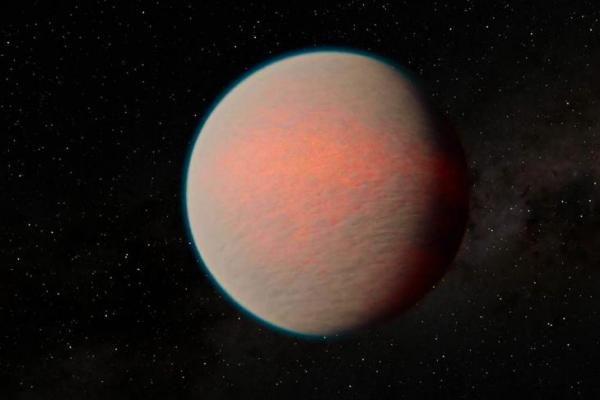
The discovery of exoplanets continues to challenge our understanding of planetary formation and evolution, with recent findings pushing the boundaries of what astronomers thought possible. Among these, a newly identified celestial body dubbed “Super-Venus” has captured scientific attention due to its striking similarities to Venus, yet with characteristics that defy easy classification. Orbiting a distant star in the constellation Libra, this exoplanet—formally known as Enaiposha—has prompted researchers to reevaluate assumptions about atmospheric composition, surface conditions, and the potential for habitability in extreme environments.
Enaiposha was first detected through data collected by NASA’s Transiting Exoplanet Survey Satellite (TESS), which monitors brightness changes in stars to identify orbiting planets. Follow-up observations using ground-based telescopes, including the High Accuracy Radial velocity Planet Searcher (HARPS) at the European Southern Observatory in Chile, confirmed its existence and allowed scientists to commence characterizing its physical properties. What makes Enaiposha particularly intriguing is its position relative to its host star: it orbits much closer than Venus does to the Sun, yet exhibits signs of a dense, potentially cloud-shrouded atmosphere that may resemble—or even surpass—the thickness of Venus’s own.
Initial analyses suggest Enaiposha has a radius approximately 1.5 times that of Earth and a mass nearly five times greater, placing it firmly in the category of super-Earths or mini-Neptunes. However, its estimated density points to a rocky composition with a thick volatile layer, possibly rich in water vapor or other heavy molecules. This combination has led some researchers to describe it as a “Super-Venus”—a world where runaway greenhouse effects may have created surface temperatures hot enough to melt lead, yet with atmospheric dynamics still poorly understood. Unlike Venus, which has a sluggish retrograde rotation, Enaiposha’s spin rate and axial tilt remain unknown, leaving key questions about its weather patterns and long-term climate stability unanswered.
The term “Super-Venus” is not an official astronomical classification but rather a descriptive label used by scientists to highlight exoplanets that share Venus-like traits—such as high surface temperatures, thick atmospheres dominated by carbon dioxide or other greenhouse gases, and potential volcanic activity—while being significantly larger or more massive. In the case of Enaiposha, early spectral hints suggest the presence of molecules like carbon dioxide and possibly sulfur compounds, though definitive confirmation requires higher-resolution spectroscopy than currently available from existing instruments.
What sets Enaiposha apart from known Venus analogs is its orbital period: it completes a full revolution around its star in just under 2.5 Earth days, placing it well within the inner edge of the traditional habitable zone. This proximity results in intense stellar irradiation, estimated to be over 50 times greater than what Earth receives from the Sun. Such energy input would typically strip away atmospheres over time, yet Enaiposha appears to have retained a substantial gaseous envelope—a paradox that challenges models of atmospheric escape and planetary evolution.
To better understand how such a planet could maintain its atmosphere under extreme conditions, researchers have turned to computer simulations that factor in stellar activity, magnetic field strength, and volcanic outgassing. One hypothesis is that Enaiposha possesses a strong internal dynamo generating a protective magnetosphere, similar in concept to Earth’s but potentially more powerful. Another possibility involves continuous replenishment of atmospheric gases through intense geological activity, suggesting a world far more volcanically active than Venus.
These theories remain speculative without direct observational evidence. The James Webb Space Telescope (JWST) is expected to play a pivotal role in future studies, with its ability to analyze exoplanet atmospheres in infrared wavelengths offering unprecedented sensitivity to molecular signatures. Astronomers have already proposed Enaiposha as a target for JWST’s Cycle 2 observations, though scheduling and competition for telescope time imply actual data collection may not occur until late 2024 or early 2025.
Until then, scientists rely on indirect methods and comparative planetology to infer Enaiposha’s nature. By comparing it to known super-Earths like 55 Cancri e and GJ 1214 b, as well as solar system Venus, researchers aim to build a more nuanced picture of how planetary size, composition, and stellar environment interact to produce diverse outcomes. Some models suggest that planets like Enaiposha may represent a transitional class—rocky cores that accumulated significant volatiles during formation but did not reach the threshold to become gas giants.
The study of such worlds has broader implications for astrobiology and the search for life beyond Earth. While surface conditions on Enaiposha are almost certainly too hostile for life as we grasp it, understanding its atmospheric chemistry and climate dynamics helps refine the criteria used to identify potentially habitable exoplanets. It also highlights the diversity of planetary outcomes possible under different initial conditions, reinforcing the idea that Venus-like evolution may be a common pathway for rocky planets orbiting close to their stars.
As observational tools improve and more data pour in from missions like TESS, CHEOPS, and PLATO, astronomers anticipate discovering additional Super-Venus candidates. Each latest find adds complexity to the emerging taxonomy of exoplanets, moving beyond simple size-based categories toward classifications based on atmospheric behavior, thermal profiles, and geological activity. For now, Enaiposha stands as a compelling reminder that the universe continues to produce worlds that challenge our assumptions—and invite us to gaze deeper.