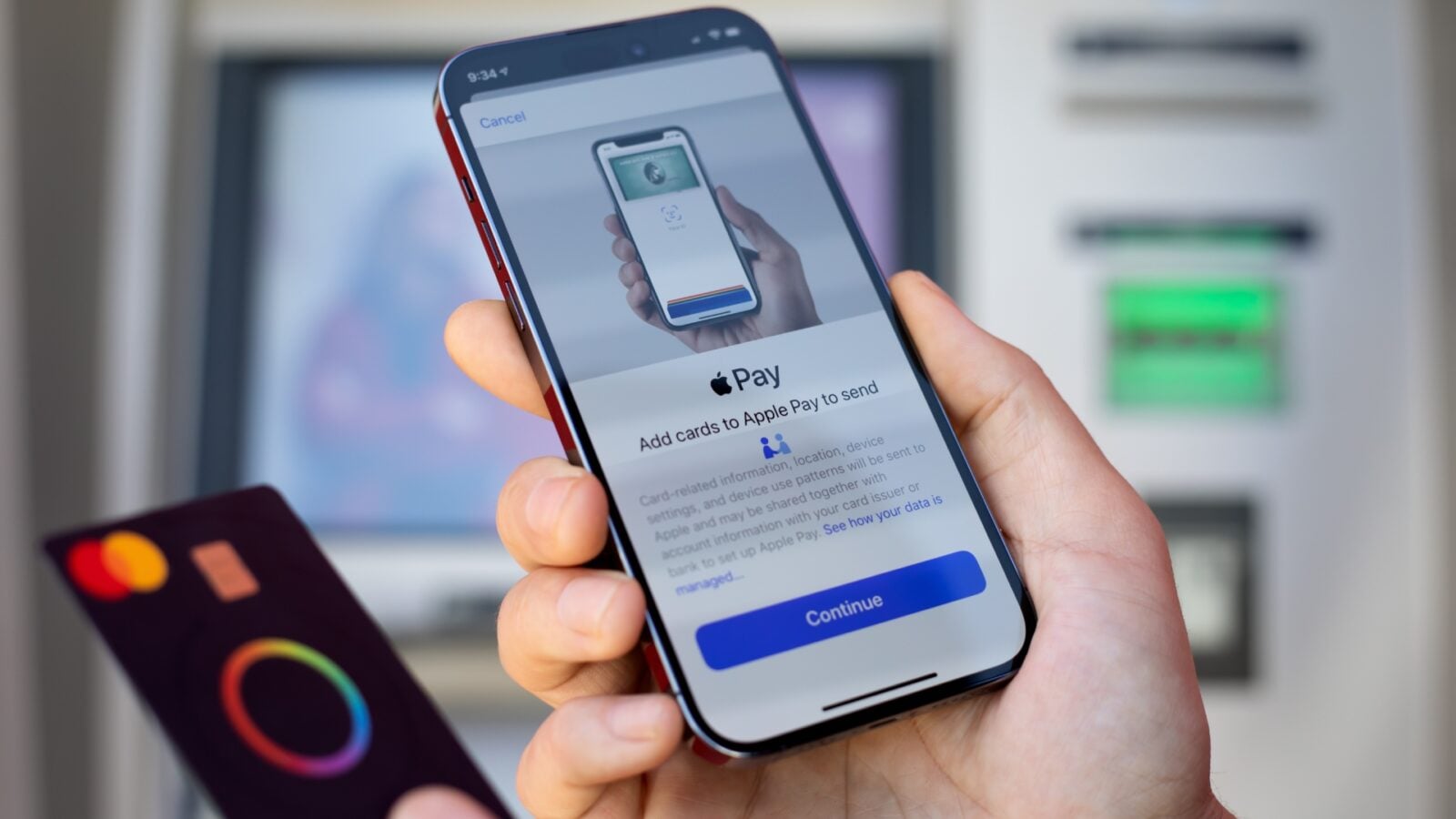
In an age where smartphones rarely leave our hands, it’s becoming increasingly common to forget a physical wallet while still having access to payment methods through mobile devices. This shift reflects a broader transformation in how consumers manage money, driven by the rapid adoption of digital wallets and contactless payment systems. As Apple Pay and Google Pay continue to dominate the mobile payment landscape globally, Europe is pushing back with its own initiative: Wero, a pan-European payment solution designed to reduce reliance on foreign tech giants and strengthen financial sovereignty.
The phrase “On oublie plus son portefeuille que son smartphone” — translating to “We forget our wallet more than our smartphone” — originated from a French tech commentary highlighting how deeply embedded mobile devices have become in daily life. But beyond the anecdote lies a significant trend: consumers are increasingly relying on their phones not just for communication, but as primary tools for financial transactions. This behavioral shift has prompted regulators and financial institutions across Europe to act, aiming to create a homegrown alternative that ensures data privacy, reduces transaction fees, and fosters competition in the digital payments space.
Wero, launched in 2023 by the European Payments Initiative (EPI), represents a coordinated effort among major European banks to build a unified instant payment system accessible across borders. Unlike proprietary systems tied to specific devices or platforms, Wero aims to be interoperable, working through banking apps rather than requiring separate downloads. It supports person-to-person (P2P) payments, in-store purchases, and online transactions, with plans to expand into business-to-business (B2B) and government disbursements. The initiative is backed by institutions including BNP Paribas, Deutsche Bank, Santander, and Intesa Sanpaolo, collectively representing a significant portion of Europe’s retail banking sector.
According to the European Central Bank, over 60% of point-of-sale transactions in the euro area were contactless in 2023, a figure that has steadily risen since the pandemic accelerated the shift away from cash. While Apple and Google collectively process billions of dollars in mobile payments annually through their respective ecosystems, concerns have grown about dependency, data control, and the long-term implications of allowing U.S.-based tech firms to dominate critical financial infrastructure. Wero seeks to address these concerns by offering a European-controlled alternative that adheres to strict EU data protection standards, including the General Data Protection Regulation (GDPR).
One of Wero’s key advantages is its integration with existing banking apps, meaning users don’t necessitate to adopt a new interface or share financial data with third-party tech companies. Transactions are processed in real time through the SEPA Instant Credit Transfer scheme, ensuring funds are available within seconds. This contrasts with some mobile wallet systems that may hold funds in intermediary accounts before settlement. Wero does not charge consumers for standard P2P transfers, aiming to undercut fees sometimes associated with instant transfers on commercial platforms.
Adoption, however, remains a challenge. As of early 2024, Wero was available in Belgium, France, Germany, Luxembourg, and the Netherlands, with plans to roll out to additional EU member states throughout the year. User numbers are still modest compared to the tens of millions actively using Apple Pay or Google Pay in those same countries. Analysts note that success will depend not only on bank backing but also on merchant acceptance, user experience, and effective public awareness campaigns. Unlike Apple and Google, which benefit from massive marketing budgets and pre-installed software on hundreds of millions of devices, Wero must rely on financial institutions to promote and integrate the service.
Security and privacy are central to Wero’s design. The system uses tokenization to protect sensitive card data, ensuring that actual account numbers are never shared during transactions. Because it operates under the regulatory framework of the EU’s Payment Services Directive 2 (PSD2) and is subject to oversight by national central banks and the European Banking Authority (EBA), it offers a level of accountability that differs from proprietary tech platforms. Supporters argue this makes Wero not just a payment tool, but a strategic asset in Europe’s push for digital autonomy.
How Wero Compares to Apple Pay and Google Pay
While Apple Pay and Google Pay offer seamless experiences — especially for users already embedded in the iOS or Android ecosystems — they operate within closed environments tied to specific hardware and software. Apple Pay, for instance, is limited to Apple devices, while Google Pay functions best on Android, though it does offer some cross-platform flexibility. Both systems generate revenue through transaction fees paid by merchants, though the exact structures are not always publicly disclosed.
Wero, by contrast, is designed to be neutral: it does not favor any operating system or device manufacturer. Because it works through participating banks’ native apps, a user with an Android phone at a French bank accesses Wero the same way as someone with an iPhone at a German savings bank. This approach aims to eliminate friction and promote inclusivity, particularly for users who may not want to or cannot afford the latest smartphones.
Another distinction lies in data handling. Apple and Google collect anonymized transaction data to improve services and, in some cases, support advertising or product development — practices that have drawn scrutiny from European regulators. Wero’s framework limits data retention and prohibits the use of transaction information for profiling or targeted marketing, aligning more closely with EU expectations for financial privacy.
Still, user experience remains a hurdle. Early adopters have reported that setting up Wero can be less intuitive than tapping to pay with Apple Pay, particularly if the banking app interface is not optimized for quick access. However, ongoing updates from participating banks are focused on streamlining the process, including biometric authentication and one-tap payment prompts within the app.
Why Europe Is Pushing for a Homegrown Alternative
The drive behind Wero is not merely competitive — it’s strategic. European policymakers have long expressed concern over the region’s dependence on foreign technology for essential services, a vulnerability highlighted during geopolitical tensions and supply chain disruptions. In the realm of payments, relying on two U.S. Corporations for a significant share of digital transactions raises questions about resilience, especially in scenarios involving sanctions, data access requests, or service restrictions.
In 2022, the European Commission released a report on the state of digital payments, warning that without intervention, the market could become increasingly concentrated in the hands of non-European actors. The report emphasized the need for a “European solution” that upholds EU values around privacy, security, and open competition. Wero emerged directly from this initiative, funded and guided by the EPI, which was itself launched in 2020 by a coalition of banks and supported by the Euro Retail Payments Board (ERPB).
Supporters argue that a successful Wero could do more than facilitate payments — it could strengthen the euro’s role in digital finance, reduce costs for businesses through lower interchange fees, and increase financial inclusion by providing a low-barrier option for unbanked or underbanked populations. Critics, however, caution that without strong network effects, Wero risks remaining a niche service, especially if users perceive little difference in convenience compared to existing options.
What’s Next for Wero and Mobile Payments in Europe?
The rollout of Wero is being monitored closely by regulators, financial analysts, and consumer advocates. As of mid-2024, the EPI has confirmed plans to expand Wero to Austria, Portugal, and Spain by the complete of the year, with discussions underway for integration in Italy and Poland. Each expansion requires coordination with national banking associations and compliance with local implementations of SEPA and PSD2.
One key milestone to watch is the potential integration of Wero into public sector payments, such as tax refunds, social benefits, or public transit systems. In France, for example, pilot programs are testing the use of instant bank transfers for municipal services, a use case where Wero’s real-time capabilities could offer advantages over card-based systems. Similarly, in Germany, discussions are ongoing about enabling Wero for government disbursements under the country’s digitalization agenda.
On the consumer front, adoption will likely hinge on education and incentives. Some banks have begun offering cashback or fee waivers for early users of Wero, while others are integrating loyalty features directly into the banking app experience. Whether these efforts will shift user behavior remains to be seen, but the underlying momentum — driven by both consumer habits and institutional strategy — suggests that mobile-first payments are here to stay, and Europe is determined to shape its own version of that future.
As the line between physical and digital wallets continues to blur, the question isn’t just whether we forget our wallets more than our phones — it’s who gets to decide how we pay when we reach for the device already in our hand.
For updates on Wero’s expansion, official statements from the European Payments Initiative, or guidance from your bank on enabling instant payments, visit the EPI’s official website or contact your financial institution directly.
What are your thoughts on mobile payments and the rise of European alternatives like Wero? Share your experience in the comments below, and consider sharing this article if you found it informative.
Related reading
- Cerebras Systems Shares Plunge After Missing Q2 Revenue Expectations
- Logitech Left-Handed Vertical Mouse Launch Exposes Ergonomic Gap for Australian Workers
- Twitch lets users opt out of Amazon using stream data to train AI models (time.news)
- Dawn of War 4 Release Date Delayed: What to Expect from the Refining Process – Warhammer 40k Strategy Game Update” “Dawn of War 4 Launch Delayed: How the Game’s Delay Will Affect Fans – Warhammer 40k Strategy Game News” “Warhammer 40k Strategy Game Dawn of War 4 Delayed to Refine Experience Ahead of Release – Gaming News Update” “Dawn of War 4 Delayed: What the Delay Means for the Upcoming Warhammer 40k Game – Strategy Game Release News (archyworldys.com)