
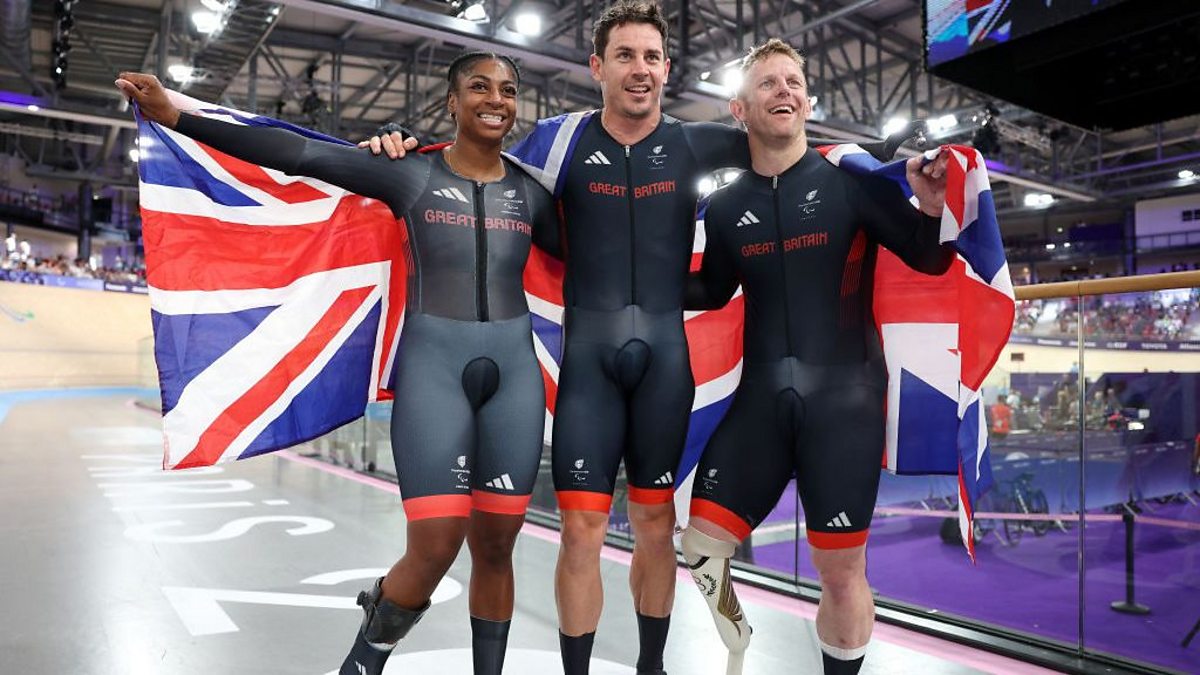
Kadeena Cox’s journey from a multiple sclerosis diagnosis to becoming a Paralympic gold medallist is a testament to resilience, defiance, and the power of self-belief. The British athlete, who competes in both athletics and cycling, has repeatedly refused to let others define her limits — a mindset encapsulated in her own words: “I don’t let anyone tell me I can’t do something.” This philosophy has guided her through some of the most challenging moments of her life and career, turning adversity into athletic excellence on the world stage.
Diagnosed with multiple sclerosis in 2014 at the age of 23, Cox faced a future that suddenly felt uncertain. The neurological condition, which affects the brain and spinal cord, can lead to a wide range of symptoms including fatigue, mobility issues, and vision problems. For an athlete who had been training as a sprinter since her teenage years, the diagnosis was a profound blow. Yet rather than stepping away from sport, Cox made the extraordinary decision to not only continue competing but to expand her horizons into para-cycling — a move that would eventually lead her to the pinnacle of Paralympic success.
Her breakthrough came at the Rio 2016 Paralympic Games, where she made history by winning gold medals in two different sports: the T38 400m on the track and the C4–5 500m time trial in cycling. This achievement made her the first British Paralympian since 1984 to win gold in two distinct sports at the same Games. Her performances were not only medalling efforts but also record-breaking — she set a Paralympic record in the cycling time trial with a blistering lap that underscored her extraordinary power and determination.
Cox’s success in Rio was built on years of adaptation and relentless training. After her MS diagnosis, she worked closely with neurologists, physiotherapists, and coaching staff to understand how her body responded to exercise and heat — a critical factor, as many people with MS experience worsened symptoms in high temperatures. Through careful monitoring and personalized training plans, she learned to manage her condition while pushing her athletic boundaries. Her ability to balance medical needs with elite performance has made her a role model not just in disability sport, but in elite athletics more broadly.
Beyond the medals, Cox has used her platform to advocate for greater inclusion and understanding of people living with chronic conditions. She has spoken openly about the emotional toll of her diagnosis, including periods of depression and anxiety, and how sport became a vital tool for mental resilience. In interviews, she has emphasized that disability does not equate to inability, and that societal barriers often pose a greater challenge than the condition itself. Her advocacy extends to working with organizations like the MS Trust and Parasport, where she encourages others to find adaptive ways to stay active.
Her journey continued at the Tokyo 2020 Paralympics (held in 2021 due to the pandemic), where she added to her medal count with a bronze in the T38 400m and a silver in the C4–5 500m time trial. Though she did not replicate her Rio double-gold feat, her performances were still elite-level, especially considering the ongoing challenges of managing MS during a global health crisis. Cox has spoken about the added difficulties of training during lockdowns, including limited access to facilities and the psychological strain of isolation — obstacles she navigated with the same grit that defined her rise.
In the lead-up to Paris 2024, Cox remained a key figure in Britain’s Paralympic hopes. While she did not compete in the cycling events due to a strategic focus on athletics, she represented Great Britain in the T38 400m, aiming to add another medal to her collection. Her preparation included high-altitude training camps and close collaboration with her medical team to optimize performance while managing symptom flare-ups. Though she did not medal in Paris, her presence on the start line was itself a victory — a visible affirmation that diagnosis does not dictate destiny.
Cox’s story resonates far beyond the track or velodrome. She has become a symbol of what is possible when athletes refuse to be limited by labels — whether medical, social, or psychological. Her work in promoting disability sport, particularly through school outreach and media appearances, has helped shift perceptions and inspire a fresh generation of para-athletes. She has also been candid about the importance of mental health support, urging sporting bodies to integrate psychological care as standard practice for elite competitors.
As she looks ahead, Cox continues to balance her athletic ambitions with her role as an advocate and public speaker. She has expressed interest in mentoring young athletes navigating similar challenges and remains committed to using her visibility to drive change in how society views disability and chronic illness. While her competitive career may evolve, her influence is likely to grow — not just as a medallist, but as a voice for perseverance, authenticity, and the refusal to accept limits imposed by others.
For those inspired by her journey, official updates on Kadeena Cox’s activities and advocacy work can be found through her verified social media channels and the British Paralympic Association’s athlete hub. Her story remains a powerful reminder that while obstacles are real, they do not have to be final — and that sometimes, the most powerful thing we can say to doubt is simply: “Watch me.”