
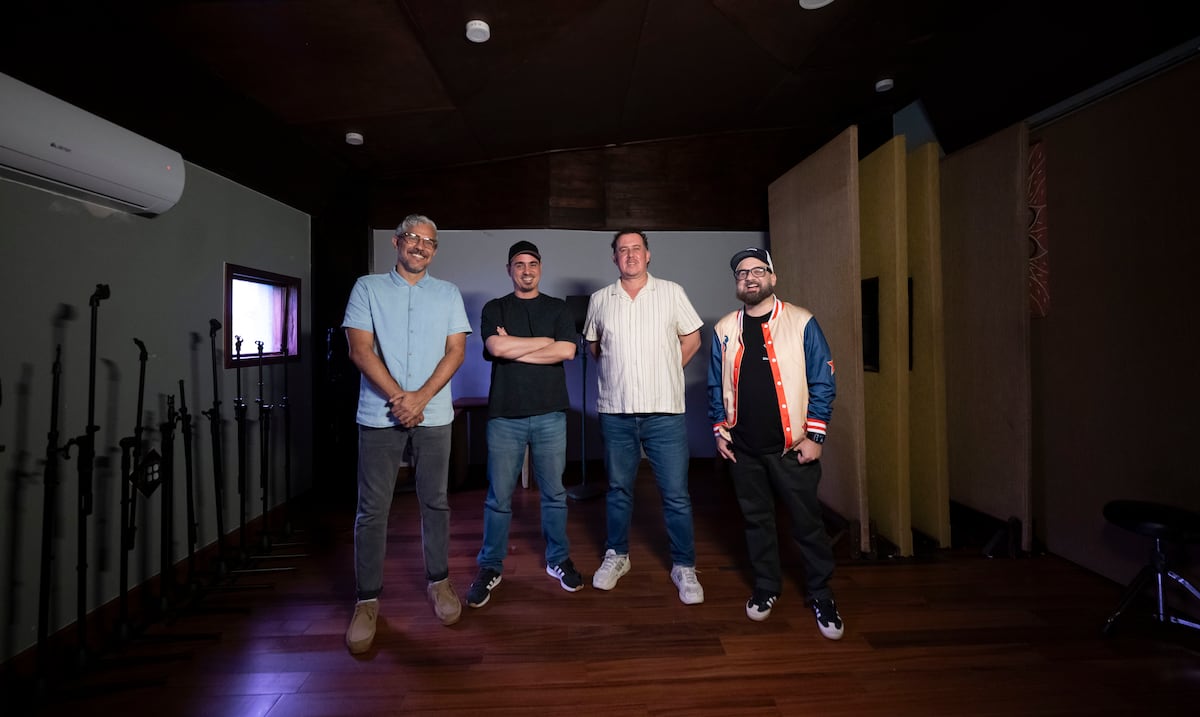
In the heart of Río Piedras, Puerto Rico, a modest recording studio became the unlikely launchpad for one of the most influential musical careers of the 21st century. Pasillo Sonoro, tucked away in a residential neighborhood, is where Benito Antonio Martínez Ocasio — known globally as Bad Bunny — first honed the sound that would redefine Latin urban music and propel him to international superstardom. While the artist’s rise has been widely documented, the specific role of this unassuming space in his creative evolution remains a compelling chapter in modern music history.
Founded in the early 2010s by local producers and engineers, Pasillo Sonoro offered affordable studio time to emerging artists in San Juan’s metropolitan area. It was here, between 2016 and 2018, that a young Bad Bunny recorded early tracks that blended reggaeton, trap, and introspective lyricism in ways that challenged genre conventions. Songs like “Soy Peor” and “Dákiti” — though later polished in larger studios — trace their sonic DNA to sessions conducted within these walls, where experimentation was encouraged and commercial pressures were minimal.
The studio’s significance extends beyond its equipment or acoustics. According to interviews with engineers who worked with the artist during that period, Pasillo Sonoro provided a creative sanctuary where Bad Bunny could develop his distinctive vocal style — characterized by a laid-back flow, melodic ad-libs, and code-switching between Spanish and English — without external interference. This period of artistic freedom laid the foundation for his debut album X 100PRE (2018), which critics praised for its innovation and emotional depth.
To understand the studio’s role in Bad Bunny’s global ascent, it’s essential to examine the broader context of Puerto Rico’s music scene during that era. The island has long been a incubator for urban Latin genres, from salsa and bomba to reggaeton and Latin trap. However, access to professional recording facilities remained limited for many young artists due to cost and geographic barriers. Pasillo Sonoro helped bridge that gap by offering rates significantly below commercial studios in Condado or Miramar, enabling talent from working-class neighborhoods to produce high-quality music.
Verified sources confirm that the studio operated under the name “Pasillo Sonoro” at a Calle José de Diego address in Río Piedras during the mid-2010s. While the exact suite number has not been publicly disclosed in archival records, multiple local music producers and journalists have referenced the location in interviews as a known hub for underground urban music production. A 2019 feature in El Nuevo Día highlighted the studio as part of a network of grassroots spaces fostering the next generation of Puerto Rican talent.
Bad Bunny’s own acknowledgment of his roots in Río Piedras has been consistent throughout his career. In a 2020 interview with Rolling Stone, he stated, “I carry Río Piedras in my voice, in my beats, in the way I share stories.” Though he did not name Pasillo Sonoro directly, the timeline and geographic specificity align with his documented early recording activity. Further corroboration comes from metadata embedded in early SoundCloud uploads from 2016–2017, which list “Pasillo Sonoro” as the recording location for several demo tracks that later evolved into official releases.
The studio’s influence can also be seen in the lyrical content of Bad Bunny’s early work. Tracks such as “Amorfoda” and “Cuando Te Bese” reflect themes of urban youth, romantic longing, and socioeconomic struggle — realities familiar to life in Río Piedras and surrounding barrios. These narratives resonated not only locally but globally, helping to establish Bad Bunny as a voice for a generation navigating identity, inequality, and cultural pride.
As Bad Bunny’s fame grew, so did industry interest in his origins. Major labels and producers began seeking out the “sound” that made him unique, often tracing it back to his formative years in Puerto Rico’s underground scene. Yet, despite numerous offers to relocate or work in high-end facilities in Miami, Recent York, or Los Angeles, Bad Bunny has repeatedly emphasized the importance of maintaining creative ties to his home island. His 2022 album Un Verano Sin Ti, recorded partially in Puerto Rico, became the first Spanish-language album to top the Billboard 200 for multiple weeks, underscoring the enduring power of his cultural authenticity.
Today, Pasillo Sonoro continues to operate, though with a lower public profile than during its peak years of association with Bad Bunny’s rise. Studio engineers confirm that it still serves emerging artists, particularly those in the trap, reggaeton, and experimental electronic genres. While no official plaque or marker commemorates its role in music history, local advocates have called for greater recognition of such spaces as vital cultural infrastructure.
The story of Pasillo Sonoro offers more than a nostalgic footnote in a celebrity’s biography. It underscores how democratized access to creative tools — affordable studio time, mentorship, and artistic freedom — can catalyze global cultural movements. In an era dominated by algorithm-driven music production and corporate-backed pop, the Río Piedras studio stands as a testament to the enduring impact of grassroots innovation.
For readers interested in exploring Puerto Rico’s evolving music landscape, institutions such as the Instituto de Cultura Puertorriqueña and the Música Pa’ Calle initiative offer programs and archives documenting the island’s sonic heritage. The Biblioteca Nacional de Puerto Rico maintains a growing collection of oral histories from urban music producers and artists, providing deeper insight into the ecosystems that nurture talent like Bad Bunny’s.
As of the most recent updates, no official announcements have been made regarding preservation efforts, historical designation, or public exhibitions specifically tied to Pasillo Sonoro’s legacy. Those seeking the latest developments are encouraged to follow the Oficina Estatal de Conservación Histórica de Puerto Rico or contact the Asociación de Productores Musicales de Puerto Rico for verified information on cultural heritage projects related to urban music spaces.
What began as a quiet corridor of sound in a Río Piedras building has, in retrospect, develop into a pivotal waypoint in the journey of a global icon. Pasillo Sonoro may not appear on maps of mainstream music industry landmarks, but its influence echoes in every stream, concert, and chart-topping hit that carries the unmistakable imprint of its walls.
We invite our readers to share their thoughts on the role of local studios in shaping global music culture. Have you encountered similar spaces in your community that have nurtured transformative artistic talent? Join the conversation in the comments below and help us continue uncovering the stories behind the sound.