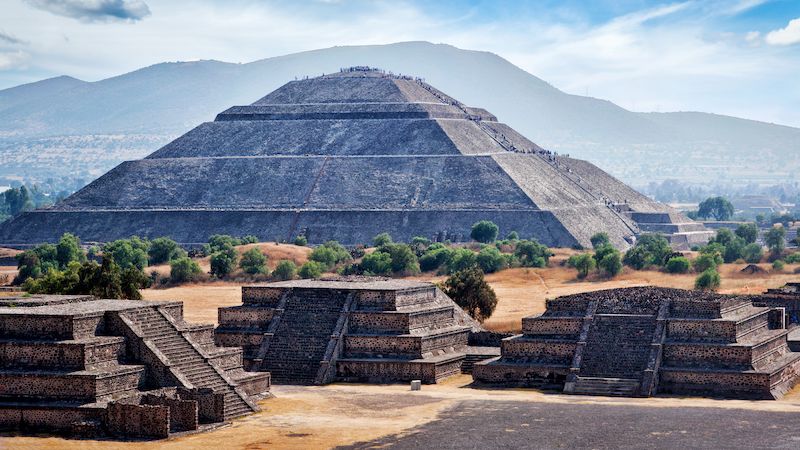
A shooting incident near the ancient pyramids of Teotihuacan in Mexico has resulted in two fatalities and 15 injuries, according to Mexican authorities. The event occurred on the outskirts of the archaeological site, a UNESCO World Heritage location approximately 40 kilometers northeast of Mexico City, drawing immediate concern from both local officials and international observers due to the site’s cultural and historical significance.
Preliminary reports from the Attorney General’s Office of the State of Mexico (Fiscalía General de Justicia del Estado de México) indicate that gunfire erupted during a public gathering near the Pyramid of the Sun, one of the largest structures of its kind in the Western Hemisphere. Emergency responders were dispatched to the scene within minutes, providing medical assistance and securing the area. The identities of the deceased have not been publicly released pending notification of next of kin, and authorities have not disclosed potential motives or suspect information at this stage.
Teotihuacan, renowned for its monumental architecture and enduring legacy of Mesoamerican civilization, attracts thousands of visitors daily, including tourists, researchers, and local residents. The proximity of the violence to such a globally recognized heritage site has prompted heightened attention to security protocols at major archaeological zones across Mexico. Officials from the National Institute of Anthropology and History (INAH) confirmed that while the incident occurred outside the regulated visitor zone, it underscores ongoing challenges related to public safety in areas surrounding protected cultural sites.
Official Response and Investigation Underway
Mexican federal and state authorities have launched a coordinated investigation into the shooting, with the federal Attorney General’s Office (FGR) offering support to state-level prosecutors. Surveillance footage from nearby cameras is being reviewed, and investigators are interviewing witnesses who were present at the time of the shooting. As of the latest update, no arrests have been made, and no official statement has linked the incident to organized crime, though such connections are commonly examined in similar cases within the region.
The State of Mexico’s security cabinet convened an emergency meeting following the event, during which officials reiterated their commitment to maintaining safety in both urban and tourist-adjacent areas. Public safety announcements have been issued urging anyone with information to come forward through official channels. The federal government has likewise emphasized its ongoing collaboration with INAH to assess whether additional protective measures are needed at or near heritage sites, particularly during peak visitation periods.
In a brief statement, the Ministry of Foreign Affairs acknowledged the incident and confirmed that consular services are available to assist any foreign nationals affected. While no foreign casualties have been confirmed, the embassy network remains on alert to provide support if needed. Travel advisories for the Teotihuacan area have not been altered, but officials continue to monitor the situation closely.
Context of Violence and Security at Cultural Sites
Although Teotihuacan itself is generally considered safe for visitors, the surrounding municipalities have experienced fluctuating levels of criminal activity in recent years. According to data from the Executive Secretariat of the National Public Security System (SESNSP), the State of Mexico recorded over 2,000 intentional homicides in 2023, placing it among the states with higher rates of violent crime nationally. However, incidents directly within archaeological zones remain rare, making this event particularly notable.
Experts in urban security and cultural preservation note that the peripheries of major tourist destinations often face complex safety challenges due to transient populations, informal commerce, and limited law enforcement presence. Dr. Elena Mendoza, a researcher at the Latin American Faculty of Social Sciences (FLACSO) Mexico, explained in a recent interview that “protecting heritage sites requires more than just guarding the monuments themselves — it involves understanding the social dynamics of the surrounding communities.” Her comments were made during a panel discussion on cultural site safety hosted by the Organization of American States (OAS) in March 2024.
INAH has previously implemented temporary increases in security personnel during festivals or solstice events when visitor numbers spike. However, routine patrols in the immediate buffer zones around sites like Teotihuacan are typically managed by municipal or state police rather than federal or institutional guards. This distinction has prompted renewed discussion about jurisdictional clarity and resource allocation for safeguarding cultural landscapes.
Impact on Tourism and Public Perception
The tourism sector, a vital component of Mexico’s economy, has expressed concern over how such incidents might affect international perception, even when they occur outside controlled zones. Data from the Ministry of Tourism (SECTUR) shows that Teotihuacan welcomed over 2.6 million visitors in 2023, making it one of the country’s most visited archaeological sites. While officials stress that the site’s core area remains secure, any perception of instability could influence travel decisions, particularly among risk-averse tourists.
Local vendors and artisans who rely on foot traffic near the site have voiced worries about potential declines in visitation following the shooting. Many operate informal stalls along access roads and have reported decreased sales in the aftermath of similar events in the past. Community leaders have called for greater investment in both security and economic resilience programs to support those whose livelihoods depend on cultural tourism.
Despite these concerns, many visitors continue to describe their experiences at Teotihuacan as profoundly moving. The site’s alignment with astronomical events, its vast Avenue of the Dead, and the spiritual resonance of its pyramids contribute to its enduring appeal. Educational programs and guided tours remain active, with institutions such as the National Autonomous University of Mexico (UNAM) continuing to conduct field research and public outreach initiatives in cooperation with INAH.
Ongoing Developments and Public Guidance
As the investigation progresses, authorities have not established a timeline for when further details will be released. The Attorney General’s Office of the State of Mexico typically provides updates every 48 to 72 hours in active cases unless operational constraints require otherwise. Members of the public are encouraged to consult official channels such as the State of Mexico Attorney General’s Office website or the National Public Security Secretariat for verified information.
INAH has affirmed that access to the Teotihuacan archaeological zone remains open, with standard operating hours and admission procedures in place. Visitors are advised to follow posted guidelines, remain within designated areas, and report any suspicious activity to on-site personnel or local law enforcement. No changes to entry fees, tour operations, or scheduled events have been announced as a direct result of the incident.
Looking ahead, the next formal update is expected from state prosecutors within the coming week, pending forensic analysis and witness corroboration. Until then, officials urge calm, cooperation with investigators, and reliance on verified sources to avoid the spread of unconfirmed narratives. The incident serves as a sobering reminder of the complex interplay between cultural preservation, public safety, and community well-being in one of Mexico’s most iconic historical landscapes.
We invite our readers to share thoughtful reflections and stay informed through reliable news outlets. If you have relevant information or wish to contribute to the conversation, please consider commenting below or sharing this article to help promote accurate, context-rich reporting.