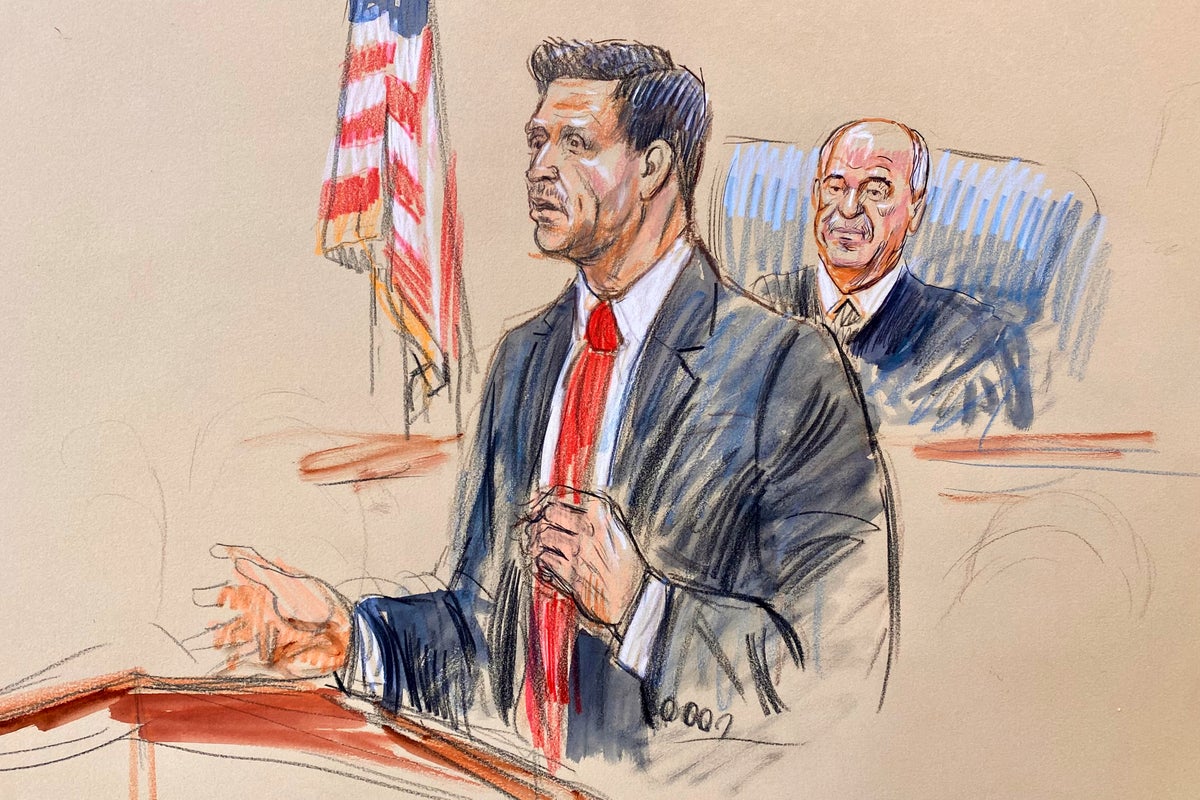
Trial proceedings have commenced in Alexandria, Virginia, for an Afghan national accused of involvement in the deadly suicide bombing at Kabul’s Hamid Karzai International Airport in August 2021. The attack, which occurred during the chaotic final days of the U.S. Military withdrawal from Afghanistan, resulted in the deaths of 13 American service members and over 170 Afghan civilians, according to U.S. Department of Defense records. The defendant, identified as Mohammad Sharifullah, faces charges related to providing material support to a terrorist organization and conspiracy to commit violence against U.S. Nationals abroad.
Sharifullah’s defense team has entered a plea of not guilty, asserting that U.S. Authorities apprehended the wrong individual. During opening statements, his attorney told jurors that the confession attributed to Sharifullah was obtained under duress and does not reflect the truth of his involvement. This claim echoes arguments previously raised in pre-trial motions, where the defense challenged the admissibility of statements made by the defendant following his capture in 2022.
The case marks one of the first major terrorism-related trials stemming from the Kabul airport attack to reach U.S. Federal court. Prosecutors allege that Sharifullah facilitated the bombing by assisting in the planning and execution of the attack, which was claimed by the Islamic State Khorasan Province (ISIS-K), a regional affiliate of ISIS. The bombing remains one of the deadliest single incidents for U.S. Forces during the two-decade war in Afghanistan.
According to court filings reviewed by multiple news outlets, Sharifullah was apprehended in Pakistan in early 2022 and subsequently transferred to U.S. Custody. He has been held in federal detention since his extradition, with proceedings delayed over the past year due to pre-trial motions concerning evidence classification and witness availability. The trial is expected to last several weeks, with testimony anticipated from intelligence analysts, forensic experts, and individuals familiar with ISIS-K operations in the region.
Outside the courthouse, relatives of the fallen service members have attended select hearings, though the proceedings are not fully open to the public due to national security considerations. Portions of the trial involving classified information are being conducted under special security protocols, including the use of cleared attorneys and restricted access to certain evidence.
The U.S. Department of Justice has not disclosed specific details about the evidence linking Sharifullah to the bombing, citing ongoing operational sensitivities. However, officials have confirmed that the investigation involved coordination with intelligence partners and review of digital communications, biometric data, and witness statements collected in the aftermath of the attack.
Sharifullah’s legal team has maintained that he was misidentified and that no credible forensic or eyewitness evidence places him at the scene of the bombing. They have requested access to raw intelligence data and called for greater transparency regarding how the identification was made. These requests have been partially denied by the court on grounds of protecting sources and methods.
As the trial continues, observers note that the outcome could have broader implications for how the U.S. Handles terrorism-related prosecutions involving overseas captures and classified evidence. Legal experts suggest the case may test the balance between national security protections and defendants’ rights to confront evidence in open court.
The next scheduled proceeding is a hearing on May 5, 2026, to address outstanding motions regarding the admissibility of surveillance data. No further trial dates have been publicly confirmed beyond this preliminary session.
Readers seeking updates on the case can consult the public docket for the U.S. District Court for the Eastern District of Virginia, where filings are made available in accordance with the E-Government Act. The court encourages the public to refer to its official website for accurate, real-time information on hearing schedules and procedural developments.
Keep reading