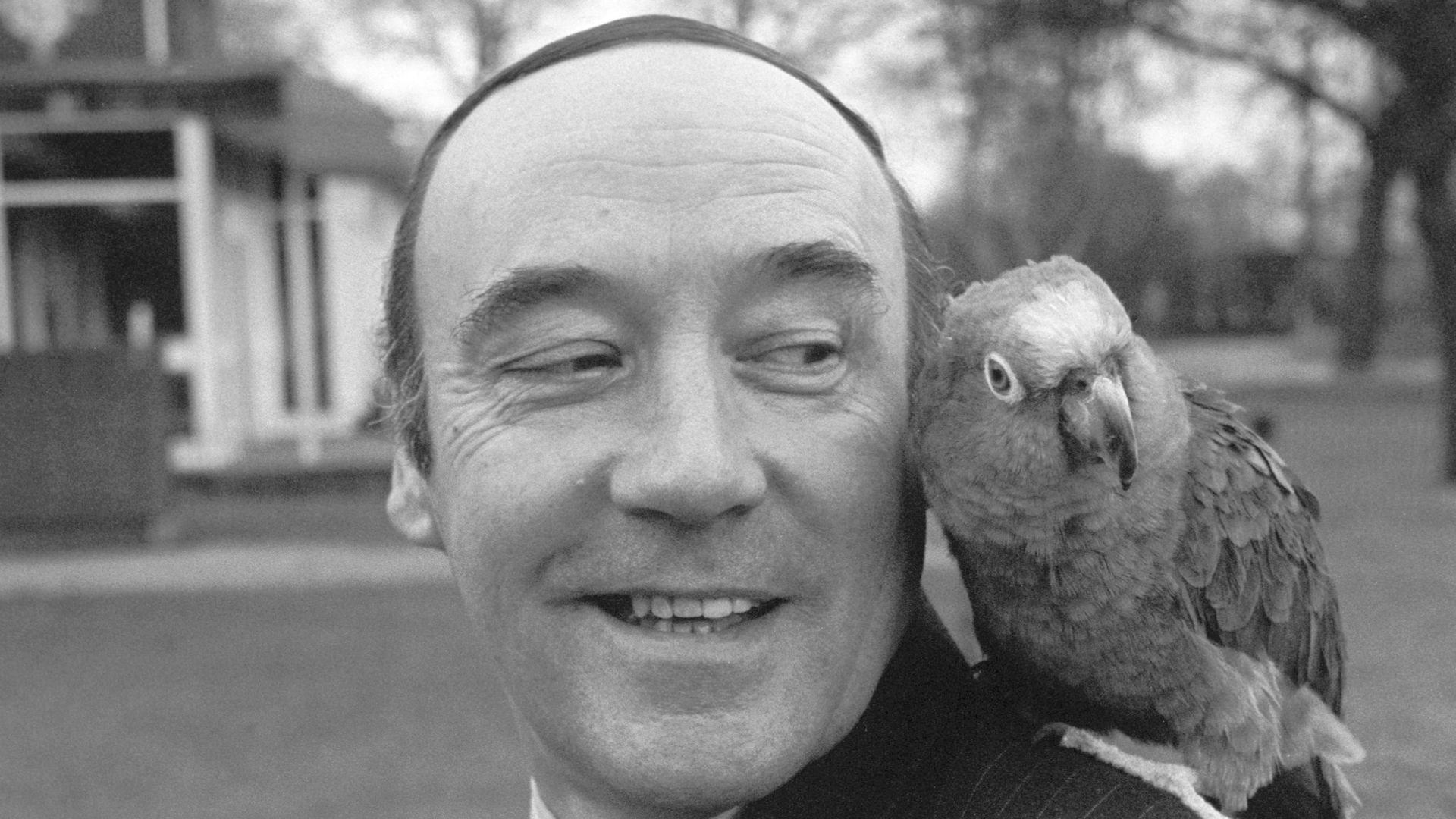
Desmond Morris, the renowned English zoologist, ethologist, surrealist painter, and author, has died at the age of 98. His passing was confirmed by his son Jason on 20 April 2026, who described his father as “a great man and an even better father and grandfather” who lived “a lifetime of exploration, curiosity and creativity”.
Morris was best known internationally for his 1967 book The Naked Ape, which became a global sensation by framing human behaviour through the lens of zoology rather than culture or anthropology. The book, written in just four weeks, explored topics ranging from mating rituals to child-rearing practices, presenting modern humans as fundamentally ape-like despite technological advancement. It sold millions of copies worldwide and was translated into numerous languages, becoming a defining function of the 1960s counterculture.
Born on 24 January 1928 in Purton, Wiltshire, England, Morris developed an early fascination with natural history during his childhood in Swindon. After serving two years in the British Army national service from 1946 to 1948, he pursued zoology at the University of Birmingham before beginning doctoral research at the Department of Zoology, University of Oxford, in 1951 under the guidance of Nobel laureate Nikolaas Tinbergen. His thesis focused on the reproductive behaviour of the ten-spined stickleback.
Throughout his career, Morris combined scientific rigor with artistic expression. He held his first one-man surrealist art exhibition at the Swindon Arts Centre in 1948 and later exhibited alongside renowned artists such as Joan Miró. In 1950, he wrote and directed two surrealist films, Time Flower and The Butterfly and the Pin. His dual identity as scientist and artist remained a hallmark of his public persona.
Morris gained widespread television fame as the host of Zoo Time, a BBC programme that aired from 1956 to 1965 and brought animal behaviour into living rooms across Britain. His engaging presentation style, often featuring live animals from London Zoo where he served as curator of mammals, made complex ethological concepts accessible to general audiences. He later hosted other series including Life in the Animal World and The Human Animal.
As an author, Morris published over 50 books spanning zoology, human behaviour, and art. Beyond The Naked Ape, notable works include Manwatching (1977), a pioneering study of nonverbal communication; The Human Zoo (1969), which applied ethological principles to urban life; and Babywatching (1995), which examined infant behaviour through an evolutionary lens. His writing consistently sought to bridge scientific insight with public understanding.
In his personal life, Morris was married to Ramona Baulch from 1952 until her death in 2018. The couple had one son, Jason, who survives him. Despite his international fame, Morris maintained connections to his roots, eventually settling in Naas, County Kildare, Ireland, where he spent his final years. He passed away on 19 April 2026, just days before his 98th birthday.
Tributes have poured in from across the scientific, artistic, and broadcasting communities. Colleagues remember him not only for his groundbreaking popularisation of ethology but also for his unwavering curiosity and interdisciplinary approach. His ability to make complex biological concepts engaging and relevant to everyday life influenced generations of scientists, writers, and broadcasters.
The legacy of Desmond Morris endures through his extensive body of work, which continues to be referenced in discussions about human nature, behaviour, and our place in the animal kingdom. As both a scientist who challenged conventional boundaries and an artist who saw beauty in biological form, he exemplified the power of interdisciplinary thinking in understanding what it means to be human.
For those wishing to learn more about his life and contributions, archives of his television appearances remain available through the BBC, even as many of his books continue to be published and reissued by major academic and trade publishers. His artworks are held in collections across Europe and have been exhibited in galleries from London to New York.
Readers are invited to share their memories of Desmond Morris’s work or reflect on how his ideas have shaped their understanding of human behaviour in the comments below. If you found this overview informative, please consider sharing it with others who may appreciate learning about this remarkable figure who bridged science and art with such enduring impact.
Keep reading