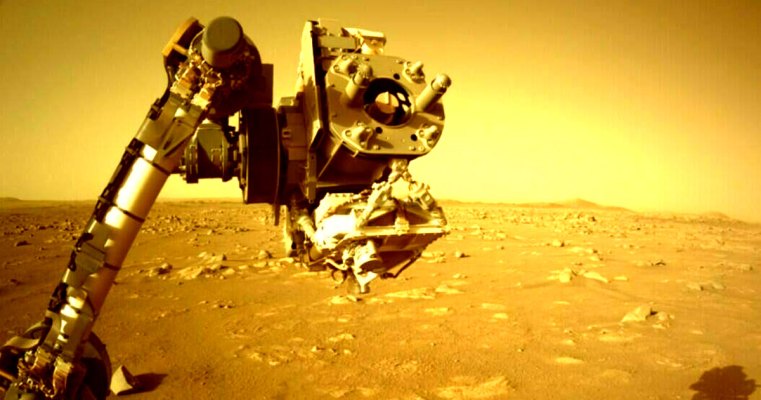
NASA’s Curiosity rover has made another significant discovery on Mars, identifying the largest organic molecules ever detected on the Red Planet. This finding, announced in March 2025, builds upon years of analysis of rock samples collected by the rover in Gale Crater. The discovery suggests that prebiotic chemistry on Mars may have progressed further than previously thought, offering new insights into the planet’s potential to have supported life in its ancient past.
The organic compounds—decane, undecane, and dodecane—were found in a powdered rock sample nicknamed “Cumberland,” which Curiosity drilled in 2013. These molecules, containing 10, 11, and 12 carbon atoms respectively, are believed to be fragments of fatty acids that were preserved in the sample over billions of years. On Earth, fatty acids are essential building blocks of life, forming cell membranes and performing vital biological functions. However, scientists emphasize that such molecules can also form through non-biological geological processes, such as reactions between water and minerals in hydrothermal vents.
The analysis was conducted using Curiosity’s Sample Analysis at Mars (SAM) instrument suite, a portable laboratory housed inside the rover. Researchers heated the powdered rock sample to release gases, which were then analyzed by SAM’s mass spectrometer and gas chromatograph. The detection of these long-chain hydrocarbons represents a significant step forward from earlier findings of simpler organic molecules like chlorobenzene on Mars. According to the study published in the Proceedings of the National Academy of Sciences, this is the first evidence that organic chemistry on Mars advanced toward the complexity associated with the origins of life.
Even as the discovery is exciting, scientists remain cautious about interpreting the results as direct evidence of past life. As noted in the research, there is currently no way to determine whether these organic molecules were produced by biological or geological processes. Both pathways remain possible, and further analysis—potentially from future missions designed to search for biosignatures—would be needed to draw more definitive conclusions. The presence of these molecules does, however, confirm that Mars once had the necessary chemical ingredients and environmental conditions to support prebiotic chemistry.
The Cumberland sample comes from an area of Gale Crater that once hosted ancient lakes and streams, making it a prime location for preserving organic materials. Curiosity has been exploring this region since landing on Mars in August 2012, with a particular focus on identifying habitable environments from the planet’s distant past. The rover’s ongoing mission continues to assess whether Mars ever possessed the right combination of water, chemistry, and energy to support microbial life.
This latest finding adds to a growing body of evidence suggesting that Mars was far more Earth-like billions of years ago than This proves today. Previous discoveries by Curiosity include detection of sulfur, nitrogen, oxygen, phosphorus, and carbon—key elements for life—as well as evidence of past water activity and complex organic molecules in sedimentary rocks. The preservation of these compounds despite billions of years of exposure to Mars’ harsh surface conditions, including radiation and oxidation, highlights the stability of certain organic materials in the Martian geological record.
Looking ahead, the search for life’s building blocks on Mars will continue with upcoming missions. NASA’s Perseverance rover, currently exploring Jezero Crater, is collecting rock samples that may eventually be returned to Earth for detailed analysis in sophisticated laboratories. These samples could provide even clearer insights into Mars’ ancient environment and its potential to have harbored life. Until then, Curiosity’s discoveries remain a vital part of understanding the Red Planet’s complex geological and chemical history.
For ongoing updates on NASA’s Mars exploration missions, visit the agency’s official Mars Science Laboratory page.
Related reading