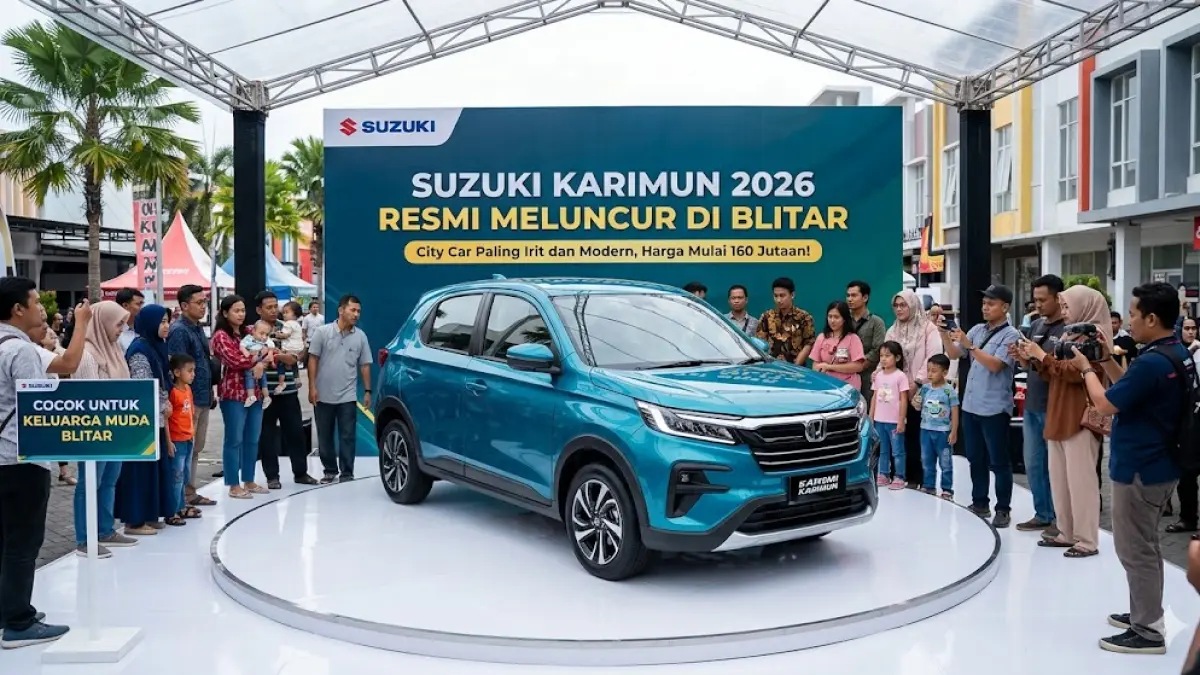
Suzuki Motor Corporation has officially launched the 2026 Suzuki Karimun in Indonesia as an affordable mild hybrid city car aimed at budget-conscious urban consumers. The vehicle is positioned as a strategic update to the long-running model, emphasizing fuel efficiency and modern design while retaining the practical, boxy silhouette that has made it popular for maximizing interior space in tight urban environments. Pricing starts at Rp140 million on-the-road, with three trim levels available: the GA manual at Rp182.5 million, the GL manual/AGS at Rp195 million, and the GX hybrid AGS variant at Rp210 million in Jakarta, according to March 2026 pricing data.
The 2026 Karimun replaces the previous K10B engine with a new 1.2L K-Series unit paired with Suzuki’s Smart Hybrid Vehicle by Suzuki (SHVS) system. This mild hybrid technology improves real-world fuel economy without requiring extensive charging infrastructure, addressing ongoing concerns about limited EV support outside major urban centers in Java and Sumatra. The launch comes amid rising fuel subsidy pressures on Indonesia’s national budget, making fuel-efficient vehicles increasingly attractive to cost-sensitive buyers, particularly young families in secondary cities like Blitar.
Exterior updates include a more refined front fascia and updated lighting while maintaining the Karimun’s iconic compact dimensions. Inside, the cabin features upgraded materials, a modernized dashboard layout, and enhanced infotainment options across trims. Safety features have too been improved, with standard dual airbags, ABS with EBD, and ISOFIX child seat anchors now included even on the base GA model, reflecting Suzuki’s response to growing consumer demand for better safety in entry-level vehicles.
Fuel Efficiency and Hybrid Technology
The SHVS mild hybrid system in the 2026 Karimun integrates a belt-driven starter generator (BSG) that assists the engine during acceleration and enables start-stop functionality to reduce fuel consumption in traffic. Unlike full hybrids, it does not allow electric-only driving but recovers energy during braking to support electrical systems and reduce engine load. Official fuel economy figures have not yet been released by Suzuki Indonesia, but the company claims the system improves real-world mileage by up to 15% compared to the previous non-hybrid Karimun under mixed driving conditions.
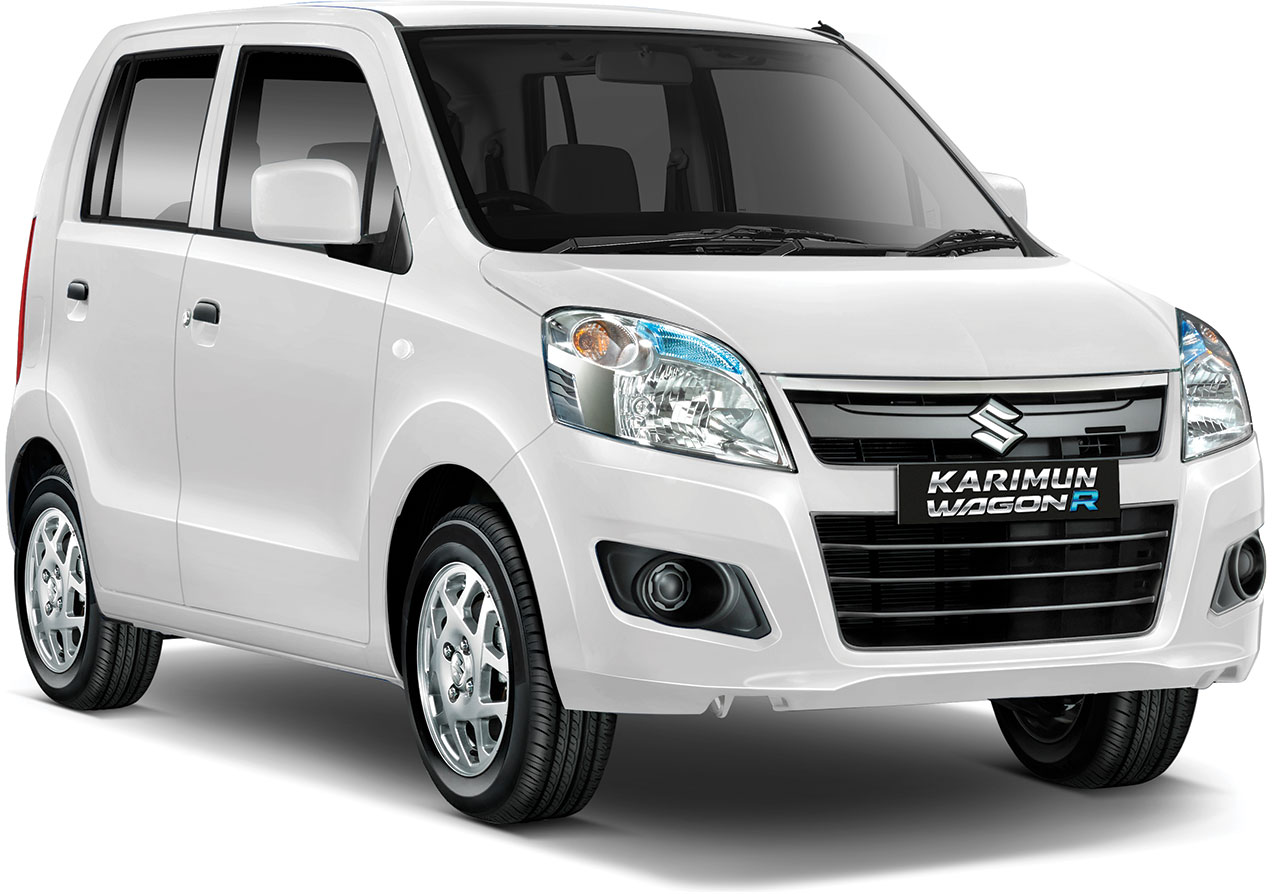
This approach avoids the high costs and infrastructure dependencies associated with plug-in hybrids or battery electric vehicles, aligning with Suzuki’s broader strategy in emerging markets where charging networks remain underdeveloped. The 1.2L K-Series engine, shared with other Suzuki models like the Swift and Ciaz, produces approximately 82 horsepower and 108 Nm of torque, providing adequate performance for city commuting while prioritizing efficiency over outright power.
Market Positioning and Consumer Impact
By pricing the base model below Rp150 million on-the-road in some regions, Suzuki targets first-time car buyers and young families seeking a reliable, low-cost vehicle for daily use. The Karimun’s compact size—under 3.6 meters in length—makes it well-suited for narrow streets and tight parking spaces common in Indonesian urban areas, while its tall roof and vertical windows maximize headroom and visibility.
The launch reflects a broader trend among automakers offering mild hybrid variants of popular nameplates to meet tightening emissions regulations and consumer expectations for better fuel economy without the premium of full electrification. In Indonesia, where government incentives for electric vehicles remain limited and adoption is concentrated in Jakarta and other major cities, mild hybrids like the Karimun offer a practical middle ground for improving efficiency in the mass-market segment.
Local dealers in Blitar and other regional markets have reported strong initial interest, particularly for the GL and GX trims, which offer automatic transmission options and additional convenience features such as touchscreen infotainment, steering-mounted controls, and automatic climate control. However, independent verification of exact sales figures or regional demand data is not currently available from official industry sources.
Context Within Suzuki’s Indonesian Strategy
The 2026 Karimun launch is part of Suzuki’s ongoing effort to refresh its lineup in Indonesia, one of its largest overseas markets. The company has gradually shifted focus toward hybrid technology across its range, introducing SHVS on models like the Ertiga and XL7 in recent years. Unlike some competitors pursuing aggressive electrification roadmaps, Suzuki has emphasized incremental efficiency gains through hybridization and engine optimization, arguing this approach better suits markets with inconsistent electricity access and lower average purchasing power.
Indonesia’s automotive market remains dominated by internal combustion engine vehicles, though hybrid adoption is slowly increasing due to rising fuel prices and growing environmental awareness among urban consumers. The Karimun’s positioning as an affordable hybrid option could help accelerate this transition in the B-segment, where price sensitivity remains a key barrier to adopting newer technologies.
As of April 2026, Suzuki Indonesia has not announced any immediate plans for a fully electric version of the Karimun, citing infrastructure limitations and customer preference for vehicles that do not require changes to refueling habits. The company continues to monitor developments in battery technology and charging networks but maintains that mild hybrids will play a significant role in its near-to-mid-term strategy for emerging markets.
For the most current specifications, pricing, and availability, consumers are encouraged to visit authorized Suzuki dealerships or consult the official Suzuki Indonesia website. Updates to the Karimun lineup or future model changes will be communicated through official press releases and dealer networks.
Related reading