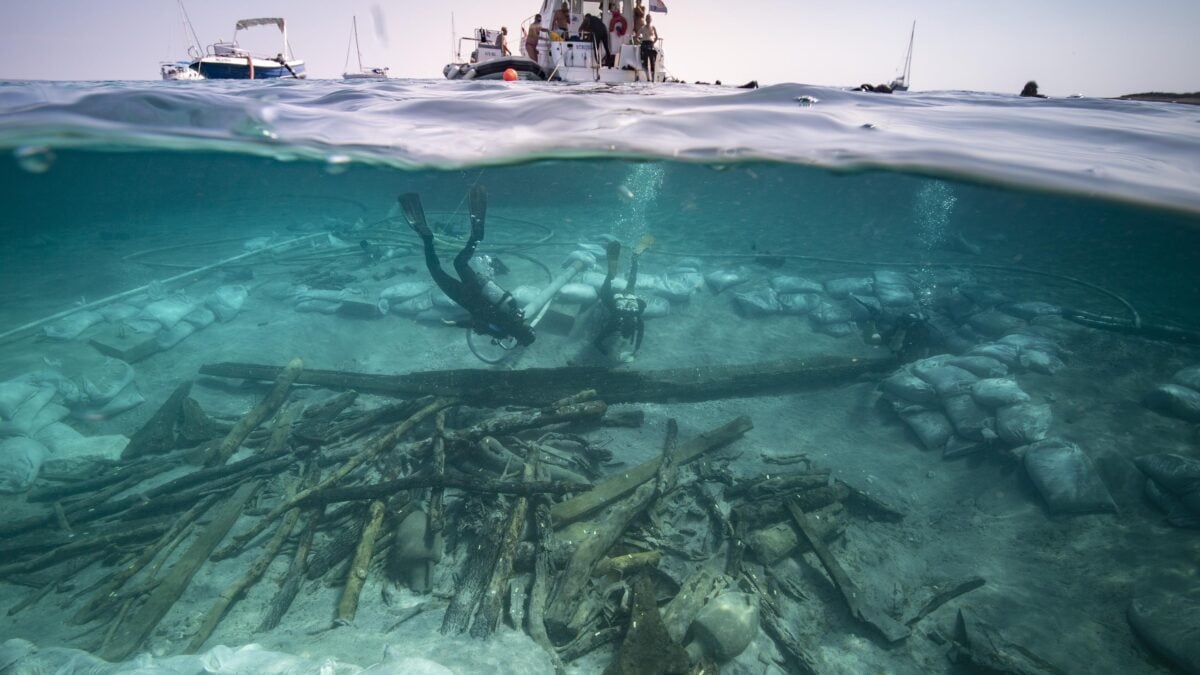
Archaeological evidence from a 2,200-year-old Roman shipwreck in the Adriatic Sea has revealed sophisticated repair techniques used by ancient sailors to maintain their vessels far from home ports. The discovery, centered on the wreck known as Ilovik-Paržine 1, provides tangible proof that Roman shipbuilders employed organic waterproofing materials and conducted ongoing maintenance during voyages, challenging previous assumptions about the limitations of ancient maritime technology.
The shipwreck, initially discovered in 2016 near the Croatian islands of Ilovik and Paržine, has become a focal point for understanding how Roman naval architecture adapted to the demands of long-distance sea travel. Researchers examining the vessel’s remains identified multiple layers of organic adhesive coating applied to both the interior and exterior of the hull, suggesting a systematic approach to preservation and repair that extended the operational lifespan of these ships.
Analysis of trapped pollen within the waterproofing materials has allowed scientists to trace the geographic origins of the repair substances, revealing a pattern of material sourcing that corresponds with known Roman trade routes across the Mediterranean. This interdisciplinary approach—combining archaeology, chemistry, and palynology—has provided new insights into the logistical capabilities of ancient maritime operations.
The findings indicate that Roman sailors did not merely construct ships for single voyages but maintained them through successive applications of protective coatings, much like modern vessels undergo regular maintenance. This practice would have been essential for sustaining naval and commercial activities across the Adriatic and beyond, where access to home shipyards was limited.
Further study of the Ilovik-Paržine 1 wreck continues to yield information about ancient shipbuilding methods, with researchers noting that the vessel’s construction techniques align with shell-first methodologies common in the pre-Roman and early Roman periods. These methods, which involve shaping the hull planks before adding internal framing, represent a significant investment in craftsmanship that would have made ongoing repairs both feasible and necessary.
The research, published in Frontiers in Materials, highlights how microscopic organic residues can preserve critical information about ancient technological practices. By examining the microscopic pollen grains embedded in the ship’s waterproofing layers, researchers have been able to reconstruct not only what materials were used but also where they originated and potentially when they were applied during the ship’s service life.
These discoveries contribute to a growing body of evidence suggesting that ancient Mediterranean seafarers possessed more advanced and adaptable maritime technologies than previously recognized. The ability to conduct effective repairs at sea would have been a crucial factor in the expansion of Roman trade networks and naval power throughout the region.
As investigations into the Ilovik-Paržine 1 site progress, archaeologists anticipate gaining further insight into the specific recipes and application techniques used for the organic waterproofing compounds. Understanding these materials could offer valuable lessons for modern conservation efforts and sustainable material science.
The study of this ancient shipwreck underscores the importance of interdisciplinary research in uncovering the technological achievements of past civilizations. What began as a structural analysis of a Roman-era vessel has evolved into a detailed examination of maritime maintenance practices that spanned centuries and connected distant shores through shared knowledge of ship preservation.
For readers interested in the latest developments in archaeological science and ancient technology, the ongoing research into Roman shipwrecks like Ilovik-Paržine 1 represents a compelling example of how modern scientific methods can illuminate historical practices. The findings not only reshape our understanding of ancient naval capabilities but also demonstrate the enduring relevance of material innovation in maritime engineering.
As new analytical techniques become available, researchers hope to extract even more detailed information from the wreck site, potentially identifying seasonal patterns in repair activities or variations in material use across different phases of the ship’s history. Each layer of discovery adds to our comprehension of how ancient societies solved complex engineering challenges with the resources available to them.
The story of the Ilovik-Paržine 1 shipwreck serves as a reminder that technological sophistication is not exclusive to modern eras. By examining the material traces left behind by ancient sailors, we gain appreciation for the ingenuity and adaptability that enabled human societies to master the seas long before the advent of modern engineering tools.
Those wishing to follow the progress of this research can monitor publications from the archaeological teams working in the Adriatic region, particularly those affiliated with institutions conducting underwater cultural heritage studies. Future publications are expected to detail further findings related to the ship’s construction, cargo, and repair history.
To stay updated on significant discoveries in archaeology and ancient technology, consider following academic journals specializing in maritime history and archaeological science. Sharing insights from such research helps foster broader public appreciation for the scientific processes that uncover our shared human past.
Worth a look
- PayPal Stock Soars on $53B Takeover Offer From Stripe and Advent
- Digital Detox on Vacation: Why Most People Struggle and 3 Simple Tips
- AI-Powered COFFIES: Predicting Solar Storms & Sunspots with AI (archyworldys.com)
- Waymo Expands Robotaxi Service Across California, Including San Diego and Sacramento (archynewsy.com)