
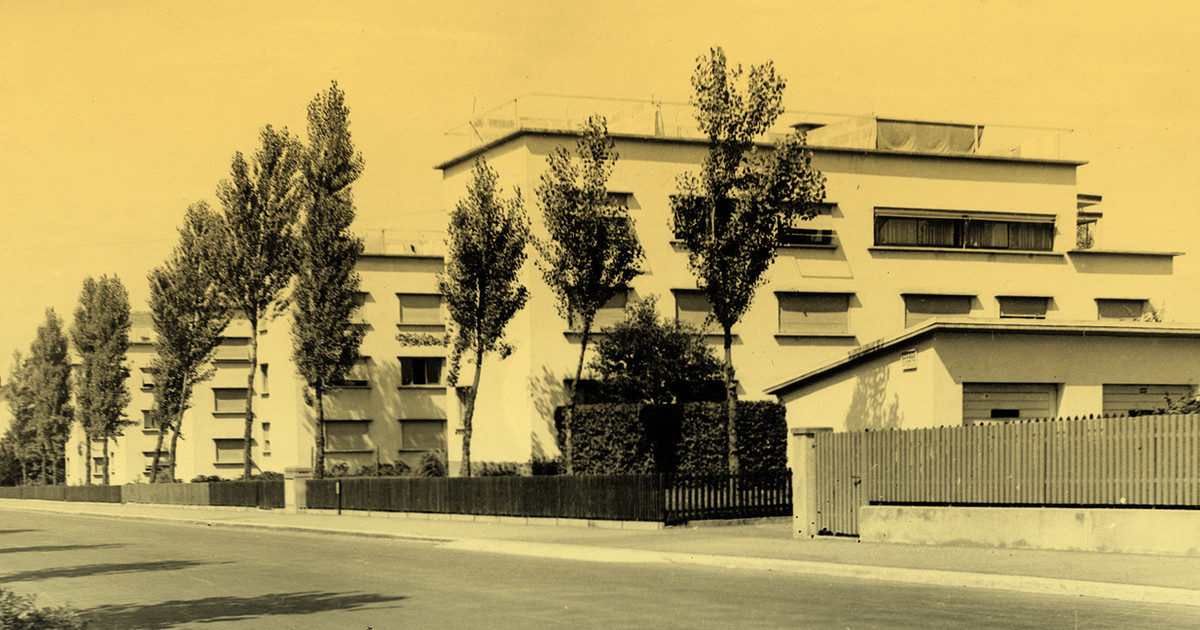
In the Wollishofen district of Zurich, a modest row of five flat-roofed houses built in 1930–1931 has emerged as one of the earliest examples of Novel Building (Neues Bauen) architecture in the city. These structures, located at Albisstrasse 153–161, were designed by Charlotte Enggist, a then 29-year-old self-taught architect whose operate remained largely undocumented for nearly a century. Recent research has brought her contribution to light, highlighting the settlement’s significance as a contemporaneous counterpart to the better-known Werkbundsiedlung Neubühl just a few hundred meters toward Lake Zurich.
The settlement’s historical value has gained attention amid growing concerns over its future. According to a report published by Hochparterre on April 24, 2026, the houses now face the threat of demolition to make way for a replacement development. This potential loss has sparked renewed discussion about preserving Zurich’s early modernist architectural heritage, particularly works by overlooked pioneers like Enggist, whose contributions were absent from standard architectural guides and publications for decades.
Architectural historians Marcel Just and Eliana Perotti first highlighted Enggist’s role in a 2024 article in the Swiss journal Kunst+Architektur titled “Der Fall (von) Charlotte Enggist. Eine Schweizer Pionierin des Flachdachbaus.” Their research established that the Albisstrasse settlement was not only modern in appearance but a genuine early example of Neues Bauen in Zurich, contemporaneous with the Werkbundsiedlung Neubühl. Unlike Neubühl, which has been featured in numerous publications and architectural guides, the Albisstrasse houses were previously undocumented beyond a single 1933 article in Das Ideale Heim, absent from Zurich architecture guides, and unmentioned in regional surveys covering Enge, Wollishofen, Leimbach, and Zurich’s New Building movement.
Just and Perotti linked this lack of documentation to Enggist’s identity as an unknown autodidact who designed the settlement at age 29. Their findings challenged assumptions about who shaped early modernism in Zurich and underscored how women architects, particularly those without formal training, were often excluded from historical records. The rediscovery of Enggist’s work has since positioned her as a significant, though long-overlooked, figure in Switzerland’s architectural pioneers of the interwar period.
The threat to the Albisstrasse settlement comes amid broader urban development pressures in Wollishofen. In April 2026, the Swiss Federal Railways (SBB) announced plans to construct 57 new apartments near Wollishofen train station by 2029, requiring the relocation of the area’s historic goods shed. Whereas this SBB project is separate from the Albisstrasse site, it reflects ongoing transformation in the district that has raised alarms among heritage advocates about the vulnerability of early 20th-century structures to redevelopment.
Preservation advocates argue that the Albisstrasse houses represent a rare, intact example of early social housing infused with modernist principles. Built during a period of experimentation with flat roofs, cubic forms, and functional design, the settlement exemplifies the Neues Bauen ethos of combining affordability, light, and hygiene in residential architecture. Its potential loss would erase physical evidence of how these ideas were applied in Zurich’s working-class neighborhoods nearly a century ago.
As of April 2026, no official decision has been made regarding the fate of the Albisstrasse 153–161 houses. The Hochparterre report indicates that a replacement building is under consideration, but details about the proposed project, timeline, or responsible party have not been publicly confirmed. Stakeholders including local heritage groups, architectural historians, and Zurich’s municipal preservation office are expected to weigh in as the situation develops.
The renewed focus on Charlotte Enggist’s work underscores a broader effort to reassess architectural history through a more inclusive lens. Her story—of a young woman designing innovative housing in relative obscurity—resonates with ongoing efforts to uncover and recognize the contributions of women and self-taught practitioners in fields long dominated by established institutions and narratives.
For readers interested in Zurich’s architectural evolution, the Albisstrasse settlement offers a tangible link to the city’s interwar modernist experiments. While its future remains uncertain, the growing awareness of its origins and significance may yet play a role in determining whether these early pioneers’ work is preserved for future generations.
Background on Charlotte Enggist and the Albisstrasse Settlement
Charlotte Enggist designed the five-house flat-roof settlement at Albisstrasse 153–161 in Wollishofen between 1930 and 1931. At just 29 years old and without formal architectural training, she created a project that architectural historians now identify as one of Zurich’s earliest embodiments of Neues Bauen—a movement emphasizing functionality, simplicity, and the use of modern materials like concrete, steel, and glass. The settlement’s design features cubic volumes, unadorned facades, and flat roofs, hallmarks of the international modernist style adapted to a local context.
Contemporaneous with the Werkbundsiedlung Neubühl—often cited as a landmark of Zurich’s modernist housing—the Albisstrasse project shares similar timelines and ideals but lacked the publicity and institutional backing that helped Neubühl gain lasting recognition. Enggist’s work remained absent from Zurich architecture guides, regional surveys, and major publications on the city’s New Building movement until the 2024 research by Just and Perotti brought it into scholarly discourse.
The rediscovery has prompted calls to reassess how architectural history is recorded, particularly regarding women who practiced outside formal academic or professional channels. Enggist’s case illustrates how innovative contributions can be overlooked when they emerge from unconventional paths, reinforcing the importance of archival research in uncovering hidden histories.
Threats and Preservation Concerns
The primary concern facing the Albisstrasse settlement is the prospect of demolition to accommodate new construction. As reported by Hochparterre on April 24, 2026, an ersatzneubau (replacement building) is under consideration, though no formal planning application has been verified in public sources as of this writing. The absence of detailed plans does not diminish the urgency felt by preservationists, who warn that early modernist structures in Zurich are increasingly vulnerable to densification pressures.
Unlike protected landmarks, the Albisstrasse houses do not appear to hold formal heritage status that would automatically prevent alteration or demolition. Their survival depends on advocacy, documentation, and potential intervention by Zurich’s city preservation authorities or private initiatives. Comparable cases in other European cities have shown that increased visibility and scholarly recognition can play a decisive role in securing protection for overlooked modernist works.
No official timeline has been released for any potential redevelopment, and representatives from the property owners or developers have not made public statements regarding the site. The Hochparterre article remains the most detailed public account of the threat as of April 2026.
Wollishofen’s Evolving Landscape
The debate over the Albisstrasse settlement unfolds against a backdrop of noticeable change in Wollishofen. In April 2026, the SBB confirmed plans to build 57 apartments near Wollishofen train station by 2029, involving the relocation of the historic goods shed to Bauma. While this project operates independently of the Albisstrasse site, it contributes to a broader pattern of redevelopment that has transformed parts of the district in recent years.
Such developments often bring benefits like updated infrastructure and increased housing supply but too raise questions about how to balance growth with the preservation of neighborhood character and historical layers. The goods shed’s relocation, while preserving the structure, illustrates the complexities of maintaining heritage in a changing urban environment—where even preserved buildings may lose their original context.
For the Albisstrasse houses, the challenge lies in demonstrating their sufficient historical and architectural merit to warrant protection in the face of competing development interests. Advocates emphasize that their value lies not only in age or style but in their association with a pioneering figure whose story enriches the understanding of who shaped Zurich’s built environment.
Why Charlotte Enggist Matters Today
Charlotte Enggist’s emergence from obscurity offers more than a correction to the historical record—it provides insight into the diverse actors who contributed to modernism’s spread. Her work challenges the notion that significant architectural innovation in interwar Zurich flowed exclusively from established firms or formally educated practitioners. Instead, it highlights how talent and vision could emerge from unexpected quarters, even if they left fewer traces in official archives.
Researchers note that Enggist’s relative anonymity may reflect broader patterns in which women’s contributions to architecture were underreported, attributed to male collaborators, or omitted from professional networks and publications. Her story aligns with efforts in other countries to recover the legacies of pioneering women architects such as Eileen Gray, Lilly Reich, and Charlotte Perriand—figures whose work gained recognition only decades after its creation.

The renewed attention to Enggist also serves as a reminder that architectural value is not solely determined by fame or institutional endorsement. The Albisstrasse settlement’s quiet presence in Wollishofen for nearly a century speaks to the endurance of thoughtful design, regardless of whether it was celebrated at the time of its creation.
As Zurich continues to evolve, settlements like Enggist’s offer a chance to reflect on what the city chooses to preserve—and why. Their potential loss would not only erase rare physical evidence of early Neues Bauen but also silence a narrative about innovation, modesty, and the quiet impact of those who build without seeking the spotlight.
What Happens Next
As of April 25, 2026, no official hearing, planning application, or municipal decision has been verified regarding the future of the Albisstrasse 153–161 houses. The most recent public update remains the Hochparterre report from April 24, 2026, which noted the threat of replacement development without specifying next steps. Readers seeking updates are advised to monitor Zurich’s municipal planning portal, heritage conservation office announcements, or trusted local news sources for any formal proposals or public consultations related to the site.
The situation remains fluid, and any significant development—such as the submission of a construction proposal, a preservation petition, or a statement from city authorities—would constitute the next verifiable checkpoint in this unfolding story.
If you found this overview of Charlotte Enggist’s work and the risks facing her Wollishofen settlement informative, consider sharing it to help raise awareness. Join the conversation by commenting below with your thoughts on preserving overlooked architectural heritage in growing cities.