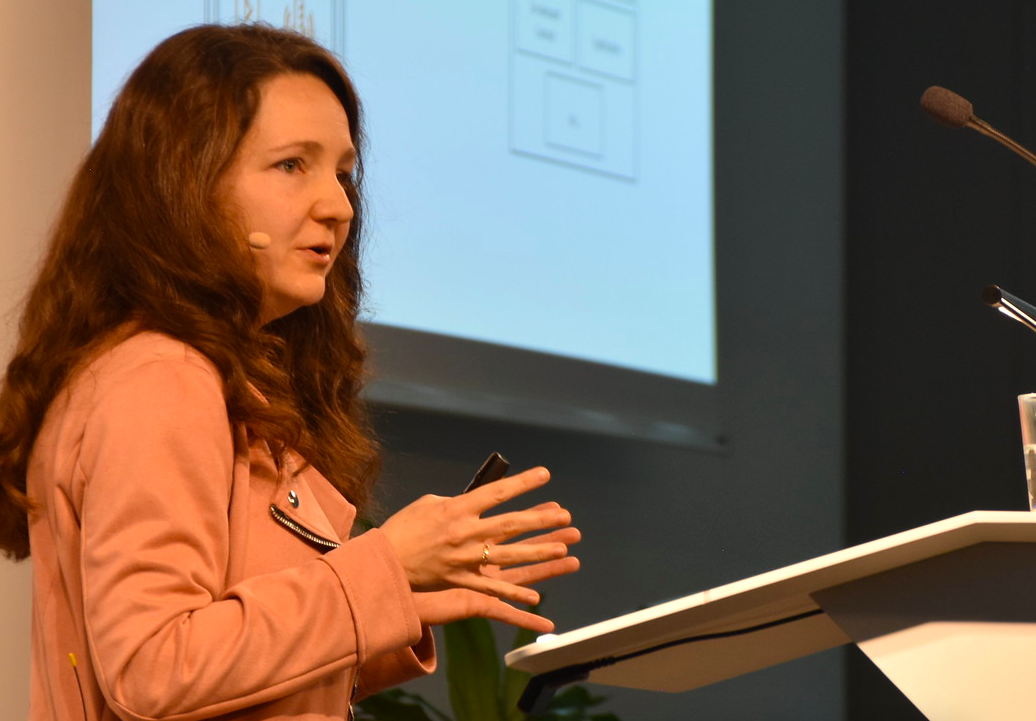
Germany’s Handelsblatt Media Group is responding to declining website traffic caused by AI-generated search summaries by building a centralized content warehouse and launching a trust-focused AI product called Smart Search. The strategy, revealed by Janina Reimann, Director of Digital Products at Handelsblatt, aims to adapt to changing user habits where audiences increasingly seek direct answers from AI systems rather than clicking through to publisher websites. This shift has significantly impacted traffic and advertising revenue for news outlets globally, prompting Handelsblatt to restructure how it creates, stores, and delivers its content.
According to Reimann, Handelsblatt began preparing for this shift about two years ago, anticipating a future where content consumption patterns would become less predictable. The company’s response was to develop a “content warehouse” — a centralized hub designed to structure all forms of its output, including articles, podcasts, videos, and transcriptions of conferences and panel discussions, for multiple uses. This system supports internal operations, paid subscribers, and the company’s syndication business, enabling Handelsblatt to sell not just written content but also audio and video material to business clients.
The content warehouse is intended to serve as a foundation for future AI integration, ensuring that Handelsblatt’s material is accessible and reusable across platforms while maintaining control over distribution. Reimann emphasized that the goal is to create a “powerfully structured database” that supports both current operations and future innovation, particularly in how the company interacts with AI-driven tools and user expectations.
To understand what users truly value, Handelsblatt conducted extensive market research as part of its preparation. The findings showed that customers prioritize quick, direct answers to save time, and they place high importance on trust in the information they receive. Reimann noted that users appreciate not having to verify content found on Handelsblatt’s platform, relying on the publisher’s reputation for accuracy and reliability.
Based on these insights, Handelsblatt launched Smart Search, its first customer-facing AI product. Unlike generic chatbots, Smart Search is designed with strict accuracy guidelines: it will not provide an answer unless it has sufficient verified sources to support it. Reimann stated that the company would rather have the system decline to answer than risk delivering inaccurate information. This approach, while occasionally frustrating to users seeking immediate responses, has been shown to increase trust in the answers that are provided, as users know they do not need to cross-check them elsewhere.
Importantly, Handelsblatt did not design Smart Search as a standalone product. Instead, This proves integrated into the publisher’s existing ecosystem to encourage interaction with core offerings such as articles, podcasts, and events. The system includes logic to suggest related content — such as recommending a relevant article, podcast, or upcoming conference — and even allows users to purchase event tickets directly. This cross-promotion strategy aims to preserve users engaged within Handelsblatt’s platform longer, reducing churn and reinforcing the value of its full range of products.
Reimann acknowledged that the future of AI and user behavior remains uncertain, but emphasized that Handelsblatt’s investments in structured content and conversational interfaces are intended to position the company to adapt to evolving market conditions. She stressed that media companies cannot ignore the shift toward AI-driven information seeking and must proactively align their strategies with business goals, including maintaining trust, protecting revenue streams, and preserving editorial independence in an increasingly automated landscape.
The initiative was presented at the WAN-IFRA Frankfurt AI Forum in 2026, where Reimann shared Handelsblatt’s approach with other publishers navigating similar challenges. WAN-IFRA has indicated it is compiling a broader report on how news organizations are responding to AI search and bot traffic, and invited industry professionals to participate in a survey available in multiple languages.
As AI continues to reshape how audiences discover and consume news, Handelsblatt’s approach highlights a growing trend among publishers to reclaim control over content distribution by investing in infrastructure that prioritizes accuracy, usability, and integration with core journalistic products — rather than competing directly with AI summarization tools on their terms.