
Sweden’s REACT Festival Brings Global Theater Experiment to Life in 2026
In a bold celebration of contemporary performing arts, Sweden’s REACT Festival is set to transform stages across the country this spring, bringing together international and local artists for a month-long exploration of identity, migration, and climate crisis through groundbreaking theatrical experiments. The festival, organized by Riksteatern in collaboration with regional theaters, kicks off in Stockholm on April 23, 2026, before touring to Göteborg, Norrköping, and Skellefteå. At its heart is ECHO (Every Cold Hearted Oxygen), a revolutionary production by Iranian playwright Nassim Soleimanpour and British director Omar Elerian, which challenges traditional storytelling by making each performance unique and unpredictable.
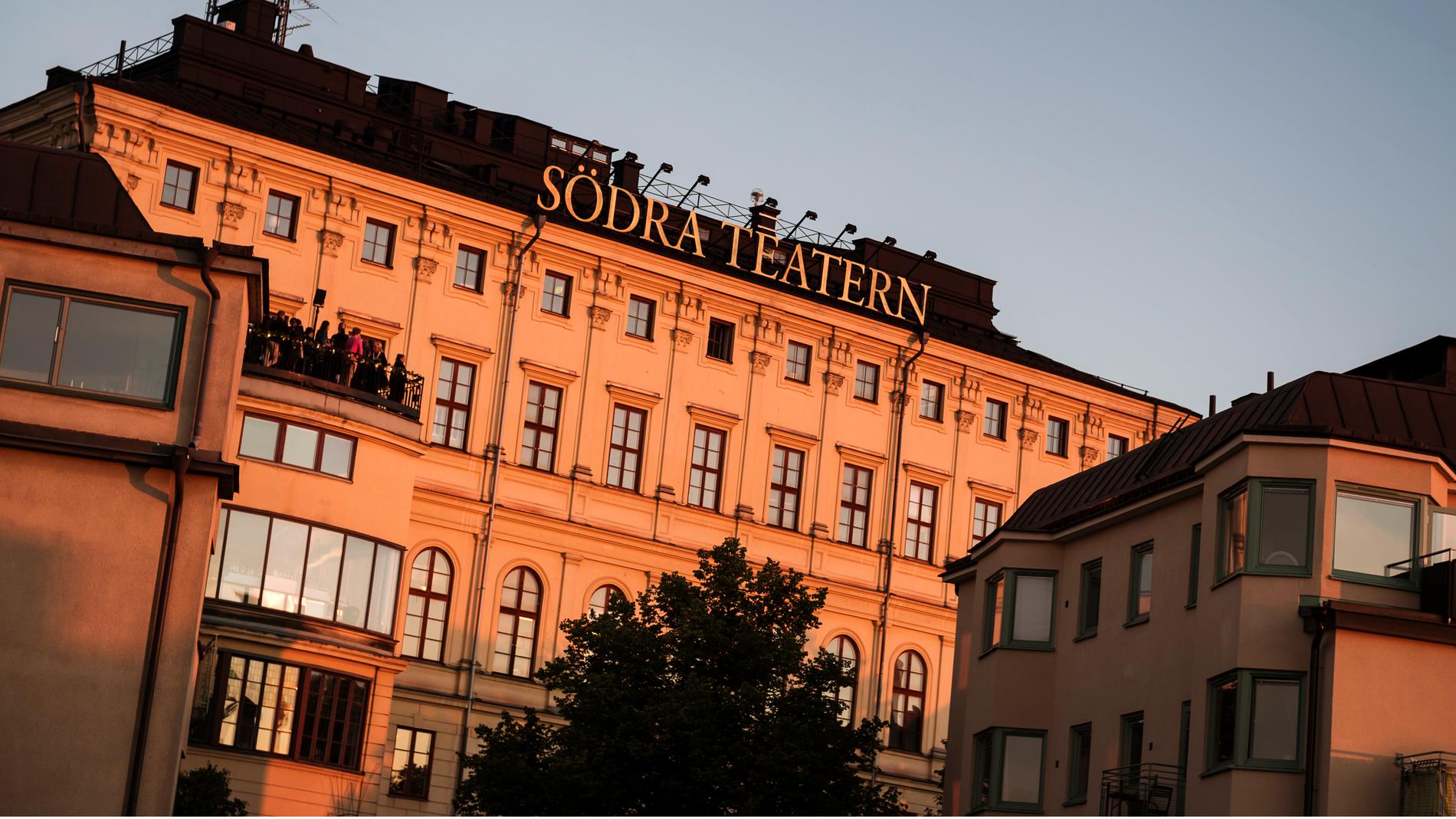
What sets REACT apart is its commitment to immersive, participatory theater. Unlike conventional plays with fixed scripts, ECHO unfolds in real-time, with actors receiving instructions via earpieces and adapting their performances based on audience reactions. The result? No two shows are alike. “It’s a nerve-wracking experiment where no one—not even the actors—knows what will happen next,” said a spokesperson for Riksteatern. The festival’s innovative approach reflects a growing trend in European theater, where boundaries between performer and spectator are increasingly blurred to provoke deeper engagement with pressing global issues.
For Swedish audiences, REACT offers a rare opportunity to experience cutting-edge international work alongside local talent. Each host city will feature its own lineup of performers, ensuring a distinct flavor in every location. In Göteborg, for example, acclaimed Swedish actors Cecilia Frode and Stina Ekblad will take the stage for ECHO on April 28 and 29, respectively, whereas Stockholm’s performances will star Eva Röse, Josefin Johansson, and Bianca Kronlöf. The festival’s decentralized model not only democratizes access to high-quality theater but also fosters cultural exchange between urban and rural communities.
The Vision Behind REACT: A Festival for Our Times
REACT is the brainchild of Riksteatern, Sweden’s national touring theater, which has long championed inclusive and experimental performances. Founded in 1933, Riksteatern operates as a network of over 200 local theater associations, making it one of the largest cultural organizations in the country. The festival’s name—an acronym for “Riksteatern’s International Artistic Collaboration and Touring”—hints at its ambitious scope: to create a platform where global voices can resonate with Swedish audiences while addressing universal themes.
This year’s edition is particularly timely. With migration, climate change, and political polarization dominating headlines, REACT’s programming reflects a conscious effort to use art as a tool for dialogue. ECHO, for instance, grapples with questions of home, displacement, and memory, drawing parallels between personal narratives and broader geopolitical struggles. The production’s title itself—a play on the chemical symbol for oxygen (O)—serves as a metaphor for the essential yet often overlooked connections between people and places.
The festival’s international reach is underscored by its co-producers, which include LIFT (London International Festival of Theatre), The Royal Court Theatre (London), and Théâtre National Wallonie-Bruxelles (Brussels). This collaborative model not only amplifies the artistic impact but also ensures that REACT remains a dynamic, evolving event. “We’re not just importing international productions. we’re co-creating them with partners who share our vision of theater as a living, breathing entity,” said Rosalind Coleman, executive producer of ECHO.
ECHO: Where Theater Meets Technology
At the center of REACT’s 2026 lineup is ECHO, a production that pushes the boundaries of live performance. Conceived by Soleimanpour and Elerian—whose previous collaborations include the critically acclaimed White Rabbit, Red Rabbit and NASSIM—the play eschews a traditional script in favor of a real-time, interactive experience. Each performance begins with an actor stepping onto a Persian rug, where they receive instructions via an earpiece from Soleimanpour, who appears via live video link from Berlin. The actor, who sees the “script” for the first time during the display, must navigate a labyrinth of emotions, memories, and political questions alongside the audience.
The production’s technical design is equally innovative. Derek Richards, the creative technologist behind ECHO, has developed a system that allows the performance to adapt to each venue’s unique characteristics. Lighting, sound, and video projections are manipulated in real-time by a team of designers, including Jacie Shemesh (lighting) and Anna Clock (sound), to create an immersive atmosphere. “It’s like conducting an orchestra where the audience is part of the score,” Richards explained in an interview with Riksteatern.
For audiences, the experience is deliberately disorienting. The play’s narrative shifts between reality and illusion, with recurring motifs—a photograph, a question, a matta—taking on new meanings as the performance unfolds. “You’re never quite sure what’s scripted and what’s spontaneous,” noted Anna Hedelius, a critic for SVT Nyheter, who attended the Stockholm premiere. “It’s a meditation on how stories change depending on who tells them and where they’re told.”
This fluidity extends to the production’s themes. While ECHO doesn’t offer effortless answers, it invites audiences to reflect on their own relationships to identity, belonging, and the climate crisis. Soleimanpour, who has lived in exile from Iran since 2012, often explores these ideas in his work. His presence via video link—sometimes ambiguous, sometimes direct—adds another layer of intrigue. Is he really in Berlin? Is it really him? The play leaves these questions unanswered, mirroring the uncertainties of modern life.
Local Voices, Global Stories: REACT’s Regional Impact
One of REACT’s defining features is its emphasis on local engagement. While the festival brings international productions to Swedish stages, it also highlights the work of regional artists, ensuring that each city’s edition feels distinct. In Göteborg, for example, the festival will feature collaborations with Göteborgs Stadsteater, while in Skellefteå, Västerbottensteatern will play a central role. This approach not only supports local talent but also fosters a sense of ownership among audiences.
“REACT isn’t just about watching theater; it’s about being part of a larger conversation,” said Patricia Gilvaia, one of the production managers for ECHO. “By involving local artists and communities, we’re able to create a festival that resonates on multiple levels.” In Norrköping, for instance, the festival will include workshops and discussions alongside performances, allowing audiences to engage more deeply with the themes explored on stage.
The festival’s regional focus is particularly significant in a country where cultural funding is often concentrated in major cities like Stockholm and Göteborg. By touring to smaller towns like Skellefteå, REACT helps democratize access to high-quality performing arts. “Theater has the power to bring people together, especially in times of division,” said Björn Kjellman, one of the actors performing ECHO in Skellefteå. “It’s a reminder that art isn’t just for the elite—it’s for everyone.”
This inclusive ethos is reflected in the festival’s programming beyond ECHO. Another standout production is Mothers – A Song for Wartime, a powerful choral work by Polish director Marta Górnicka. Featuring 21 women from Ukraine and Belarus, the performance blends song, movement, and spoken word to explore the experiences of mothers affected by war and political persecution. Described by Svenska Dagbladet as “both gorgeous and brutally raw,” the piece has drawn international acclaim for its unflinching portrayal of resilience and grief.
Why REACT Matters: Theater as a Mirror to Society
In an era of digital distraction and political polarization, festivals like REACT serve as vital spaces for reflection and connection. By blending innovation with tradition, the festival offers a counterpoint to the passive consumption of entertainment. “Theater has always been a place where society holds up a mirror to itself,” said Elerian in a recent interview. “With REACT, we’re asking audiences to seem closely—not just at the stage, but at the world around them.”
The festival’s timing is also noteworthy. As Sweden grapples with its own debates over immigration, climate policy, and national identity, REACT’s programming provides a platform for these conversations to unfold in a creative, non-confrontational setting. ECHO, in particular, resonates with audiences by framing personal stories within larger global narratives. “It’s not about preaching or providing answers,” said Soleimanpour. “It’s about creating a space where people can sit with their questions and, hopefully, leave with new ones.”
For those unable to attend in person, Riksteatern has made efforts to extend the festival’s reach. Some performances will be livestreamed, while others will be documented in collaboration with local media outlets. The festival’s website also offers behind-the-scenes content, including interviews with artists and production teams, to provide audiences a deeper understanding of the creative process.
What’s Next for REACT and Swedish Theater
As REACT prepares to launch its 2026 edition, the festival’s organizers are already looking ahead to the future. Plans are underway to expand the event’s scope, with potential collaborations in additional European cities. “The response to REACT has been overwhelming,” said a Riksteatern representative. “We’re excited to build on this momentum and continue pushing the boundaries of what theater can be.”
For Swedish audiences, the festival offers a glimpse into the future of performing arts—a future where technology, interactivity, and global collaboration redefine the relationship between artist and audience. Whether through the unpredictable magic of ECHO or the raw emotional power of Mothers, REACT challenges viewers to engage with the world in new ways.
The festival’s final performance of ECHO will take place in Norrköping on May 10, 2026, featuring Maria Kulle. Tickets are available through Riksteatern’s website, with festival passes offering a 25% discount on multiple performances. For those eager to experience the cutting edge of contemporary theater, REACT is not to be missed.
Have you attended a REACT Festival performance? Share your thoughts in the comments below or on social media using #REACTFestival2026.
Related reading
- Kangana Ranaut Says Political Shifts Follow Islamist Encounters
- Channel 4 Star Brittany Parks Diagnosed with Stage 2 Breast Cancer as Co-Stars Rally in Support
- Sen. Markey Highlights Commerce Committee Report on Tech and Transportation (archynewsy.com)
- Tate McRae Tests Her Memory in Ultimate Lyrics Challenge (newsdirectory3.com)