
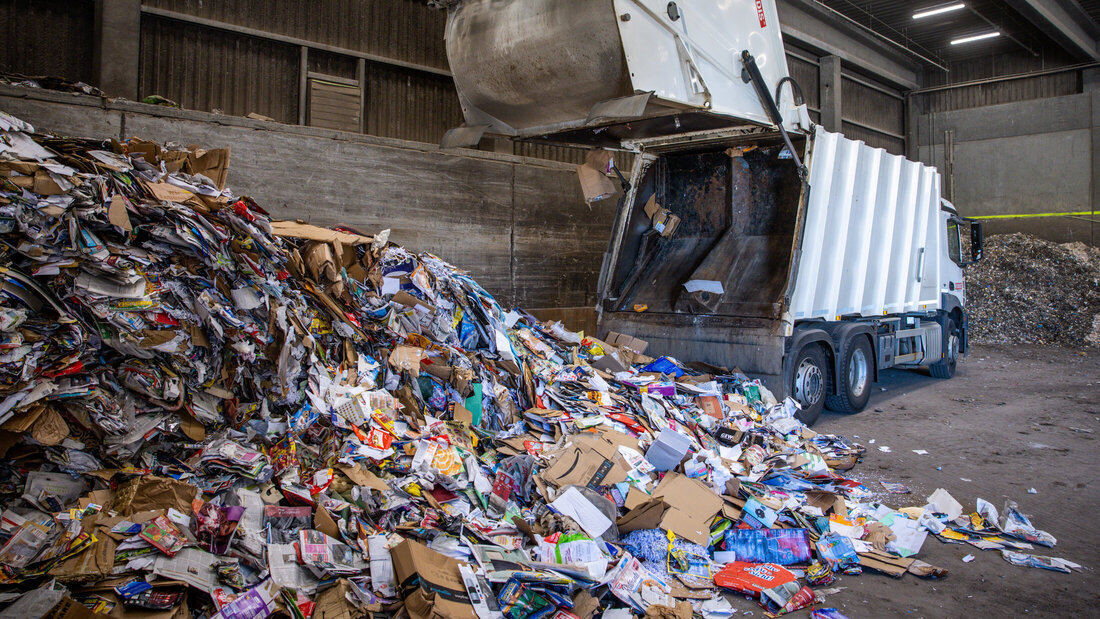
EU to Continue Allowing Waste Exports to Switzerland, Adjusting New Regulations
Brussels – The European Union is set to amend its upcoming waste export regulations to continue permitting the shipment of waste to Switzerland, a move signaling continued close economic ties despite recent shifts in EU-Swiss relations. The decision, announced as the EU prepares to implement new rules governing waste shipments in May, aims to maintain existing trade flows while adhering to stricter environmental standards. This development comes after a period of negotiation and assessment regarding the implications of the new regulations on non-EU member states.
The EU’s decision underscores the complex relationship it maintains with Switzerland, a key trading partner that, while not a member of the European Economic Area (EEA), enjoys significant access to the EU’s internal market through a series of bilateral agreements. These agreements, established in 1999 and continually updated, cover a wide range of sectors, including trade, research, and environmental cooperation. The continuation of waste exports is just one facet of this intricate partnership, which is currently undergoing re-evaluation following Switzerland’s decision to terminate negotiations on an institutional framework agreement in 2021.
New EU Waste Shipment Regulations and the Swiss Exception
The EU is revising its rules on the export of waste to address concerns about environmental protection and the responsible management of waste streams. The new regulations, set to take effect in May, are designed to ensure that waste is shipped only to countries with adequate waste management infrastructure and environmental safeguards. Initially, these regulations threatened to disrupt existing waste trade flows with Switzerland, prompting discussions between EU and Swiss authorities. The EU and Switzerland have a long-standing history of economic and trade relations, governed by a free trade agreement dating back to 1972, and the continuation of waste exports reflects a desire to maintain this established partnership.

According to the European Commission, the adjustment to the regulations will allow for the continued export of certain types of waste to Switzerland, provided that specific conditions are met. These conditions likely include adherence to EU environmental standards and the demonstration of Switzerland’s capacity to manage the imported waste in an environmentally sound manner. The precise details of these conditions are expected to be outlined in the amended regulations, which are currently undergoing finalization. The EU’s economic relationship with Switzerland is substantial; in 2020, Switzerland was the EU’s 4th largest trading partner, following China, the US, and the UK.
Historical Context: EU-Swiss Bilateral Agreements
The current framework governing EU-Swiss relations is built upon a series of bilateral agreements, which have been incrementally developed over decades. These agreements provide Switzerland with access to the EU’s internal market in various sectors, while also requiring Switzerland to align with certain EU regulations. The agreements cover areas such as free movement of people, air transport, land transport, and research. Recent updates to these agreements, signed in March 2026 by European Commission President Ursula von der Leyen and Swiss President Guy Parmelin, demonstrate the ongoing commitment to strengthening the bilateral relationship.
But, the relationship has faced challenges in recent years, particularly with regard to the proposed institutional framework agreement. This agreement aimed to streamline and consolidate the existing bilateral agreements into a single, more comprehensive framework. The Swiss government ultimately terminated negotiations on this agreement in May 2021, citing concerns about national sovereignty. This decision led to a period of uncertainty regarding the future of EU-Swiss relations, and the EU is currently analyzing the impact of this termination on the bilateral relationship.
Implications for Waste Management and Environmental Policy
The decision to continue allowing waste exports to Switzerland has implications for both waste management practices and broader environmental policy. For Switzerland, the continued access to EU waste streams provides a source of materials for its recycling and recovery industries. Switzerland has a well-developed waste management system, with a high rate of recycling and a focus on minimizing landfill disposal. The import of waste from the EU contributes to this system, allowing Switzerland to maximize resource recovery and reduce its reliance on virgin materials.

From the EU’s perspective, the decision reflects a commitment to ensuring that waste is managed in an environmentally responsible manner, even when it is shipped across borders. The EU’s waste shipment regulations are designed to prevent the illegal export of waste to countries with inadequate waste management infrastructure, which could lead to environmental pollution and harm to human health. By allowing continued exports to Switzerland, the EU is signaling its confidence in Switzerland’s ability to manage the imported waste in accordance with EU environmental standards. The EU accounts for around 42% of Switzerland’s exports in goods and for 60% of its imports, highlighting the importance of maintaining a stable trade relationship.
Stakeholders and Future Outlook
The decision to continue waste exports to Switzerland affects a range of stakeholders, including waste management companies, recycling industries, environmental organizations, and government authorities. Waste management companies in both the EU and Switzerland benefit from the continued trade flows, as it allows them to optimize their operations and access new markets. Recycling industries in Switzerland rely on imported waste as a source of materials for their processes. Environmental organizations are closely monitoring the situation to ensure that waste is managed in an environmentally sound manner.
Looking ahead, the future of EU-Swiss relations remains uncertain. While the continuation of waste exports is a positive sign, broader issues related to the institutional framework agreement remain unresolved. The EU is continuing to analyze the impact of Switzerland’s decision to terminate negotiations on the bilateral relationship, and further discussions are likely to be needed to address outstanding issues. The ongoing dialogue between EU and Swiss authorities will be crucial in shaping the future of this crucial partnership. The next key development will be the publication of the finalized amended regulations regarding waste shipments, which are expected in the coming weeks.
Key Takeaways:
- The EU will continue to allow waste exports to Switzerland despite new waste shipment regulations coming into effect in May.
- This decision underscores the importance of the economic relationship between the EU and Switzerland, despite recent disagreements over a broader institutional framework agreement.
- Switzerland’s well-developed waste management system and commitment to environmental standards were key factors in the EU’s decision.
- The continuation of waste exports benefits waste management companies and recycling industries in both the EU and Switzerland.
Do you have thoughts on the EU’s decision? Share your comments below, and please share this article with your network.