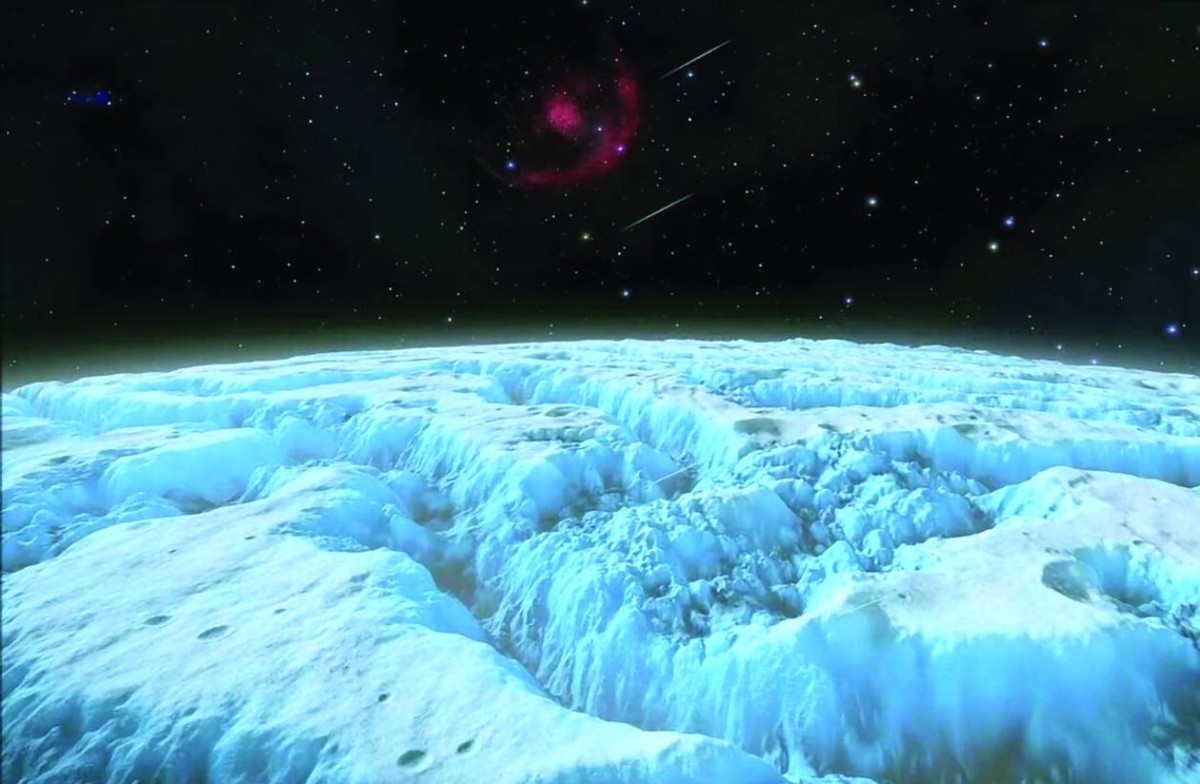
The cosmos continues to reveal its secrets, and the James Webb Space Telescope (JWST) is leading the charge. In a groundbreaking discovery, astronomers have detected water ice clouds in the atmosphere of Epsilon Indi Ab, a gas giant exoplanet located 12 light-years from Earth. This finding, detailed in recent reports, challenges existing models of exoplanetary atmospheres and opens latest avenues for understanding the potential habitability of worlds beyond our solar system.
Epsilon Indi Ab, a planet roughly the size of Jupiter, orbits the star Epsilon Indi A in the Indus constellation. Whereas scientists have identified thousands of exoplanets over the past decades, detailed atmospheric analysis has remained a significant hurdle. The JWST’s advanced capabilities, particularly its infrared sensors, are now allowing researchers to dissect the molecular composition of these distant worlds with unprecedented precision. This marks a shift from simply identifying exoplanets – a process dominant between 1995 and 2022 – to a detailed analysis of their atmospheric components.
Unveiling the Atmospheric Complexity of Epsilon Indi Ab
The research, led by astronomer Elizabeth Matthews of the Max Planck Institute for Astronomy (MPIA), utilized JWST to identify distinct signatures of high-altitude water ice clouds in Epsilon Indi Ab’s atmosphere. As reported by Al Bayan, this discovery paves the way for the search for habitable worlds. The presence of water, a crucial ingredient for life as we know it, in the atmosphere of an exoplanet is a significant step forward in the ongoing quest to find potentially habitable environments.
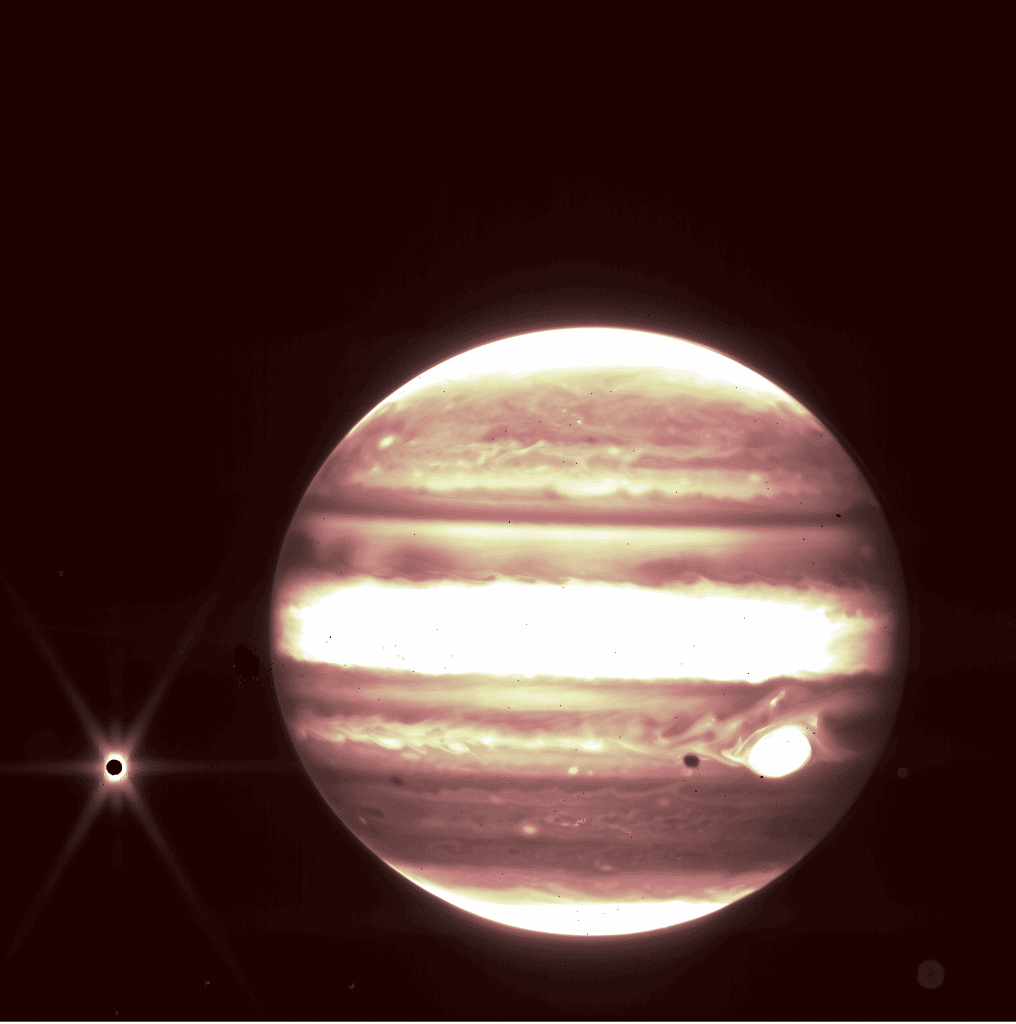
“This is a pivotal moment in exoplanet research,” explains Dr. Matthews in statements reported by various news outlets. “For years, we’ve been theorizing about the atmospheric conditions on gas giants, but JWST is now providing us with concrete data to test those theories.” The detection of water ice clouds suggests a complex atmospheric structure with dynamic weather patterns, far more intricate than previously anticipated.
The composition of Epsilon Indi Ab’s atmosphere is particularly intriguing. While similar in overall composition to Jupiter, the planet exhibits a level of molecular complexity that has surprised researchers. The JWST’s observations reveal a nuanced interplay of various molecules, indicating a potentially active and evolving atmospheric system. This complexity is crucial for understanding the planet’s overall climate and its potential to harbor conditions conducive to life, even if not directly on the planet itself.
The James Webb Space Telescope: A New Era of Exoplanet Exploration
The James Webb Space Telescope, a collaborative project between NASA, the European Space Agency (ESA), and the Canadian Space Agency (CSA), was launched on December 25, 2021, aboard an Ariane 5 ECA rocket from the Guiana Space Centre in French Guiana. According to Wikipedia, the telescope weighs approximately 6,500 kilograms and boasts a primary mirror diameter of 6.5 meters. It operates at the Sun-Earth L2 Lagrange point, approximately 1.5 million kilometers from Earth, providing a stable and unobstructed view of the cosmos.
JWST’s design is specifically optimized for infrared astronomy. Unlike the Hubble Space Telescope, which primarily observes in visible and ultraviolet light, JWST detects infrared radiation, allowing it to penetrate dust clouds and observe objects that are too faint or too distant to be seen with other telescopes. This capability is particularly crucial for studying exoplanet atmospheres, as many of the key molecules associated with habitability, such as water, methane, and carbon dioxide, emit strongly in the infrared spectrum.
The telescope’s advanced instrumentation includes the Near-Infrared Camera (NIRCam), the Near-Infrared Spectrograph (NIRSpec), the Mid-Infrared Instrument (MIRI), and the Fine Guidance Sensor/Near Infrared Imager and Slitless Spectrograph (FGS/NIRISS). These instruments work in concert to capture high-resolution images and spectra of celestial objects, providing scientists with a wealth of data to analyze.
Implications for the Search for Habitable Worlds
The discovery of water ice clouds on Epsilon Indi Ab has significant implications for the search for habitable worlds. While the planet itself is a gas giant and therefore unlikely to host life as we know it, the findings demonstrate the JWST’s ability to detect and characterize atmospheric features on exoplanets. This capability is essential for identifying potentially habitable planets – rocky worlds with liquid water on their surfaces – that may exist around other stars.

The presence of water in an exoplanet’s atmosphere is a key indicator of potential habitability. Water is essential for all known forms of life, and its presence suggests that a planet may have the conditions necessary to support biological processes. However, water alone is not enough. Other factors, such as temperature, pressure, and the presence of other essential elements, also play a crucial role.
JWST’s observations of Epsilon Indi Ab provide valuable insights into the atmospheric processes that govern the climate of exoplanets. By studying the distribution and composition of clouds, scientists can gain a better understanding of how energy is transported within a planet’s atmosphere and how this affects its overall temperature. This knowledge is crucial for identifying planets that may have stable and habitable climates.
Future Research and the Ongoing Quest for Extraterrestrial Life
The discovery of water ice clouds on Epsilon Indi Ab is just the beginning. Astronomers are planning to apply JWST to study the atmospheres of many other exoplanets, including those that are considered to be potentially habitable. These observations will provide a more comprehensive understanding of the diversity of exoplanetary atmospheres and the conditions that are necessary for life to arise.
Future research will focus on identifying biomarkers – molecules that are indicative of life – in exoplanet atmospheres. These biomarkers could include gases such as oxygen, methane, and ozone, which are produced by biological processes on Earth. The detection of biomarkers on an exoplanet would be a strong indication that life may exist on that world.
The James Webb Space Telescope is revolutionizing our understanding of the universe and our place within it. Its ability to probe the atmospheres of exoplanets is opening up new possibilities for the search for extraterrestrial life. As JWST continues to gather data, we can expect even more groundbreaking discoveries that will reshape our understanding of the cosmos.
The next phase of research will involve more detailed spectroscopic analysis of Epsilon Indi Ab’s atmosphere, aiming to identify other molecules and refine our understanding of its atmospheric dynamics. Scientists are also planning to observe other similar gas giants to determine if the presence of water ice clouds is a common phenomenon. These ongoing investigations promise to further illuminate the complexities of exoplanetary atmospheres and bring us closer to answering the fundamental question of whether we are alone in the universe.
What are your thoughts on this incredible discovery? Share your comments below and let us know what excites you most about the future of exoplanet research.
Worth a look