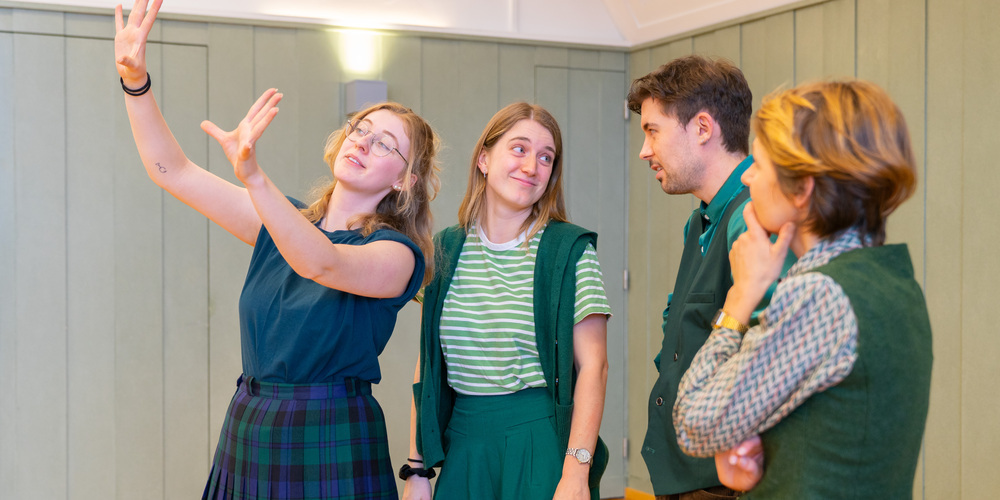
The traditional boundary between the performer and the observer is often defined by a physical divide: the edge of the stage. However, a provocative new project at the Pädagogische Hochschule St. Gallen (PHSG) is dismantling that architecture entirely. Titled Zwischen Türen
(Between Doors), this immersive theater experience transforms the university’s own corridors and classrooms into a living set, challenging the notion that art requires a designated venue to be impactful.
Led by Claudia Ehrenzeller, the project leader and head of the theater department at PHSG, the production moves away from the proscenium arch in favor of site-specific storytelling. By utilizing the existing infrastructure of the Pädagogische Hochschule St. Gallen, the performance integrates the daily environment of teacher education into a narrative exploration of boundaries and transitions.
This approach to theater, often referred to as immersive or site-specific performance, requires the audience to grow active participants in the geography of the story. Rather than sitting in a darkened auditorium, viewers navigate the physical space of the institution, encountering scenes that unfold in the very locations where academic and professional lives intersect. The result is a blurring of the line between the fictional world of the play and the reality of the campus.
The Vision of Claudia Ehrenzeller
The creation of Zwischen Türen
stems from a desire to explore how space influences emotion and perception. Claudia Ehrenzeller designed the piece to reflect the psychological and physical thresholds people encounter in their professional and personal lives. By stripping away the artificiality of a stage, the production forces a more intimate and immediate confrontation with the subject matter.
For Ehrenzeller, the choice of the PHSG campus as a venue is not merely convenient but central to the play’s meaning. The university serves as a site of transition for students becoming educators, making the theme of doors
—both literal and metaphorical—particularly resonant. The performance examines the masks people wear when moving from one room, or one social role, to another.
The integration of theater into a pedagogical setting is a hallmark of the PHSG’s approach to teacher training. By engaging with the arts in this unconventional manner, the institution encourages future educators to think creatively about how they use space and interaction to facilitate learning and emotional expression in their own future classrooms.
Redefining the Audience Experience
In Zwischen Türen
, the audience does not simply watch a story; they traverse it. The narrative is fragmented across different locations, meaning the viewer’s physical movement through the building dictates their experience of the plot. This movement mirrors the internal journeys of the characters, who are often caught in the liminal spaces between different stages of their lives.
This format removes the safety of the “fourth wall,” the invisible barrier that typically separates the actors from the audience. When a scene takes place in a narrow hallway or a small office, the proximity to the actors increases the emotional stakes. The audience becomes a witness to private moments, effectively becoming part of the environment the characters inhabit.
The technical requirements of such a production differ significantly from traditional theater. Instead of complex lighting rigs and fly systems, the production relies on the natural acoustics and existing lighting of the university. The “set design” is the architecture itself, requiring the performers to interact with the physical reality of the building—doors, desks and walls—as primary props.
The Role of Site-Specific Theater in Education
The use of site-specific theater at a teacher’s college highlights a broader trend in experiential learning. By removing art from the gallery or the theater and placing it in a functional workspace, the project demonstrates that creativity is not a separate activity but something that can be woven into the fabric of daily life.
This method of storytelling is particularly effective for exploring social dynamics. Because the play occurs in a place of authority and learning, it naturally invites reflection on the power structures inherent in educational institutions. The act of opening and closing doors becomes a symbol for access, exclusion, and the revelation of secrets.
the project serves as a laboratory for students. By participating in or observing a production that defies traditional norms, future teachers are exposed to the idea that the environment is a tool for communication. This understanding is critical for creating inclusive and dynamic learning environments where the physical layout of a room can be leveraged to encourage collaboration or focus.
Key Elements of the Immersive Approach
| Feature | Traditional Theater | Site-Specific (Zwischen Türen) |
|---|---|---|
| Venue | Dedicated stage/auditorium | PHSG Campus corridors and rooms |
| Audience Role | Passive observer (seated) | Active navigator (moving) |
| The “Fourth Wall” | Maintained barrier | Dismantled; high proximity |
| Set Design | Constructed scenery | Existing institutional architecture |
| Narrative Flow | Linear, centralized | Fragmented, spatially distributed |
Cultural Impact in St. Gallen
The presence of such avant-garde projects within the PHSG contributes to the cultural vibrancy of St. Gallen. By opening the university’s doors to artistic experimentation, the institution positions itself as more than just a place of academic instruction; it becomes a cultural hub where the community can engage with contemporary art forms.
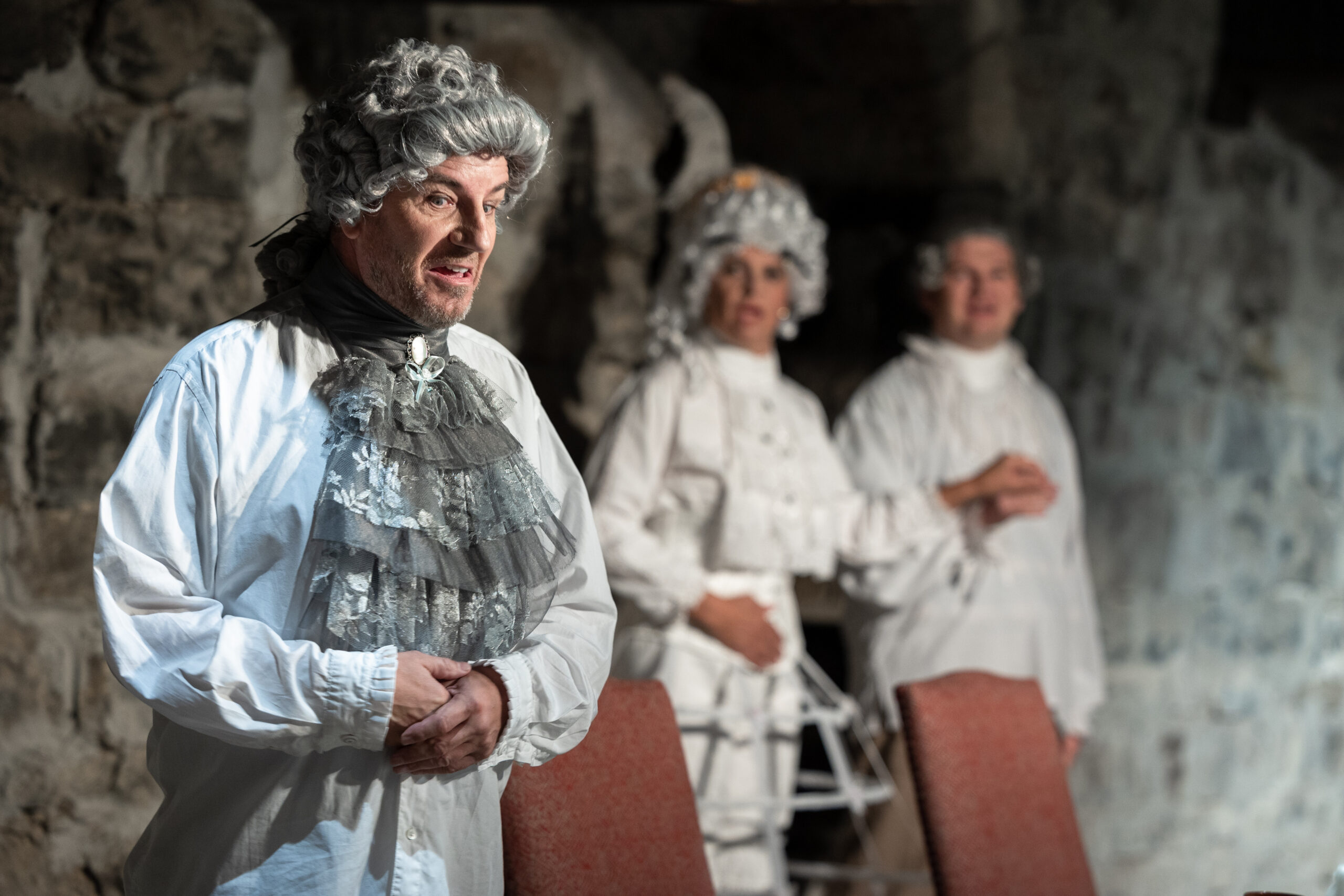
The success of Zwischen Türen
suggests a growing appetite for immersive experiences that challenge the passive consumption of art. As audiences increasingly seek interactive and authentic engagements, the model of “theater without a stage” provides a blueprint for how other institutions can utilize their spaces to advise compelling, human stories.
The project also underscores the importance of interdisciplinary collaboration. The intersection of theater arts and pedagogical science allows for a unique exploration of human behavior, proving that the tools of the stage can be used to analyze and understand the complexities of the classroom and the workplace.
As the production continues to evolve, it remains a testament to the power of spatial storytelling. By focusing on the gaps—the spaces between doors
—Claudia Ehrenzeller and her team have created a mirror for the transitions we all face, reminding us that the most profound dramas often happen in the most mundane of places.
Details regarding future performances or public workshops associated with the theater department at PHSG are typically released through the university’s official communication channels. Those interested in the intersection of arts and education are encouraged to monitor the PHSG event calendar for upcoming site-specific initiatives.
Do you believe immersive theater is more effective than traditional stages for exploring social issues? Share your thoughts in the comments below or share this article with your network.
Worth a look