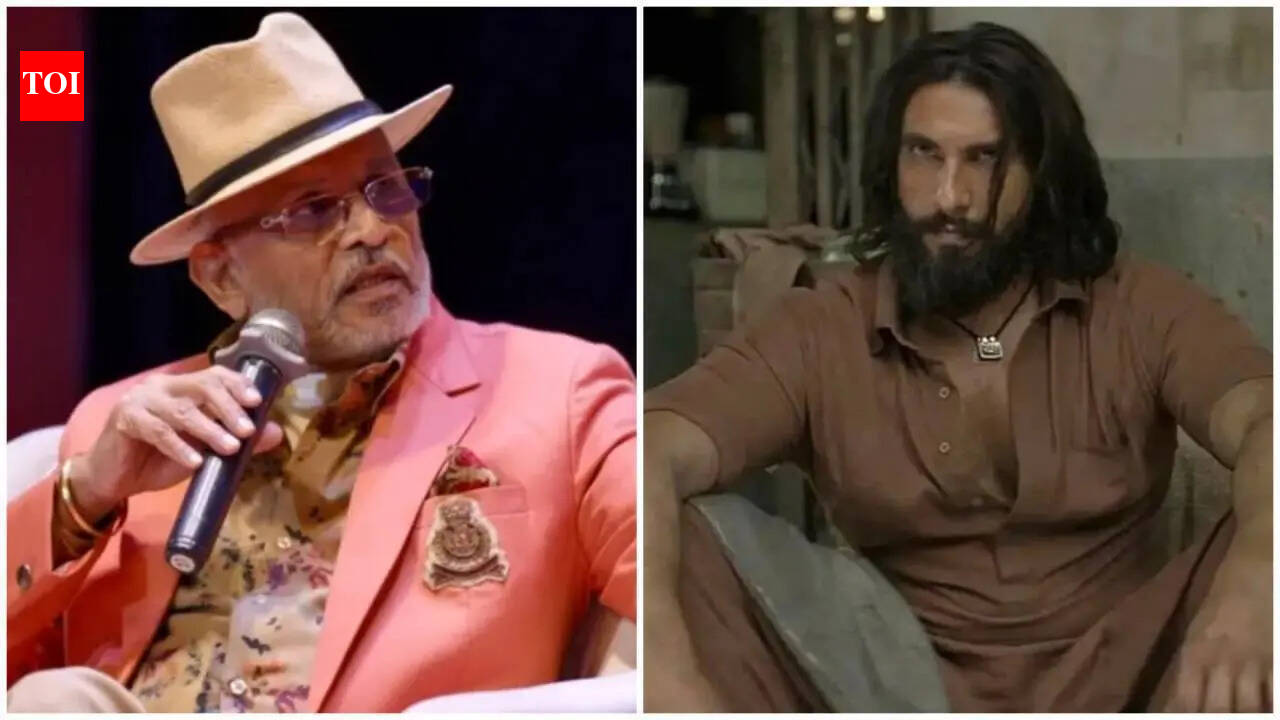
The intersection of cinema and political ideology has always been a volatile space, but few veterans of the screen navigate it with as much candidness as Annu Kapoor. The seasoned actor recently found himself at the center of a growing discourse following the release of Dhurandhar
, a project that has sparked intense debate over its portrayal of political narratives and historical timelines.
As critics voice concerns that the film distorts facts to align with a specific ideological agenda, Kapoor has remained unfazed. Rather than retreating from the controversy, the actor has leaned into it, arguing that the notion of propaganda
in filmmaking is not a modern phenomenon but a foundational element of the medium’s history.
The backlash against Dhurandhar centers on claims that the production manipulated chronological events to suit a particular narrative. For many, this represents a dangerous blurring of the line between creative liberty and historical revisionism. However, Kapoor views these critiques through a wider lens, suggesting that no piece of cinema is truly neutral.
Beyond the political fray, Kapoor also addressed the perennial industry shadow of nepotism. In an era where the “insider vs. Outsider” debate dominates headlines in the Indian film industry, Kapoor’s dismissal of nepotism as a primary hurdle reflects a perspective forged over decades of navigating the complex hierarchies of Bollywood and beyond.
The Debate Over Ideology and Narrative in ‘Dhurandhar’
The controversy surrounding Dhurandhar is not merely about a few misplaced dates or altered sequences; it is a reflection of a broader cultural struggle over who gets to define history on screen. Critics have pointed to specific segments of the film where timelines appear compressed or redirected, alleging that these changes were intentional efforts to paint a specific political portrait.
Kapoor’s response to these allegations is rooted in a historical understanding of the arts. He posits that every filmmaker, whether consciously or unconsciously, brings a bias to their work. By framing the criticism as a reaction to propaganda
, Kapoor argues that the audience is simply noticing a tool that has been used in cinema for generations.
“Propaganda in cinema is nothing new and has existed for decades.” Annu Kapoor, Veteran Actor
This perspective suggests that the current outrage is perhaps less about the film itself and more about the specific ideology being presented. In the current global climate, where media consumption is often polarized, the “distorted timeline” argument frequently becomes a proxy for deeper political disagreements. By acknowledging the existence of propaganda, Kapoor effectively strips the critics’ argument of its novelty, framing it as an inherent part of the cinematic experience.
Creative Liberty vs. Historical Accuracy
The tension between artistic expression and factual precision is a recurring theme in political cinema. When a film claims to be based on real events, it enters into an implicit contract with the audience. When that contract is perceived as broken—through the distortion of facts—the reaction is often visceral.
In the case of Dhurandhar, the debate highlights a critical question: does a filmmaker owe the truth to the audience, or does the “emotional truth” of the story supersede the literal facts? Kapoor seems to lean toward the latter, implying that the narrative goal of the film justifies the structural adjustments made to the timeline.
This approach is not uncommon in historical dramas. Many acclaimed films worldwide alter dates or combine multiple real-life figures into a single composite character to streamline the plot. However, when the subject matter is contemporary politics, these shortcuts are often viewed not as artistic choices, but as calculated manipulations.
Dismissing the Nepotism Narrative
Whereas the political discourse surrounds the content of the film, a separate but equally heated debate surrounds the industry’s structure. The “nepotism” tag has become a standard critique in Indian entertainment, often used to describe the perceived unfair advantage given to the children of established stars.
Kapoor’s dismissal of these claims provides a stark contrast to the prevailing sentiment among many younger actors and critics. For Kapoor, the focus on lineage often distracts from the fundamental requirement of the craft: talent. His stance suggests that while access may be easier for some, longevity in the industry is only possible through merit.
This dismissive approach to the nepotism debate likely stems from Kapoor’s own trajectory. Having built a career through versatility—spanning acting, singing, and hosting—he represents a generation that viewed the industry as a meritocracy of performance, even if the doors were not open equally to everyone.
By dismissing nepotism, Kapoor is not necessarily denying that familial connections exist, but rather arguing that they are not the defining factor of success. In his view, the obsession with “star kids” ignores the thousands of outsiders who have successfully penetrated the industry through sheer persistence and skill.
The Broader Impact of Political Cinema
The reaction to Dhurandhar is a symptom of a larger trend in global cinema where films are increasingly used as vehicles for social and political commentary. From the United States to India, “message movies” are gaining traction, often leading to intense polarization among viewers.
This trend has led to an increase in “fact-checking” cinema, where viewers use social media to dismantle the historical claims of a film in real-time. While this promotes a more critical viewership, it also creates a climate where filmmakers may perceive pressured to avoid controversial subjects or, conversely, double down on their ideological leanings to satisfy a specific base.
Kapoor’s insistence that cinema has always been a tool for narrative suggests that the industry is simply entering a more transparent phase of this process. Where propaganda was once subtle or state-mandated, it is now contested in the public square, with actors and directors forced to defend their creative choices in the face of instant digital scrutiny.
Why the ‘Propaganda’ Label Matters
The word propaganda
carries a heavy weight, usually associated with state control and the erasure of truth. When critics apply this label to a film like Dhurandhar, they are suggesting that the work is not art, but a tool for indoctrination.
By accepting the term and normalizing it, Kapoor attempts to neutralize its power. If all cinema is, in some sense, propaganda—meaning it seeks to persuade the audience of a certain point of view—then Dhurandhar is not an anomaly, but a standard example of the medium.
Key Takeaways from the Controversy
- Narrative Distortion: Critics allege that Dhurandhar manipulates timelines to suit a specific ideological bias.
- Kapoor’s Defense: Annu Kapoor argues that cinematic propaganda is a historical norm and not a new development.
- Nepotism Stance: The veteran actor dismisses the current obsession with nepotism, emphasizing talent over lineage.
- Artistic Intent: The debate highlights the ongoing conflict between historical accuracy and creative license in political filmmaking.
As Dhurandhar continues to circulate, the conversation it has sparked serves as a reminder of the power of film to provoke and divide. For Annu Kapoor, the noise is simply part of the process. In an industry that thrives on attention, a film that is debated is a film that is being watched.
The next phase of this discourse will likely depend on whether the filmmakers release further clarifications regarding their sources or if the film’s performance at the box office silences the critics. For now, the project remains a lightning rod for discussions on truth, power, and the enduring influence of the silver screen.
World Today Journal will continue to monitor updates regarding the critical reception and official responses to Dhurandhar.
Do you believe filmmakers have a moral obligation to stick to historical facts, or should creative liberty always come first? Share your thoughts in the comments below.