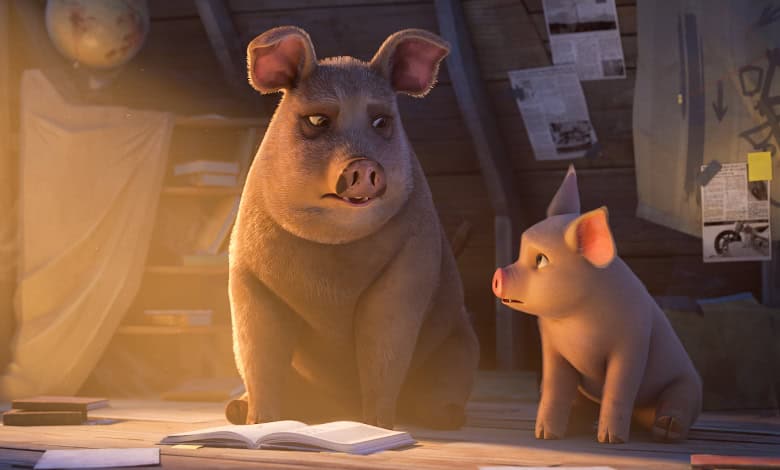
The intersection of faith-based cinema and political satire has sparked a fierce debate in the entertainment industry, as Angel Studios finds itself at the center of a mounting controversy over its latest acquisition. The studio, known for producing content that aligns with traditional values, is facing a significant backlash from its own core audience following the announcement of a “re-imagined” adaptation of George Orwell’s classic, Animal Farm
.
Directed by actor Andy Serkis, the fresh version of the story reportedly shifts the target of its satire. While Orwell’s original 1945 novella served as a biting critique of the Russian Revolution and the subsequent rise of Soviet-style totalitarianism, this new iteration is said to target capitalism. This thematic pivot has created a profound rift between the studio and the conservative, faith-friendly demographic that propelled Angel Studios to prominence.
The tension comes to a head as the film, titled Animal Farm: A Cautionary Tail
, prepares for its theatrical release. For a studio that has built its brand on being a necessary corrective
to mainstream Hollywood—often by amplifying narratives that are ignored or suppressed by larger studios—the decision to release a film with an anti-capitalist bent is being viewed by some as a betrayal of its mission.
The controversy highlights a growing struggle within the “culture war” of modern cinema: the challenge of balancing artistic ambition and star-studded casts with the expectations of a niche, value-driven audience. With a cast featuring high-profile names like Seth Rogen, Glenn Close, and Woody Harrelson, the project represents a significant step into the mainstream for Angel Studios, but it may come at a steep cost to its grassroots support.
A Clash of Ideologies: From Communism to Capitalism
George Orwell’s Animal Farm
has long been an instrumental read for generations, serving as a warning against the corruption of power and the pitfalls of utopian revolutions. The original function is widely recognized as a satire of the Soviet Union, where the pigs’ ascent to power mirrored the betrayal of the revolution’s ideals by Joseph Stalin.
However, the Serkis-directed version takes a different approach. Early reviews and trailer analysis—including critiques from commentators such as Tim Pool—suggest the film re-centers the narrative to critique capitalist structures. This shift has left many of the studio’s supporters bewildered. For the “Heartland” moviegoers who turned out in massive numbers for the 2023 release of Sound of Freedom
, the move feels contradictory to the studio’s promise to amplify light
and protect traditional values.
The backlash has been amplified by the studio’s response to its critics. Rather than engaging in a dialogue about the film’s thematic changes, Angel Studios released a comical social media post to promote the film’s release, which some observers felt was dismissive of the concerns raised by its base.
We’re in love, and we aren’t afraid to show it.
Observe Animal Farm: A Cautionary Tail, in theaters tomorrow! pic.twitter.com/9eqy25vaSt— Animal Farm: A Cautionary Tail (@animalfarmfilm) April 30, 2026
The Angel Studios Model and the ‘Guild’ Conflict
To understand why this acquisition is so polarizing, one must look at the unique business model employed by Angel Studios. Unlike traditional Hollywood studios that rely on venture capital or corporate ownership, Angel Studios utilizes a “Guild” system. This program allows members of the community to have a say in which projects the studio acquires and supports, effectively democratizing the greenlighting process.
Angel Studios maintains that its Guild members approved the acquisition of Animal Farm
. However, the outcry from conservatives suggests a disconnect between the Guild’s voting outcomes and the expectations of the wider faith-based audience. Critics argue that the studio may have been seduced by the prestige of Andy Serkis and the attachment of A-list talent, potentially overlooking the ideological friction the film would create.
The frustration among critics is not just about the film’s content, but the perceived attitude of the studio. Some social media users have compared the studio’s current trajectory to that of Disney, suggesting that Angel Studios is beginning to ignore its audience in favor of mainstream acclaim.
“Not caring what our audience says or wants has been working out well for Disney, let’s give it a try.” — Angel Studios
— Five Times August (@FiveTimesAugust) May 1, 2026
The Broader Context of Hollywood Re-imaginings
The controversy surrounding Animal Farm: A Cautionary Tail
is part of a larger trend in the entertainment industry where studios reinterpret classic intellectual property for modern sensibilities. This practice often leads to “culture war” flashpoints, as seen with recent attempts to modernize beloved franchises. Examples cited by critics include the recent reception of The Acolyte
and the reimagined Snow White
, where fans felt the original essence of the stories was sacrificed for contemporary political messaging.
For Angel Studios, the stakes are higher as its brand identity is explicitly tied to being an alternative to this mainstream trend. By releasing a film that some perceive as “progressivism on steroids,” the studio risks losing the very trust that made it a successful alternative to the major studios.
Despite the friction, the studio has continued to attract diverse talent. The recent romantic comedy Solo Mio
, starring Kevin James, demonstrates that the studio can still appeal to broad audiences while maintaining its identity. The question remains whether the studio can survive the “toxic blowback” resulting from the Animal Farm
project.
Key Stakeholders and the Impact of the Controversy
- Angel Studios: Facing a potential identity crisis and a breach of trust with its primary funding and viewership base.
- Andy Serkis: The director whose “re-imagining” of Orwell’s work has become a lightning rod for political debate.
- The Guild Members: The community-driven decision-makers whose approval of the film is now being questioned by the broader audience.
- Faith-Based Audiences: The core demographic that feels the studio is pivoting away from the values that originally attracted them.
As Animal Farm: A Cautionary Tail
hits theaters, the industry will be watching closely to see if the film’s box office performance is bolstered or hindered by this ideological divide. The outcome may determine whether Angel Studios continues to pivot toward mainstream prestige or returns to its roots as a strictly faith-friendly sanctuary for storytelling.
The next major checkpoint for the studio will be the release of the film’s initial box office numbers and the subsequent reaction from its Guild members regarding the project’s reception. We invite our readers to share their thoughts in the comments: Does a studio’s commitment to its audience outweigh artistic reimagining, or should the “Guild” model allow for diverse political perspectives?
Related reading