
The tension between futuristic minimalism and driver safety has reached a tipping point in the luxury automotive sector. Mercedes-Benz, a pioneer in the shift toward digital cockpits, is now navigating a complex strategic pivot: admitting that physical buttons are superior for driver interaction although simultaneously refusing to abandon the massive touchscreens that define its modern brand identity.
This duality highlights a broader industry struggle. For years, automakers chased the “smartphone on wheels” aesthetic, replacing tactile switches with haptic feedback and deep-menu touch interfaces. But, a growing wave of consumer frustration and looming regulatory pressures are forcing a return to ergonomics. At Mercedes-Benz, this has manifested as a hybrid approach—reintroducing physical controls for critical functions without sacrificing the visual spectacle of the Hyperscreen
.
The shift comes as competitors like Volkswagen and Audi have already begun reducing screen sizes and restoring tactile buttons in response to customer backlash. For Mercedes, the challenge is to balance digital craftsmanship
with the practical necessity of “eyes-on-the-road” safety.
The Admission: Why Physical Buttons Won
The move toward total digitalization was not without its casualties. Drivers consistently reported that navigating multiple screen layers to adjust basic settings—such as climate control or mirror adjustments—was distracting and inefficient. This feedback eventually reached the highest levels of Mercedes-Benz leadership.
Magnus Östberg, the company’s software chief, has explicitly acknowledged the superiority of tactile interfaces, stating that the data shows that physical buttons are better
according to reporting by Heise Online. This admission marks a significant departure from the industry’s previous trajectory, where the removal of buttons was framed as progress.
One of the most visible reversals is found on the steering wheel. Mercedes is replacing haptic slide controls—which many drivers found imprecise—with the return of the traditional scroll wheel. This change aims to restore the intuitive, blind-touch capability that allows drivers to keep their focus on the road rather than hunting for a virtual slider on a glass surface.
The Persistence of the Hyperscreen
Despite the admission that buttons are more efficient, Mercedes-Benz is not retreating from its digital ambitions. Mathias Geisen, the company’s sales boss, has confirmed that large touchscreens will remain a cornerstone of future vehicles. According to Autocar, Geisen views these screens as a primary way to showcase the brand’s digital craftsmanship
.
The MBUX Hyperscreen—a curved glass panel that can span nearly the entire width of the dashboard—remains the flagship of this vision. In the new electric C-Class, for example, a 39.1-inch Hyperscreen dominates the cabin. The company is betting that the prestige and “wow factor” of a massive digital interface outweigh the desire for a completely button-centric dashboard, provided that the most critical functions are handled by physical switches.
This “best of both worlds” strategy attempts to satisfy two different psychological needs: the desire for a high-tech, luxurious environment and the fundamental need for safety and ease of use during high-speed transit.
Regulatory Pressure: The 2026 Euro NCAP Mandate
The return of the button is not merely a response to customer preference. It’s becoming a regulatory necessity. The European New Car Assessment Programme (Euro NCAP) is implementing sweeping changes to its safety protocols that will directly impact how cars are rated starting in 2026.
According to Politico and official Euro NCAP documentation, the safety body will start stripping safety points from vehicles that rely too heavily on touchscreens for primary controls. To achieve the coveted five-star safety rating, manufacturers must ensure that five key functions are operated by physical buttons or switches:
- The horn
- Windshield wipers
- Turn signals
- Hazard warning lights
- SOS features
These mandates, which go into effect on January 1, 2026, as detailed in the Euro NCAP 2026 protocol announcement, create a hard deadline for automakers. The industry can no longer treat physical buttons as “legacy” technology; they are now a prerequisite for safety certification in the European market.
The Future: Software-Defined Vehicles
While the dashboard is seeing a return to the tactile, the underlying architecture of the car is moving further into the cloud. Mercedes-Benz is transitioning toward “software-defined vehicles,” where the hardware remains constant but the features and functionality are updated over-the-air (OTA).
The 2026 Mercedes-Benz CLA and the 2027 Mercedes-Benz GLC are positioned as the first truly software-defined models. In these vehicles, the company aims to replace the need for complex app-based menus with advanced voice commands and AI-driven interfaces. The goal is to reduce the “cognitive load” on the driver—essentially moving the interaction away from both the screen and the button and into the realm of natural language.
Comparison: The Shift in Interior Philosophy
| Era | Primary Interface | Philosophy | Driver Impact |
|---|---|---|---|
| Pre-2020 | Physical Switches/Knobs | Tactile Reliability | Low distraction, high intuition |
| 2020-2024 | Touchscreens/Haptics | Digital Minimalism | High visual appeal, increased distraction |
| 2026 & Beyond | Hybrid (Screens + Key Buttons) | Balanced Craftsmanship | Safety-compliant, tech-forward |
Analysis: A Costly Lesson in Human Factors
From an economic and design perspective, the “touchscreen era” was a gamble on human adaptability. Automakers assumed that users would adapt to digital menus as they had to smartphones. However, the environment of a moving vehicle is fundamentally different from a living room; the cost of a “misclick” in a car can be catastrophic.
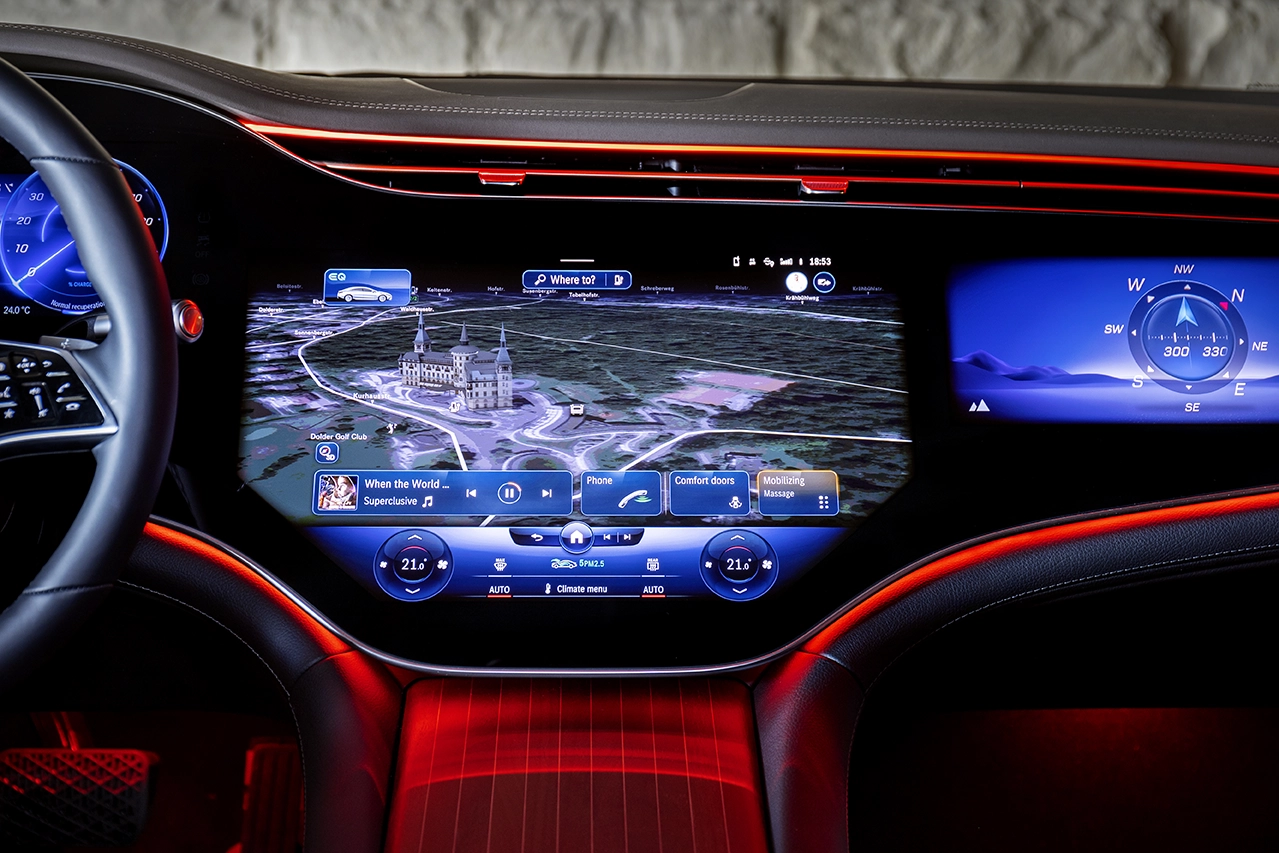
Mercedes-Benz’s current pivot is an admission that human factors engineering—the study of how humans interact with systems—cannot be ignored in favor of aesthetics. By reintroducing buttons for “key functions” while keeping the Hyperscreen for “experience,” Mercedes is attempting to salvage its luxury image without compromising on the safety metrics that will define the 2026 market.
The industry is now entering a phase of “corrective design.” We can expect other luxury brands to follow this hybrid path, moving away from the total eradication of buttons and toward a curated selection of tactile controls that prioritize safety over style.
The next major checkpoint for this transition will be the full implementation of the Euro NCAP 2026 protocols on January 1, 2026, which will formally penalize the “screen-only” approach. Whether the hybrid model of “Big Screens + Small Buttons” satisfies both the regulators and the drivers remains to be seen.
Do you prefer a completely digital dashboard or the reliability of physical buttons? Share your thoughts in the comments below.
Related reading